Stargazing Gear for Hobbyists: Level Up Your Night Sky Experience
Intermediate optical acquisition requires a shift from exploratory viewing to systematic target logging. By integrating high-aperture binoculars and narrowband filtration, observers can significantly enhance the signal-to-noise ratio of deep-sky targets. This technical brief outlines the hardware requirements for hobbyists transitioning to high-cadence astronomical observation.
DH Research Lab
Data & Editorial Board
Expert Tested Gear & Affiliate Disclosure
This guide contains affiliate links. As an Amazon Associate, we earn from qualifying purchases.
01The Binocular Upgrade
Those 10x25 pocket binos were fine for the Moon, but for the 'big sky,' you need serious aperture.
10x50 is the 'Goldilocks' size. It's light enough to hold steady for minutes but has 50mm lenses that gather enough light to resolve star clusters like the Pleiades and the Beehive.
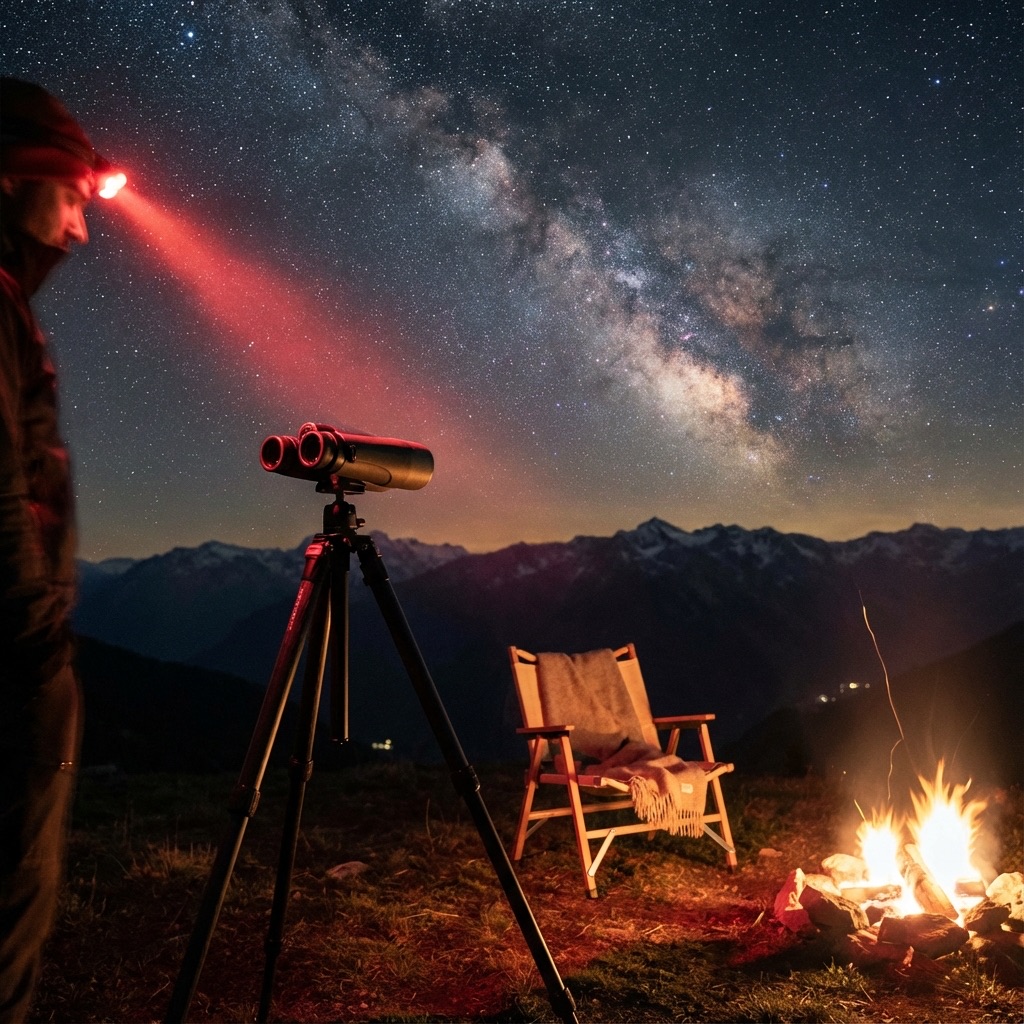
15x70 or 20x80 are monsters. They gather as much light as a small telescope but offer a wide, two-eyed (stereoscopic) view that makes the Milky Way look 3D. However, these require a tripod or a 'monopod' to use comfortably.
Image Stabilization (IS): If you have the budget, Canon's IS binoculars are the single best upgrade you can buy. They electronically cancel out your hand tremors, making a 10x view look as sharp as a 2x view.
Celestron SkyMaster 15x70
“The affordable giant for binocular astronomy.”
RATIONALE
It comes with a tripod adapter included. At under $100, it provides a 'telescope-like' experience while maintaining the wide-field context of binoculars.
02Navigating the Deep Sky
A hobbyist shouldn't just be 'looking at stars'—you should be 'star hopping' to specific treasures.
The Power of Filters:
- UHC (Ultra High Contrast) filters are magic for nebulae. They block city streetlights while letting the specific wavelengths of glowing gas through.
- OIII Filters: More aggressive than UHC. They make the Veil Nebula or the Orion Nebula 'pop' out of the background.
Digital Navigation: Use an app like SkySafari Plus. It can connect to your telescope's computerized mount via Bluetooth, allowing you to tap an object on your phone and have the scope move there automatically.
Use a Parallel Mount
03Comfort for Long Sessions
If you're stationary for hours, 'atmospheric cold' is your enemy.
The Stargazing Chair: Don't use a regular camping chair. An 'Astro-Chair' with a sliding seat allows you to observe at any angle—from the horizon to straight up (the zenith)—without straining your neck or back.
Heated Gear: USB-powered heated vests and seat pads are no longer luxury items—they are essential gear for winter observers. Keeping your core warm allows you to stay out 3-4 times longer than clothing alone.
Red Flashlight
Essential for reading star charts without ruining your night vision.
Clear Outside
The most accurate app for predicting 'astronomical seeing' and transparency.
Target Lists
Download the 'Messier 100' list and see how many you can find this season.
Frequently Asked Questions
Q:Should I buy big binoculars or a small telescope?
Binoculars are better for wide-field 'scanning' of the Milky Way and finding constellations. Telescopes are better for high-power views of planets and small galaxies. Many hobbyists own both.
Q:What does an 'OIII' filter do?
An Oxygen-III filter is a narrowband filter that blocks almost all light except for the specific color emitted by glowing nebulae. It makes these faint objects appear much brighter against a dark sky.
Q:Do I need a tripod for 10x50 binoculars?
No, 10x50 is usually the upper limit for handheld use. If you go larger (15x70 or 20x80), the magnification makes every heartbeat visible as a shake in the image, so a tripod is mandatory.
Q:What is 'star hopping'?
Star hopping is a technique for finding faint objects by starting at a bright star you recognize and 'hopping' through smaller patterns of stars until you reach your target.
Q:How do I choose an observing chair?
Look for an 'adjustable-height' chair. Because the eyepiece of a telescope moves as you point it at different parts of the sky, you need to be able to raise or lower your seat height quickly to stay comfortable.
Don't waste a clear-night chance
Get the field checklist, then use DarkestHour to decide if tonight's sky is actually worth your time, setup or travel.
Learn first. Decide with the map.
DarkestHour guides are free trust builders. Use them to understand conditions, then use Pro for saved spots, alerts and best-night decisions.
Find Your Darkest Sky
Use our real-time satellite maps to find locations with zero light pollution.
Launch Interactive MapYour Learning Roadmap
You've mastered the intermediate basics. The next logical step in your technical progression is mastering advanced deep sky setups.
MANDATORY FIELD EQUIPMENT
Celestron NexStar 8SE
The gold standard for deep-sky observation. 203mm aperture for maximum light gathering.
ZWO Seestar S50
Fully robotic imaging system. Perfect for urban environments and rapid deployment.
Peak Design Travel Tripod
Zero-latency stability for long exposure astrophotography. Carbon fiber construction.
Continue Your Research
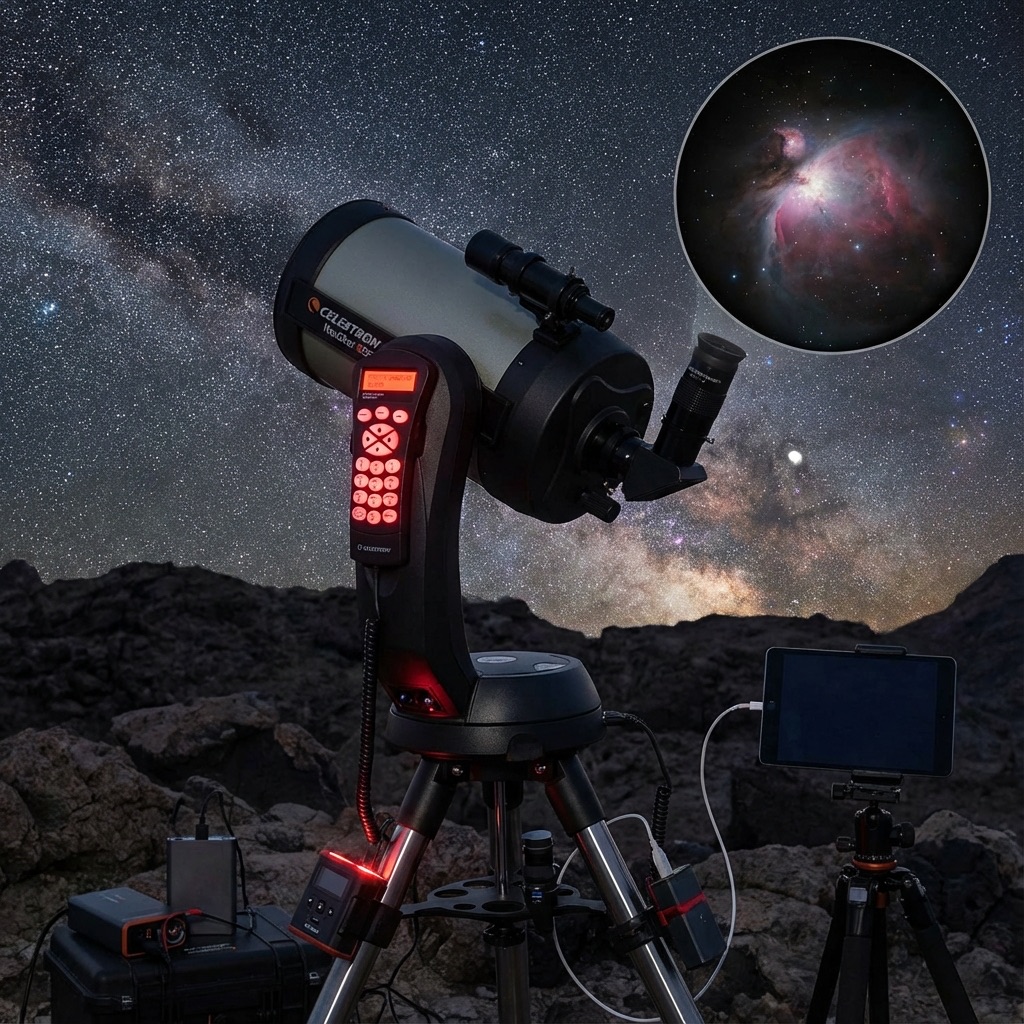
Astronomy Gear for Hobbyists: GoTo Scopes & Eyepieces
Upgrade your view with computerized GoTo telescopes, wide-field 82° eyepieces, and OIII filters that reveal hidden details in nebulae and galaxies.
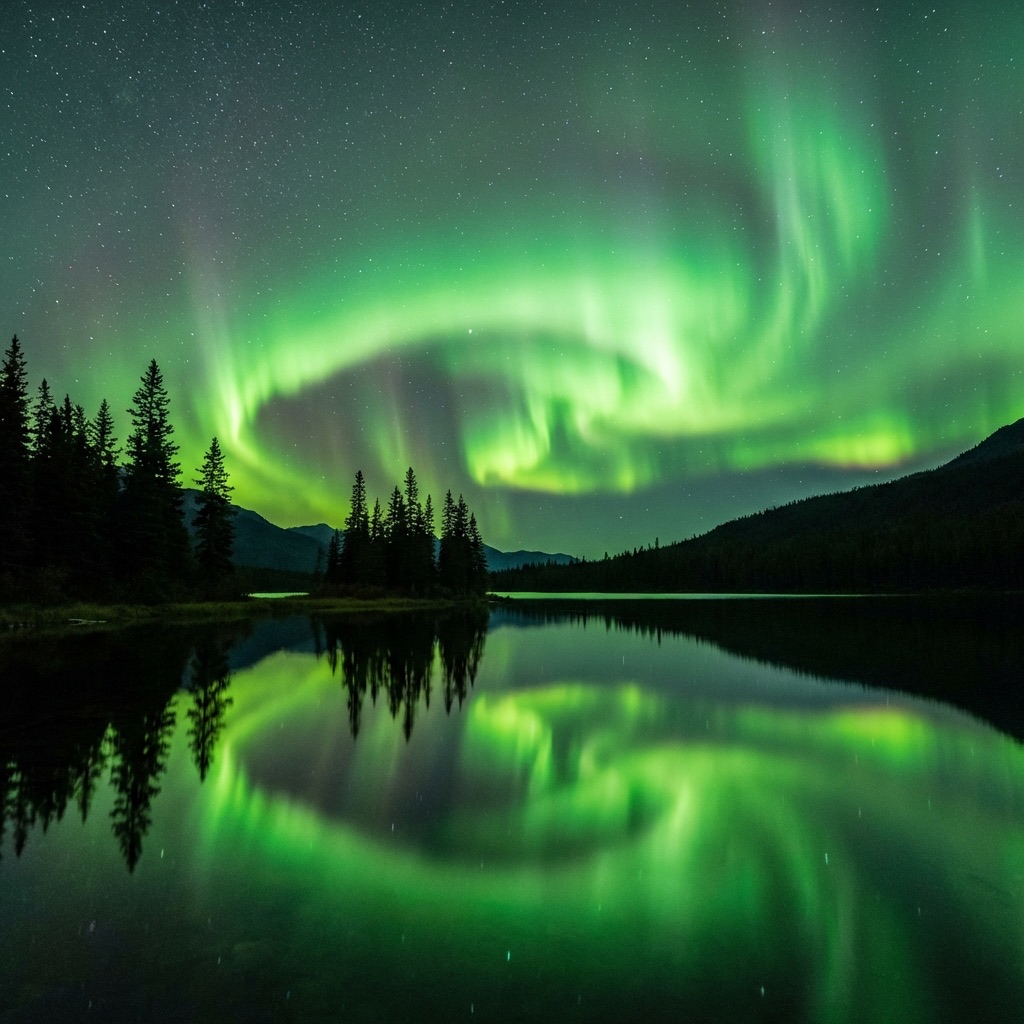
Aurora Photography: Settings & Gear for Stunning Shots
Master aurora photography with our complete guide. Learn the perfect camera settings, lens selection, and post-processing techniques for stunning results.
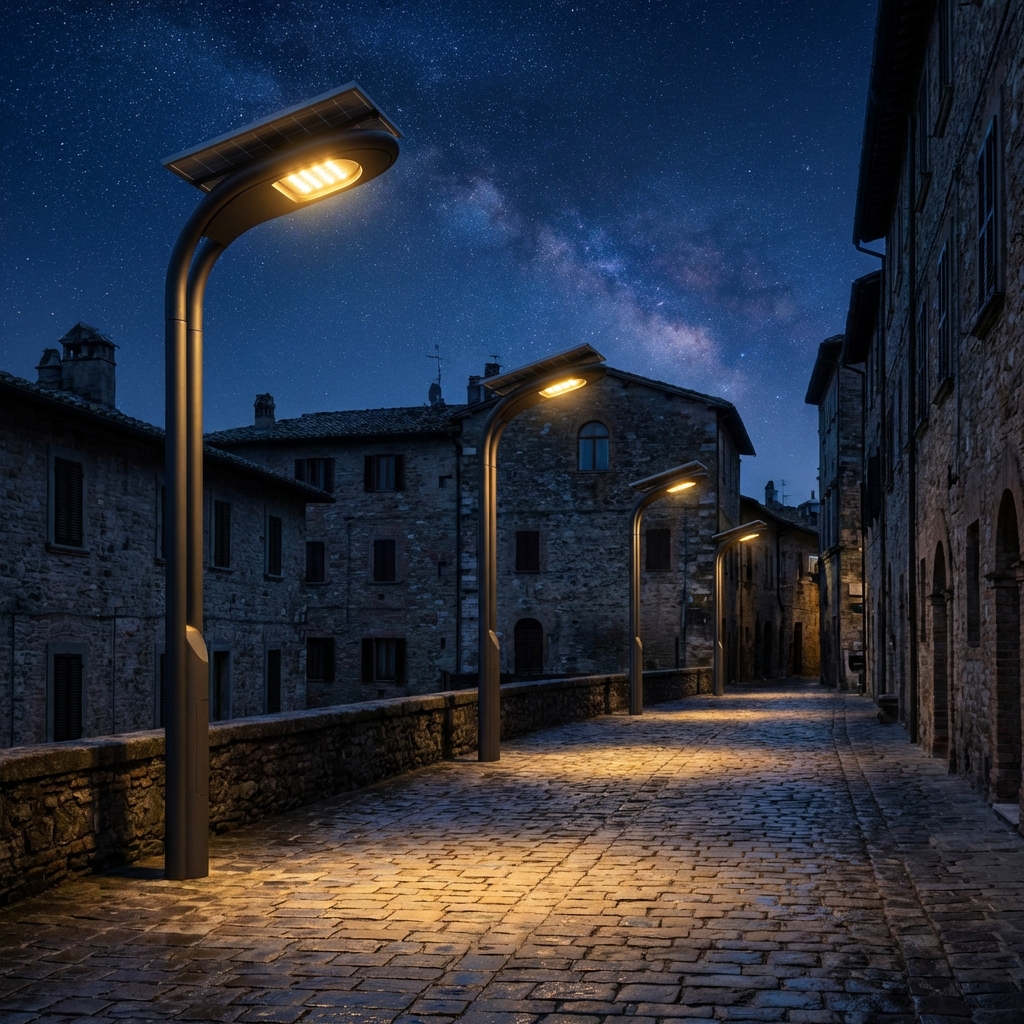
Light Pollution Solutions: Filters & Techniques
Fight back against city glow with the right light pollution filters and observing strategies. See more stars from your suburban backyard tonight.
End of Dossier • Research Complete