
Light Pollution Solutions: Filters & Techniques for Urban Astronomers
You don't have to live in the wilderness to enjoy the night sky. With the right filters and techniques, urban and suburban astronomers can reclaim views that light pollution has stolen. After years of observing from my Bortle 7 backyard, I've learned that equipment and strategy can cut through the worst skies. Here's how to fight back against the glow.
DH Research Lab
Data & Editorial Board
Expert Tested Gear & Affiliate Disclosure
This guide contains affiliate links. As an Amazon Associate, we earn from qualifying purchases.
01Understanding Light Pollution
Before you can fight light pollution, you need to understand what you're fighting.
Types of Light Pollution:
- Skyglow — The dome of light over cities visible from miles away
- Glare — Direct bright sources in your field of view
- Light Trespass — Neighbors' lights shining into your space
- Over-illumination — Simply too much light for the area
The Science: Most artificial lighting uses specific wavelengths. Sodium vapor produces a telltale orange. LEDs produce broad spectrum with blue peaks. Nebula filters exploit gaps in this spectrum where natural objects emit light but artificial sources don't.
Check your Bortle class on our Dark Sky Map to understand your starting point.
Good News About LEDs... Sort Of
02Filter Types Explained
Astronomical filters block light pollution wavelengths while passing wavelengths from celestial objects.
Light Pollution Filters (Broadband):
- Block sodium and mercury vapor wavelengths
- Slightly improve contrast in suburban skies
- Work on all objects (stars, planets, DSOs)
- Examples: Orion SkyGlow, Lumicon Deep Sky
Narrowband Filters:
- Block everything except specific nebula emission lines
- Dramatic improvement on emission nebulae
- Useless for stars, galaxies, planets
- Examples: UHC (Ultra High Contrast), OIII, H-alpha
Line Filters:
- Ultra-narrow pass at single wavelength
- Maximum contrast on specific targets
- Very dark, requires large aperture
- Examples: 7nm or 3nm H-alpha, OIII
| Filter Type | Best For | Blocks |
|---|---|---|
| Broadband | General observing | Sodium, mercury |
| UHC | Emission nebulae | Most except OIII, H-beta |
| OIII | Planetary nebulae | Everything except 500nm |
| H-alpha | Emission/star-forming regions | Everything except 656nm |
Orion SkyGlow Astrophotography Filter
“Broadband filter that blocks common light pollution wavelengths.”
RATIONALE
The best all-rounder for visual and photographic use from suburban sites. Noticeable improvement on most targets.
03Best Filters for Visual Observing
For Nebulae (Emission): The UHC filter is the urban astronomer's best friend. It passes OIII (500nm) and H-beta (486nm) wavelengths while blocking nearly everything else.
Results:
- Orion Nebula: Dramatically improved structure
- Veil Nebula: Visible from suburban sites
- Ring Nebula: Pops against sky background
For Planetary Nebulae: OIII filters make planetary nebulae visible where they'd otherwise be impossible. The Blinking Planetary, Eskimo Nebula, and Cat's Eye all benefit.
For Planets: Light pollution filters don't help planets much—they're bright enough already. But colored filters (blue, green, yellow, red) can enhance specific features:
- Blue: Jupiter's cloud bands
- Red: Mars surface features
- Yellow: Saturn's rings
For Galaxies and Star Clusters: Sadly, no filter helps here. Galaxies and clusters emit broad-spectrum light, so any filter that blocks light pollution also blocks your target. Better to chase darker sites for these objects.
UHC Filter
Best overall for nebulae from light-polluted sites.
OIII Filter
Specialized for planetary nebulae.
No Help
Galaxies need dark skies, not filters.
04Filters for Astrophotography
Imagers have more options than visual observers because cameras can handle very narrow filters.
Broadband (One-Shot Color Cameras):
- Light pollution filters help but can't eliminate color casts
- Best for widefield Milky Way shots from suburbs
- Examples: Optolong L-Pro, IDAS LPS-D2
Narrowband (CCD/CMOS Monochrome):
- Complete immunity to light pollution
- Shoot through full moon or city glow
- Requires monochrome camera and filter wheel
- H-alpha, OIII, SII filters for Hubble palette
Duo-Narrowband (One-Shot Color):
- Passes H-alpha AND OIII simultaneously
- Works with color cameras
- Great balance of convenience and LP rejection
- Examples: Optolong L-eXtreme, Antlia ALP-T
For serious urban astrophotography, nothing beats narrowband. I've shot 8-hour exposures from my backyard next to streetlights with zero LP impact.
Optolong L-eXtreme Dual Narrowband Filter
“Passes H-alpha and OIII with extreme LP rejection for color cameras.”
RATIONALE
This filter changed my astrophotography. Shooting from Bortle 7, I get results comparable to dark sites.
05Techniques That Don't Require Filters
Filters aren't the only solution. Strategic observing can dramatically improve your experience:
Object Selection
- Focus on bright targets: planets, Moon, double stars
- Emission nebulae visible under LP: Orion, Swan, Lagoon
- Globular clusters punch through LP well
- Save galaxies for dark sky trips
Timing
- Observe when targets are highest (least atmosphere)
- After midnight, many lights turn off
- Winter = longer nights, often clearer skies
- Target objects away from light domes on horizon
Site Optimization
- Shield direct light sources with buildings, fences
- Let eyes fully adapt (30 minutes minimum)
- Use only red light
- Sit with your back to the brightest direction
Equipment Tricks
- Higher magnification darkens background, improves contrast
- Larger aperture gathers more light, overpowers LP
- Cooled cameras reduce noise for longer exposures
Check conditions on our Dashboard — transparency and seeing matter even from urban sites.
The 30-Minute Rule
06Advocacy: Reducing Light Pollution
The best filter is... less light pollution. You can make a difference:
At Home:
- Install motion sensors on outdoor lights
- Use shielded fixtures that point down
- Choose warm (2700K or lower) bulbs
- Turn off unnecessary lights at night
In Your Community:
- Attend city council meetings about lighting ordinances
- Educate neighbors about light trespass
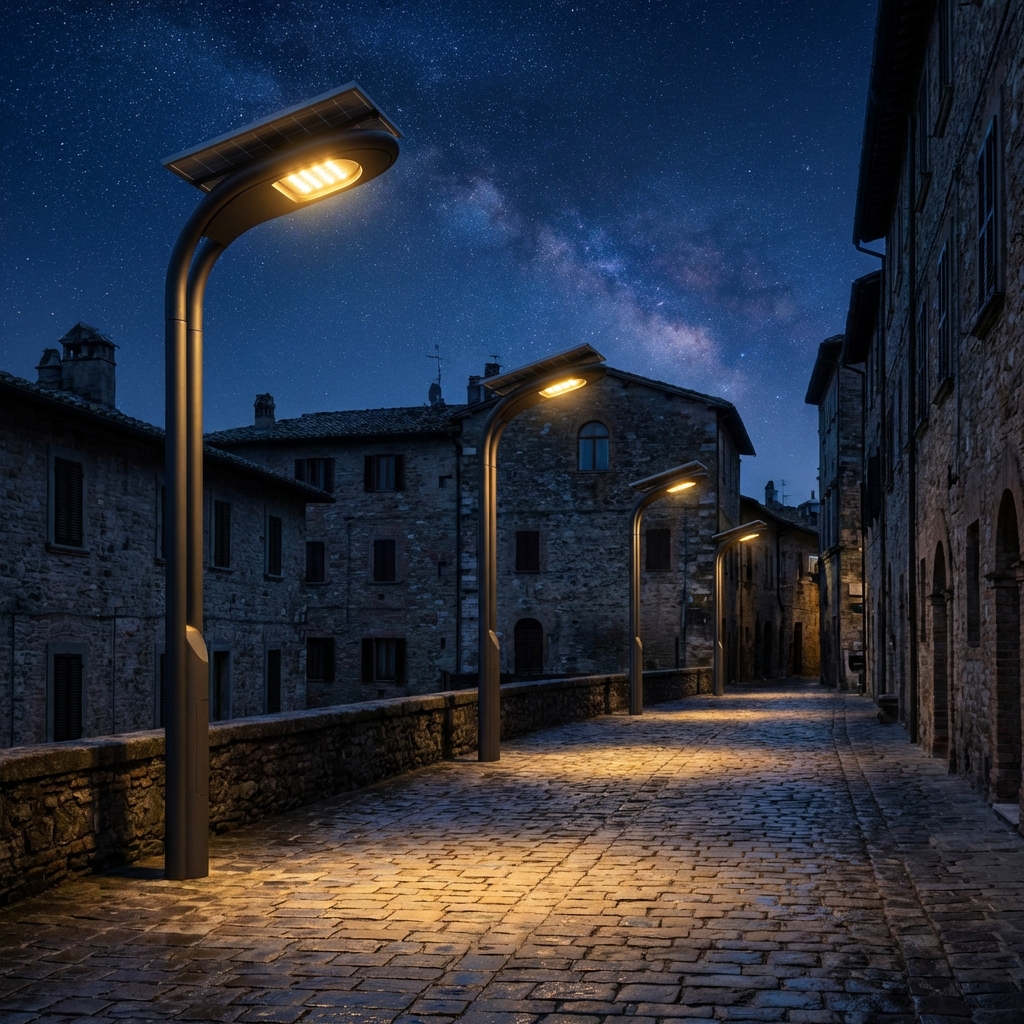
- Advocate for dark-sky compliant streetlights
- Join the International Dark-Sky Association
Dark Sky Places:
- Support designated Dark Sky Parks and Reserves
- Visit them! Tourism dollars = conservation funding
- Report violations of lighting codes
The Business Case:
- Shielded lighting saves energy
- LEDs have long payback periods
- Dark sky tourism brings revenue
Every fixture you improve helps all astronomers in your area. Check our Dark Sky Map to see how your region compares globally—and what could be improved.
LEONLITE LED Outdoor Wall Light
“Dark-sky compliant, fully shielded, warm 2700K, motion-sensor equipped.”
RATIONALE
Replace your porch light with this. Shielded design eliminates upward light pollution while keeping your property safe.
07Urban Observing Target List
Here are my go-to targets for Bortle 6-8 skies:
No Filter Needed:
| Target | Type | Notes |
|---|---|---|
| Moon | Planetary | Always spectacular |
| Jupiter | Planet | Moons, cloud bands |
| Saturn | Planet | Rings visible in any scope |
| Mars (at opposition) | Planet | Surface features |
| Albireo | Double star | Beautiful color contrast |
| M13 | Globular cluster | Still impressive from cities |
| M45 Pleiades | Open cluster | Naked eye star cluster |
With UHC Filter:
| Target | Type | Bortle Limit |
|---|---|---|
| M42 Orion Nebula | Emission | Visible anywhere |
| M27 Dumbbell | Planetary | 6-7 |
| NGC 7000 North America | Emission | 5-6 |
| M57 Ring | Planetary | 6-7 |
| NGC 7293 Helix | Planetary | 5-6 |
With OIII Filter:
| Target | Type | Bortle Limit |
|---|---|---|
| M1 Crab | Supernova remnant | 5-6 |
| NGC 6826 Blinking | Planetary | 6-7 |
| Veil Nebula | Supernova remnant | 5-6 |
Don't let light pollution stop you. Get out there tonight! 🔭
Don't waste a clear-night chance
Get the field checklist, then use DarkestHour to decide if tonight's sky is actually worth your time, setup or travel.
Learn first. Decide with the map.
DarkestHour guides are free trust builders. Use them to understand conditions, then use Pro for saved spots, alerts and best-night decisions.
Find Your Darkest Sky
Use our real-time satellite maps to find locations with zero light pollution.
Launch Interactive MapYour Learning Roadmap
You've mastered the intermediate basics. The next logical step in your technical progression is mastering advanced deep sky setups.
MANDATORY FIELD EQUIPMENT
Celestron NexStar 8SE
The gold standard for deep-sky observation. 203mm aperture for maximum light gathering.
ZWO Seestar S50
Fully robotic imaging system. Perfect for urban environments and rapid deployment.
Peak Design Travel Tripod
Zero-latency stability for long exposure astrophotography. Carbon fiber construction.
Continue Your Research
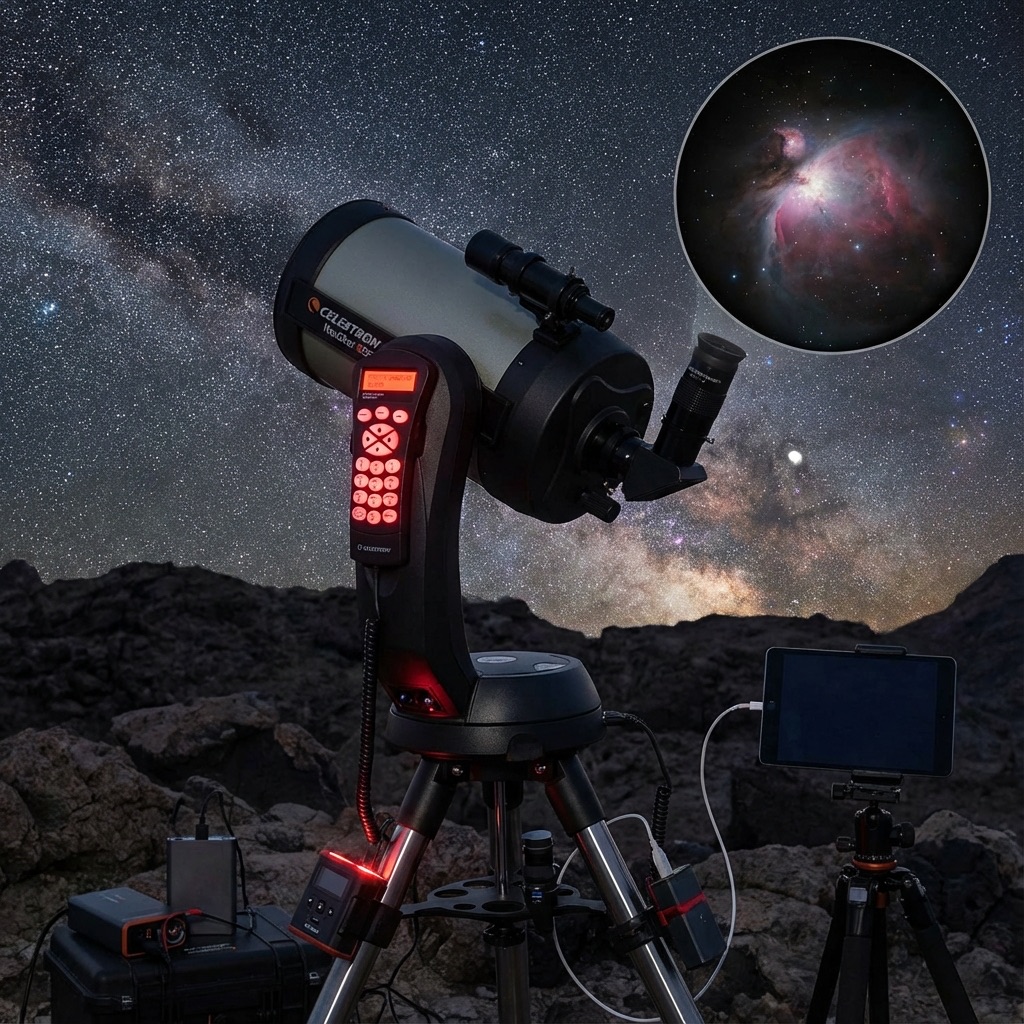
Astronomy Gear for Hobbyists: GoTo Scopes & Eyepieces
Upgrade your view with computerized GoTo telescopes, wide-field 82° eyepieces, and OIII filters that reveal hidden details in nebulae and galaxies.
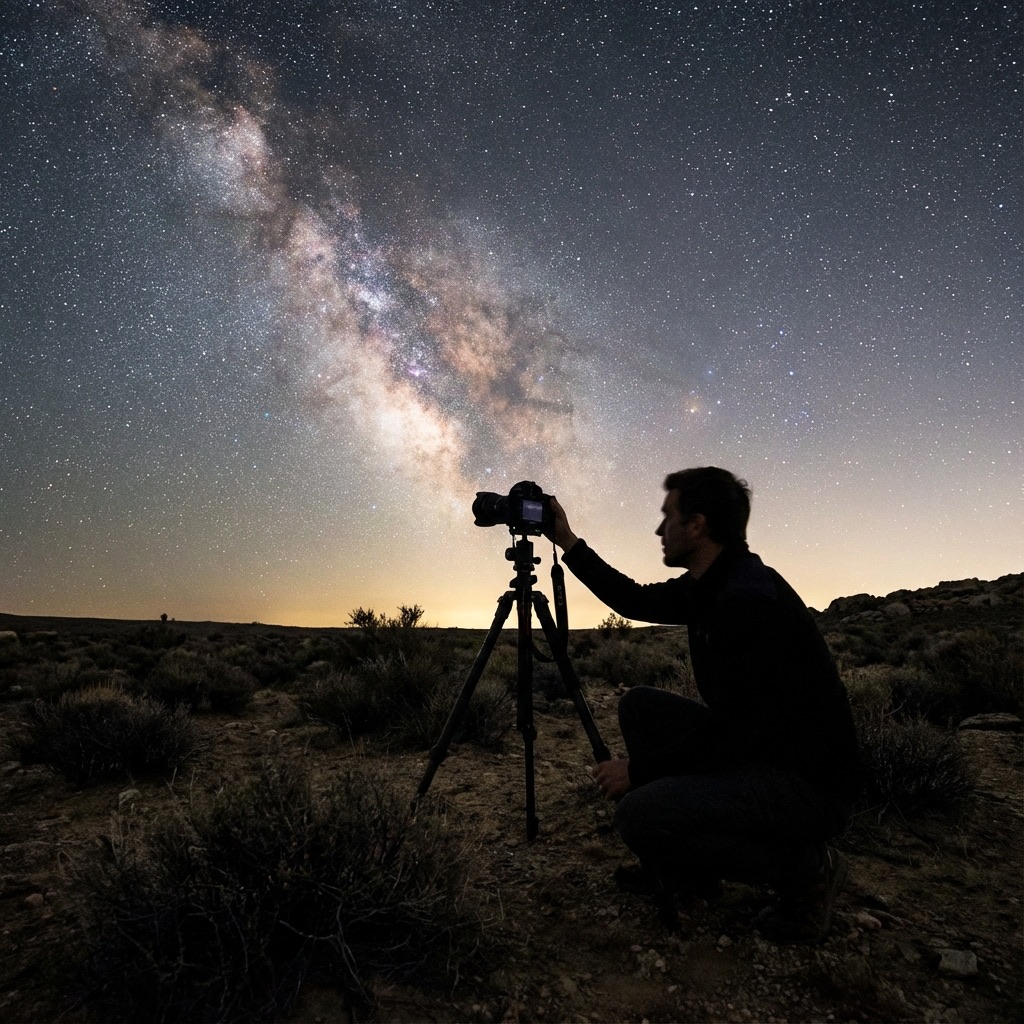
Astrophotography on a Budget: Milky Way for Under $500
Learn to photograph the night sky with affordable equipment. Our complete gear guide shows you how to capture the Milky Way for under $500.
Astrophotography Post-Processing: From RAW to Stunning
Transform flat, noisy RAW files into vibrant, detailed images. Our step-by-step post-processing guide covers stacking, stretching, and color correction.
End of Dossier • Research Complete