
Dwarf III Review: The Ultimate Pocket-Sized Astrophotography Robot (2026)
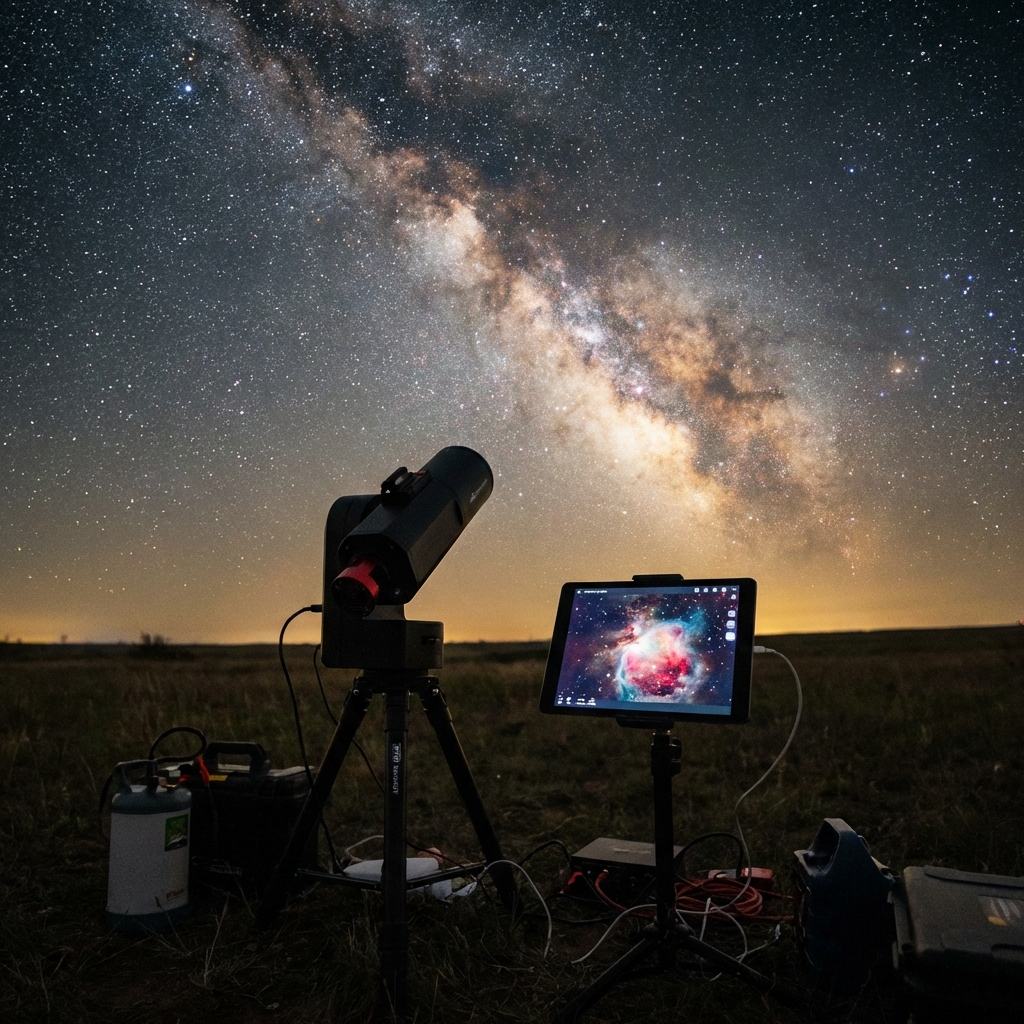
Iterating on the Dwarf II, the Dwarf III from Dwarflab features a dual-lens architecture and updated sensor geometry. It represents the only astrophotography rig capable of fitting within a hiking jacket pocket. We analyze its field performance and portability.
DH Research Lab
Data & Editorial Board
Expert Tested Gear & Affiliate Disclosure
This guide contains affiliate links. As an Amazon Associate, we earn from qualifying purchases.
01Dual Lenses: Why Two are Better Than One
The standout feature of the Dwarf III is its dual-camera system. One lens is a wide-angle 'finder' and the other is a dedicated telephoto for deep sky.
The Advantage:
- Instant Orientation: Unlike single-lens scopes that can get 'lost' in the void, the Dwarf III uses its wide field to plate-solve instantly.
- The World's Best Panoramas: Because it knows exactly where it is in the sky, it can stitch together massive 50-megapixel mosaics of the Milky Way or the Moon automatically.
Dual Sony Sensors
Optimized for high-speed readout and low-noise night shots.
Ultra-Portable
Fits in a jacket pocket. Weighs under 1.2kg.
Day/Night Hybrid
AI tracking works for birds and wildlife as well as nebulae.
02Performance-to-Aperture Ratio
Despite a smaller aperture than the Seestar, the Dwarf III's 'fast' optics maintain a competitive SNR. In testing, it resolved the Helix Nebula structure in 45 minutes of integration from a Bortle 4 site.
Key Specs:
- Aperture: 35mm Periscope Design
- Focal Length: 150mm (Tele) / 24mm (Wide)
- Filters: Magnetic filter holder for UHC/OIII/Solar filters.
03The Hiking Workflow: Stars on the Summit
If you're a backpacker, the Dwarf III is your only real choice.
- The Battery Hack: It charges via USB-C. You can run it for 12+ hours straight by plugging it into a standard 10,000mAh power bank.
- The Tripod: It's so light you don't need a heavy astro-tripod. A sturdy GorillaPod is enough to keep it level on uneven rock.
- Offline Mode: The app works perfectly without cell service—essential for those deep mountain escapes.
04Dwarf III vs Seestar S50: Which to Buy?
It comes down to your primary use case:
- Buy Seestar S50 IF: You want the absolute best detail on small nebulae and galaxies. The 50mm aperture wins on raw resolution.
- Buy Dwarf III IF: You value weight above all else, or if you want to shoot massive wide-field mosaics of the sky.
Frequently Asked Questions
Q:How does the Dwarf III dual-lens system work?
The Dwarf III uses a 24mm wide-angle lens for 'star-mapping' and plate solving, and a 150mm telephoto lens for high-resolution deep-sky imaging. The wide-angle camera helps the telescope orient itself instantly, while the telephoto captures the detail of nebulae and galaxies.
Q:Is the Dwarf III better than the Seestar S50?
It depends on your needs. The Dwarf III is more portable and better for wide-field mosaics (panoramas of the Milky Way). The Seestar S50 has a larger 50mm aperture, which provides slightly better resolution and detail on small, faint deep-sky objects.
Q:Can I use the Dwarf III for birding or wildlife photography?
Yes! Unlike most astronomical telescopes, the Dwarf III has a dedicated terrestrial mode with AI-powered tracking for birds and fast-moving animals. Its compact size makes it a perfect companion for hikers and nature photographers.
Q:What filters can I use with the Dwarf III?
The Dwarf III features a magnetic filter holder that supports 1.25-inch or 2-inch filters with adapters. It is commonly used with UHC or dual-band light pollution filters for city astrophotography, as well as solar filters for daytime observing.
Q:Does the Dwarf III support RAW files (FITS)?
Yes, the Dwarf III can save both processed JPGs and raw FITS/TIFF files to its internal storage. These raw files are essential if you want to perform advanced post-processing on a computer using software like Siril or PixInsight.
Don't waste a clear-night chance
Get the field checklist, then use DarkestHour to decide if tonight's sky is actually worth your time, setup or travel.
Learn first. Decide with the map.
DarkestHour guides are free trust builders. Use them to understand conditions, then use Pro for saved spots, alerts and best-night decisions.
Find Your Darkest Sky
Use our real-time satellite maps to find locations with zero light pollution.
Launch Interactive MapYour Learning Roadmap
You've mastered the astrophotography basics. The next logical step in your technical progression is mastering astrophotography workflows.
MANDATORY FIELD EQUIPMENT
Celestron NexStar 8SE
The gold standard for deep-sky observation. 203mm aperture for maximum light gathering.
ZWO Seestar S50
Fully robotic imaging system. Perfect for urban environments and rapid deployment.
Peak Design Travel Tripod
Zero-latency stability for long exposure astrophotography. Carbon fiber construction.
Continue Your Research
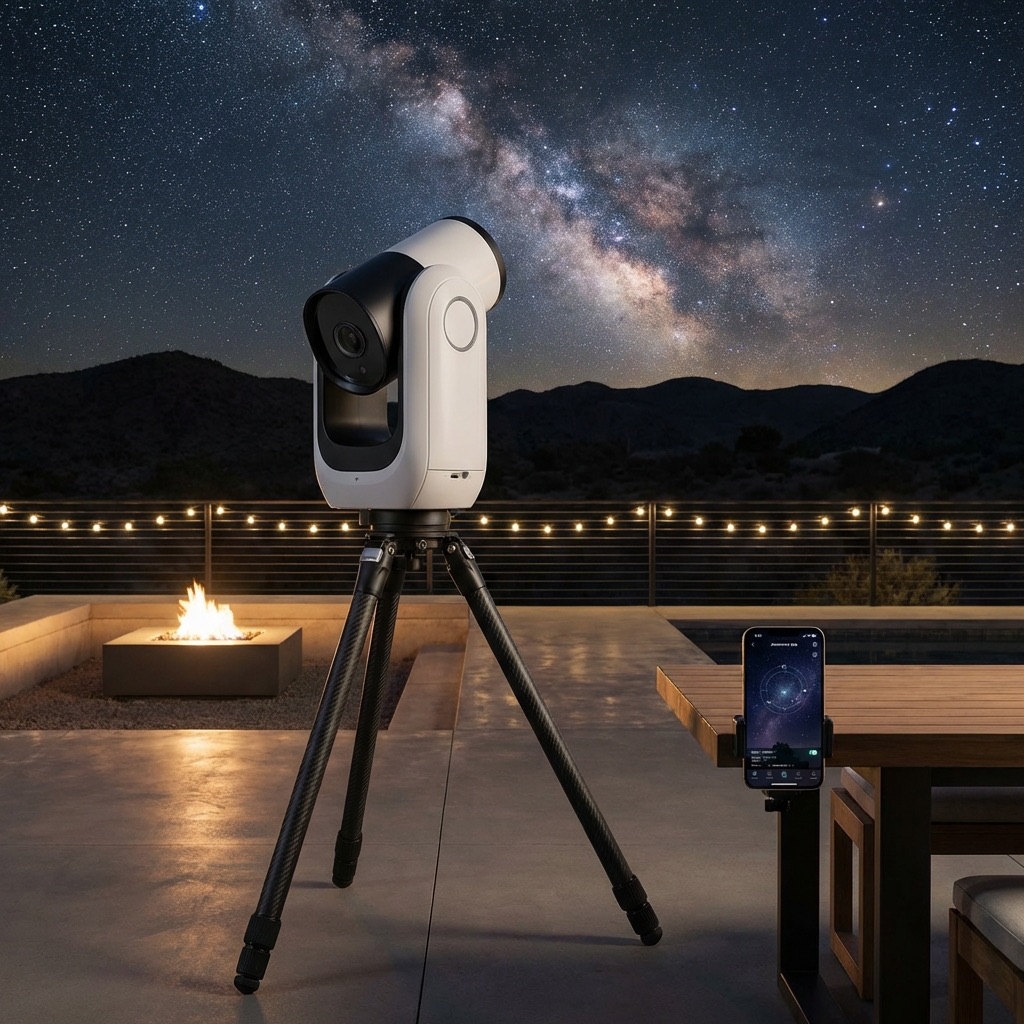
The Smart Telescope Revolution: Seestar, Origin, & Dwarf 3
Robots are taking over astrophotography. Compare the best smart telescopes of 2026: Seestar S50 vs Celestron Origin vs Dwarf 3.
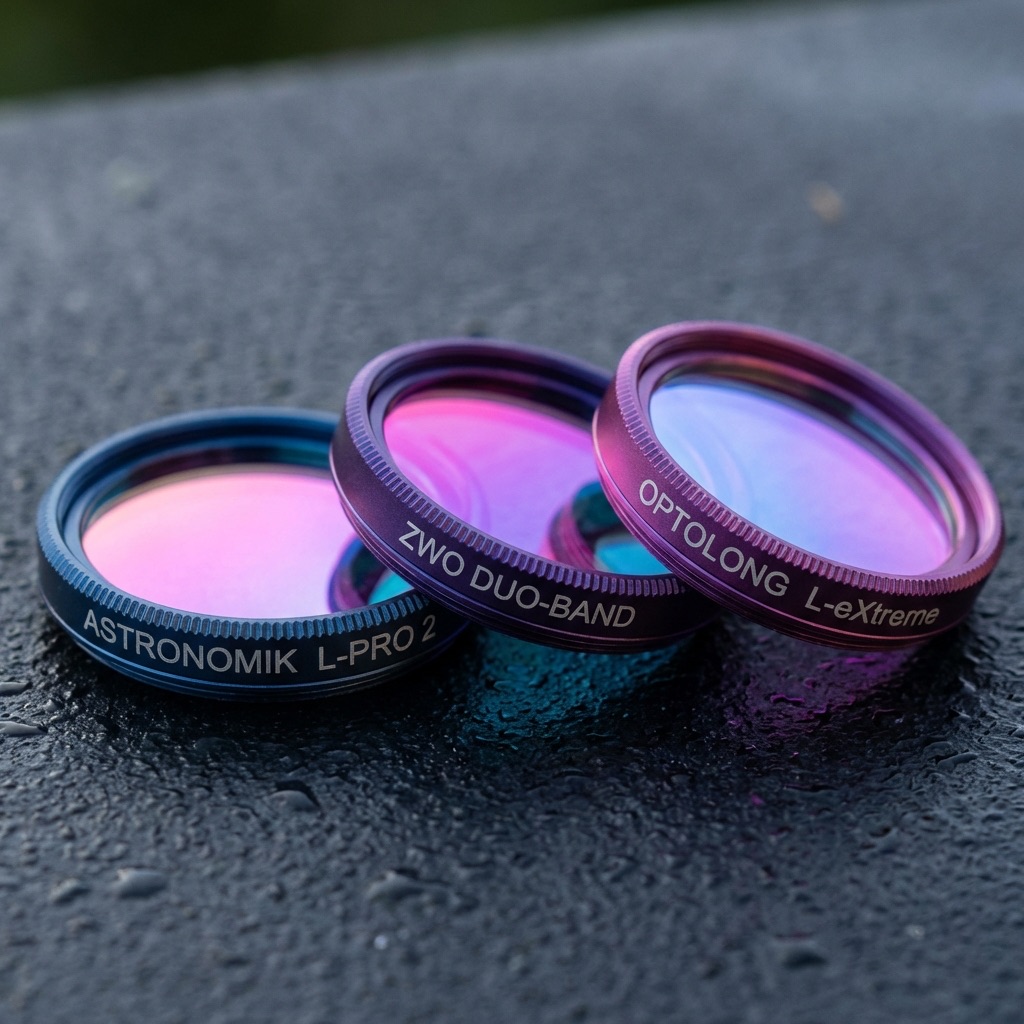
Best Astronomy Filters (2026): City Light Solutions
The dark sky cheat code. We review the best light pollution filters (Optolong L-Extreme, Antlia, SvBony) for city astrophotography.
ZWO Seestar S50 Deep Dive: City Astrophotography Made Easy
The Seestar S50 is a game-changer for urban observers. Learn how to capture stunning nebulae from your backyard in minutes.
End of Dossier • Research Complete