
Best Astronomy Filters (2026): Seeing Through the City Lights
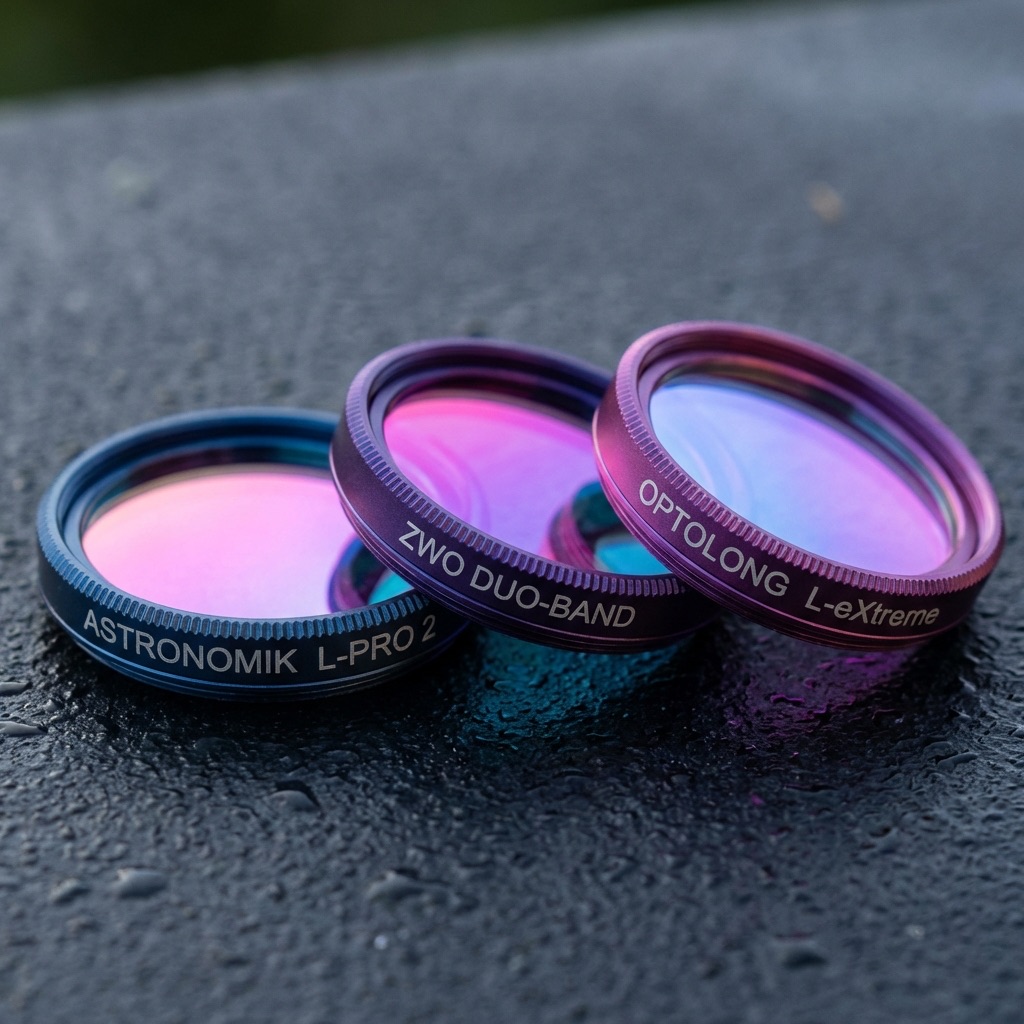
The #1 question we get is: 'I live in a city, can I still see nebulae?' The answer is yes, but you need the right glass. Modern multi-narrowband filters are magic. They block 99% of artificial light while letting the specific wavelengths of emission nebulae pass through. Here is our buyer's guide.

DH Research Lab
Data & Editorial Board
Expert Tested Gear & Affiliate Disclosure
This guide contains affiliate links. As an Amazon Associate, we earn from qualifying purchases.
01Broadband vs. Narrowband
Understanding the difference is key to saving money.
Broadband Filters (UHC / CLS): These block specific chunks of the spectrum associated with old streetlights (Sodium/Mercury vapor).
- Best For: Visual observation, galaxies, broad spectrum targets.
- Problem: Modern LED streetlights emit all wavelengths, making these less effective than they used to be.
Narrowband Filters (Duo-Band / Tri-Band): These block everything except the specific lines emitted by ionized gas (Hydrogen Alpha and Oxygen III).
- Best For: Emission nebulae (Orion, Lagoon, North America).
- Result: You can shoot dim nebulae from downtown Tokyo or New York.
Nebulae Only
02Best Budget Filter: SvBony SV220
You don't need to spend $400 to start. The SvBony SV220 is a 7nm dual-band filter that punches way above its weight.
It isolates Ha (Hydrogen) and OIII (Oxygen). It works with color cameras (OSC) and allows you to capture the Veil Nebula from a Bortle 8 zone.
SvBony SV220 Dual-Band Filter
“The best value 7nm narrowband filter on the market.”
RATIONALE
At 7nm bandpass, it cuts out almost all moon and city light. Essential for beginner astrophotographers.
03The Gold Standard: Optolong L-Ultimate
If you want the absolute best performance for a color camera, this is it. The L-Ultimate is a 3nm filter.
7nm is good; 3nm is professional. The contrast is unbelievable. It creates pitch-black backgrounds even purely under a full moon. It separates the faintest wisps of gas from the background glow.
Optolong L-Ultimate 3nm
“The heavy hitter. 3nm bandpass for supreme contrast.”
RATIONALE
This is the 'cheat code' for city astrophotography. If you can afford it, buy this once and never upgrade.
04Visual Filters: Seeing with your Eyes
For visual observers (looking through an eyepiece), narrowband is too dark. You need an OIII or UHC filter.
OIII (Oxygen III): The 'Nebula Killer'. It makes the Veil Nebula pop out of nowhere. It dims the stars significantly, leaving the ghostly glow of the nebula behind.
UHC (Ultra High Contrast): A gentler filter that darkens the background sky, increasing contrast for almost all deep sky objects.
Don't waste a clear-night chance
Get the field checklist, then use DarkestHour to decide if tonight's sky is actually worth your time, setup or travel.
Learn first. Decide with the map.
DarkestHour guides are free trust builders. Use them to understand conditions, then use Pro for saved spots, alerts and best-night decisions.
Find Your Darkest Sky
Use our real-time satellite maps to find locations with zero light pollution.
Launch Interactive MapYour Learning Roadmap
You've mastered the astrophotography basics. The next logical step in your technical progression is mastering astrophotography workflows.
MANDATORY FIELD EQUIPMENT
Celestron NexStar 8SE
The gold standard for deep-sky observation. 203mm aperture for maximum light gathering.
ZWO Seestar S50
Fully robotic imaging system. Perfect for urban environments and rapid deployment.
Peak Design Travel Tripod
Zero-latency stability for long exposure astrophotography. Carbon fiber construction.
Continue Your Research
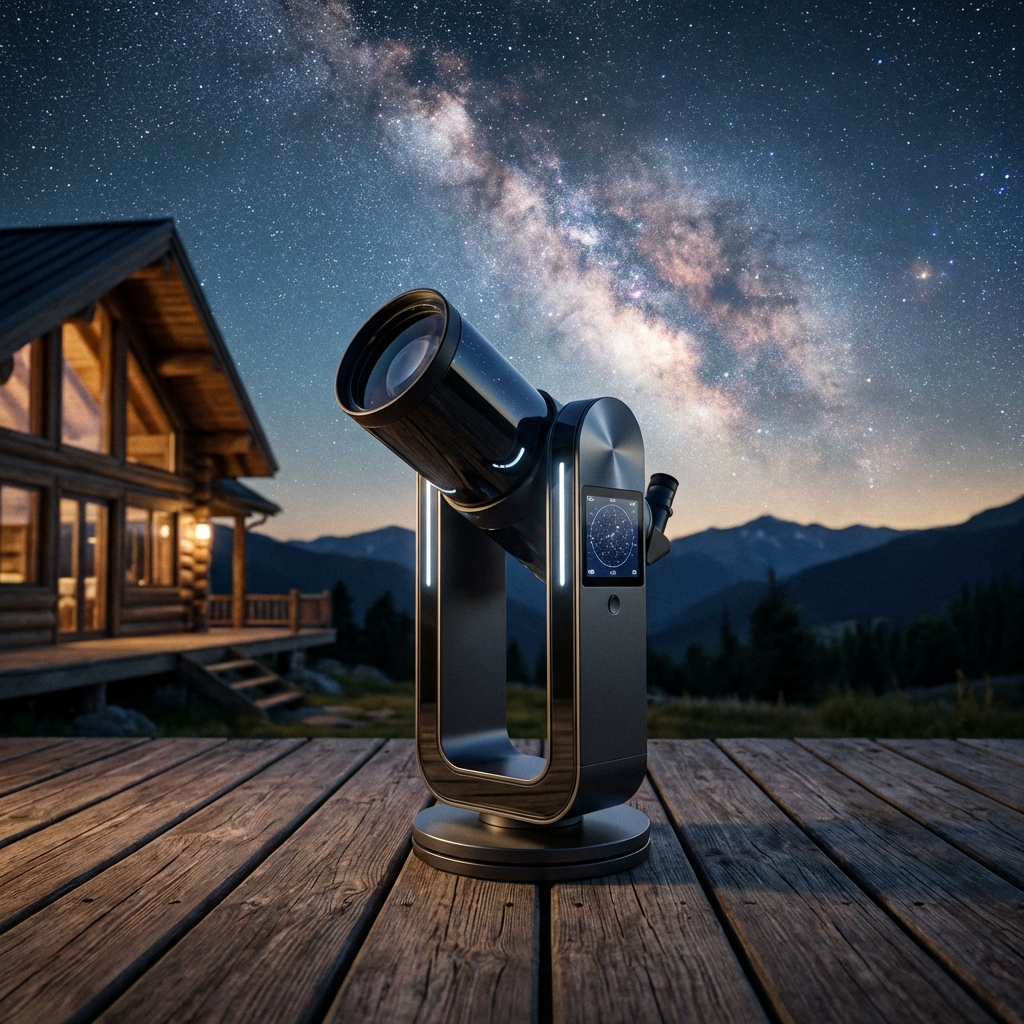
Dwarf III Review: The Ultimate Pocket-Sized Smart Telescope
Tiny but powerful. Discover why the Dwarf III is the best travel telescope for wide-field astrophotography and wildlife spotting.
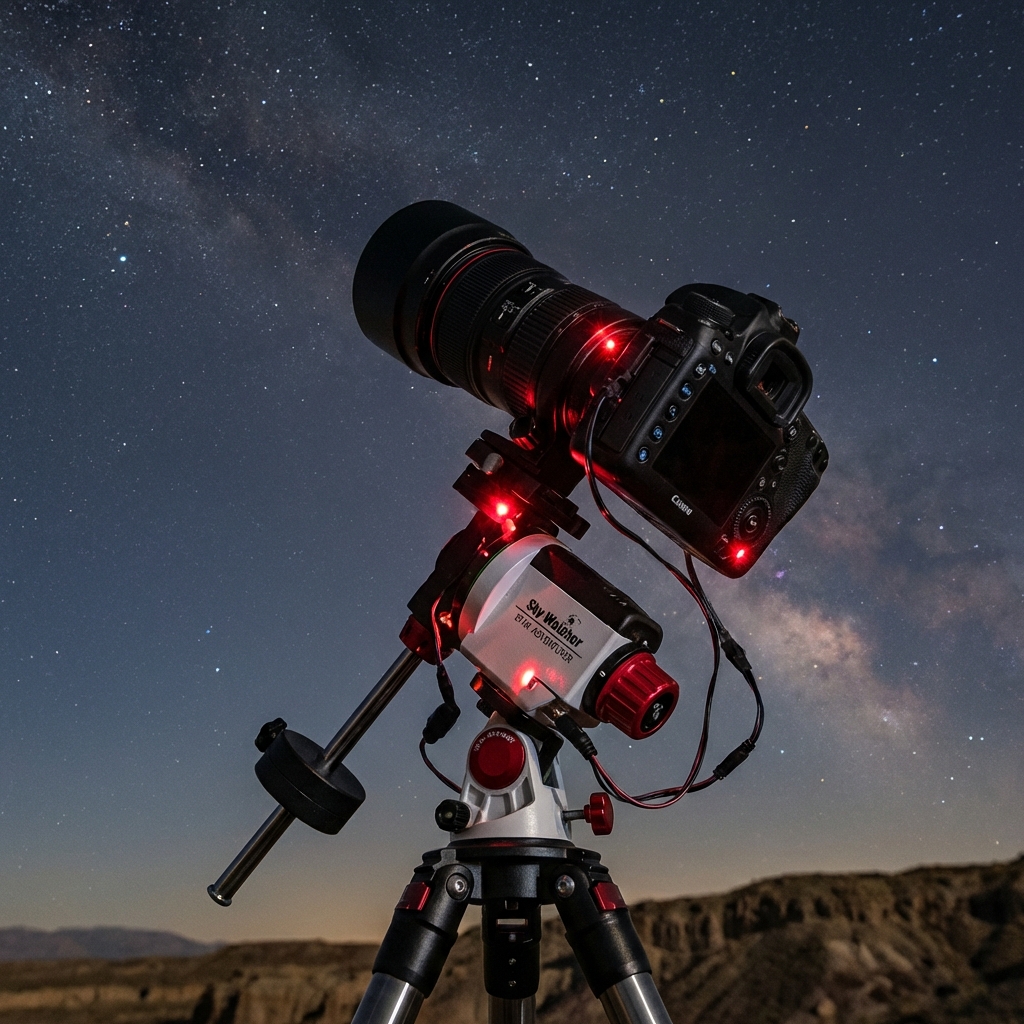
Star Trackers & Long Exposures: How to Turn the Earth Off
Why a star tracker is the biggest upgrade for astrophotography. We cover polar alignment, NPF rule vs tracked, and recommended gear.
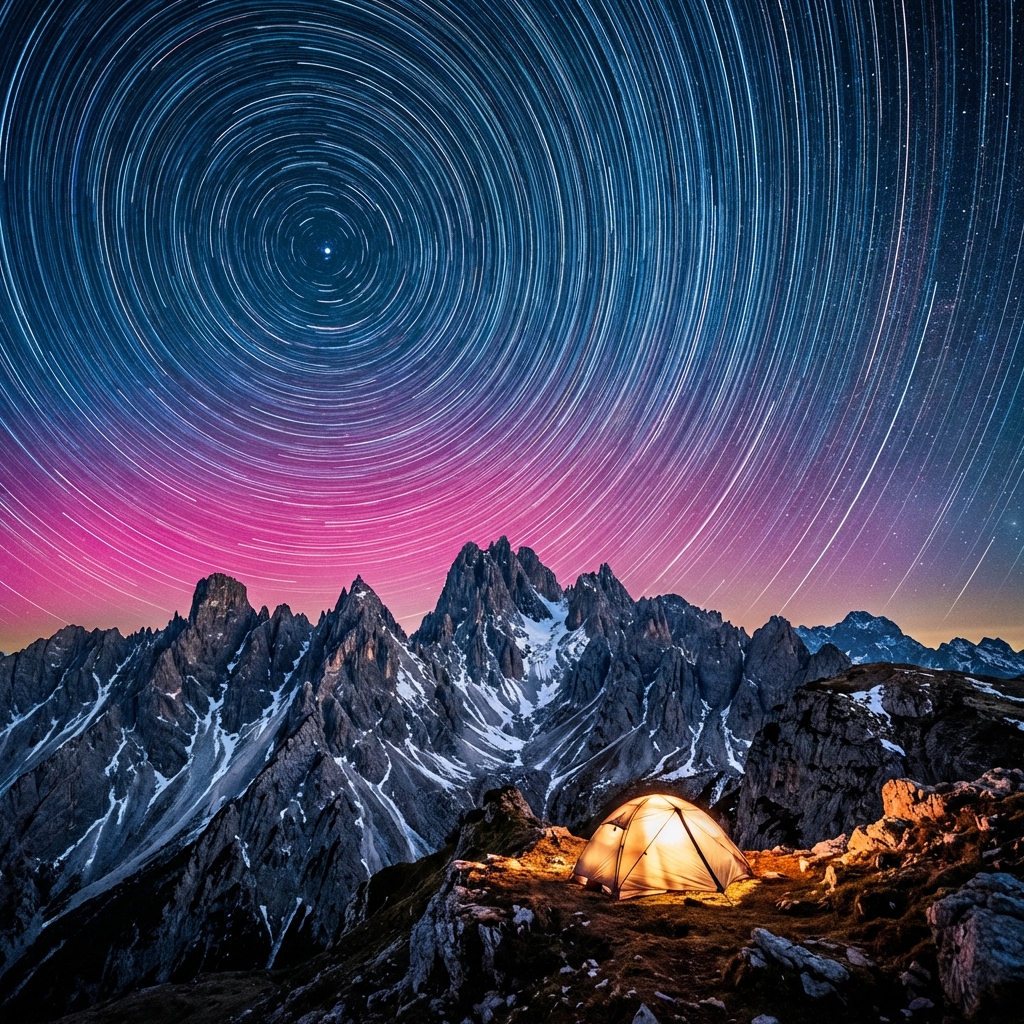
Astrophotography Time-lapses: The Egg Timer Hack
Create mesmerizing motion videos of the night sky. Includes the $10 'Egg Timer' panning technique and day-to-night transition tips.
End of Dossier • Research Complete