Escape the Slc Lights: Best Stargazing Locations
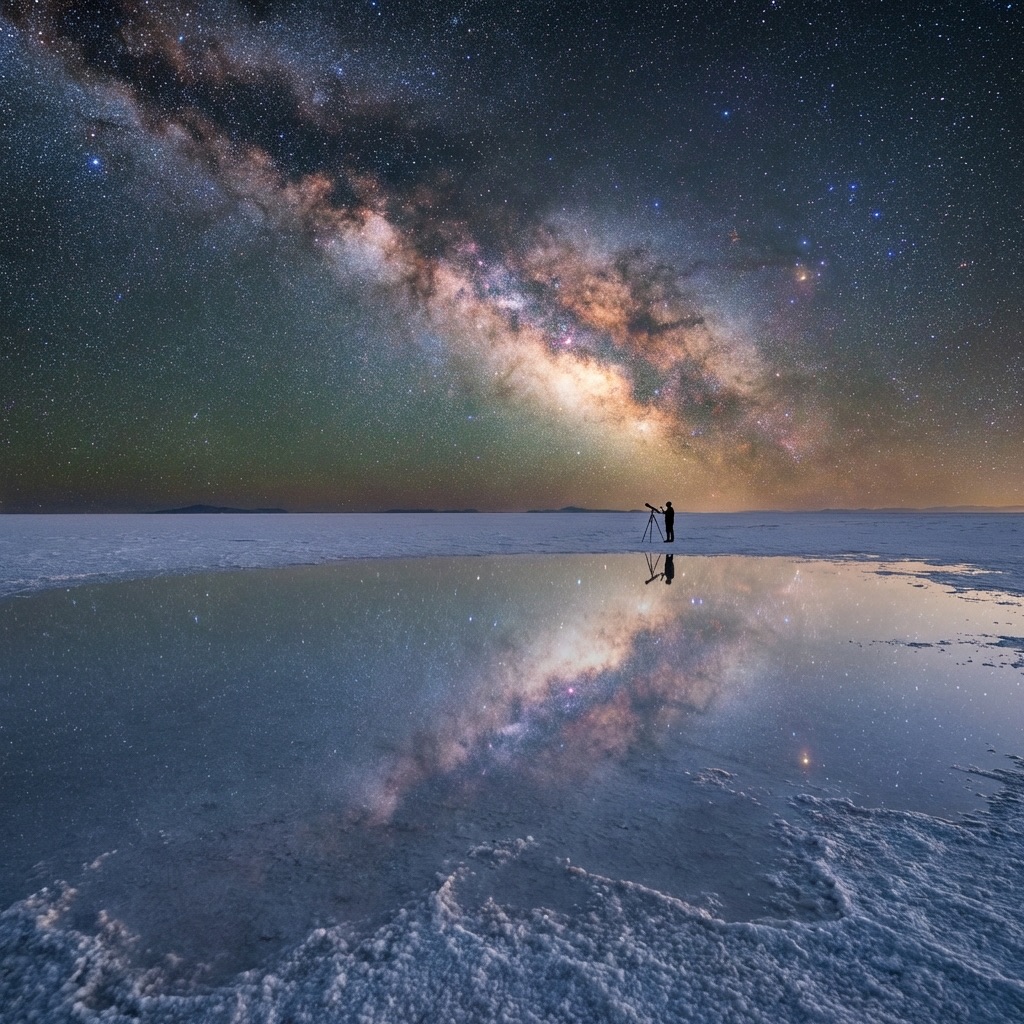
The artificial skyglow of Slc drowns out most celestial objects, leaving only the brightest planets visible. But just a few hours away, the true night sky emerges. Here is where local astronomers go to find the stars.
DH Research Lab
Data & Editorial Board
Expert Tested Gear & Affiliate Disclosure
This guide contains affiliate links. As an Amazon Associate, we earn from qualifying purchases.
01Understanding Local Light Pollution
Before heading out from Slc, always check the Bortle scale of your destination. The transition from the inner city (Bortle 8/9) to these locations represents a massive leap in visibility.
02Utah: The World's Dark Sky Leader
Utah has embraced dark sky preservation like no other state.
High and Dry: The combination of high elevation and desert air means there is very little moisture to scatter light. The 'seeing' conditions here are often professional-grade. Designated Parks: Utah boasts over 20 IDA-certified dark sky parks and communities, ensuring that even near major cities, darkness is protected. Year-Round Viewing: While winter is cold, the skies are exceptionally clear. Summer offers comfortable temperatures for viewing the galactic core.
Bortle Scale
031. Antelope Island State Park
Distance from SLC: 1 hour | Bortle Class: 3 | Best For: Closest certified Dark Sky Park
Antelope Island is a miracle of proximity. Just an hour from downtown SLC, it offers skies that are dark enough to see the Milky Way with stunning clarity.
Highlights:
- Surrounded by the Great Salt Lake, which acts as a natural buffer against city lights.
- Resident bison and pronghorn silhouettes for photography.
- Regular star parties hosted by the Ogden Astronomical Society.
Note: The park is famous for 'No-see-ums' (biting gnats) in the spring. Plan accordingly.
Stay22 - Antelope Island View Stays
“Find motels and stays in Syracuse/Layton near the park entrance.”
RATIONALE
Staying near the causeway allows you to maximize your night and avoid the long drive back to SLC after a session.
042. Uinta Mountains (Mirror Lake Highway)
Distance from SLC: 1.5 - 2 hours | Bortle Class: 2 | Best For: High elevation, pristine alpine darkness
The Uintas are Utah's highest mountains. Driving up the Mirror Lake Highway puts you at 10,000+ feet, far above most of the atmosphere's haze.
Why go:
- Bald Mountain Pass — Over 10,700 feet with incredible horizons.
- Mirror Lake — Perfect reflections of the Milky Way.
- Absolute silence and zero light pollution to the south and east.
Celestron SkyMaster 20x80 Binoculars
“Giant binoculars for deep-sky scanning.”
RATIONALE
In the thin air of the Uintas, these binoculars reveal the 'Andromeda Galaxy' not as a smudge, but as a detailed spiral.
053. Timpanogos Cave National Monument
Distance from SLC: 45 mins | Bortle Class: 4 | Best For: Mid-elevation mountain stargazing
Located in American Fork Canyon, the steep walls of the canyon shield the area from the lights of the Utah Valley.
Highlights:
- Popular spot for local star parties.
- High-altitude environment without the long drive of the Uintas.
- Great for planetary viewing where horizontal clarity is less critical.
Canyon Shield
The steep walls of American Fork Canyon block light from Lehi and Orem.
Transparency
The mountain air is significantly cleaner than the valley floor.
Quick Visit
Perfect for a weeknight session to catch a meteor shower.
064. North Fork Park (Ogden Valley)
Distance from SLC: 1 hour 15 mins | Bortle Class: 3 | Best For: First International Dark Sky Park in an urban county
North Fork Park near Liberty is a testament to community action. It's a gold-tier park that has maintained its darkness despite being in Weber County.
What to expect:
- Heavily wooded, providing great screening from any stray light.
- Dedicated astronomy program with the city of Ogden.
- Excellent for camping and deep-sky observing.
Educational Hub
075. Little Sahara Recreation Area
Distance from SLC: 1 hour 45 mins | Bortle Class: 3 | Best For: Sand dune foregrounds
Heading south toward the Sevier Desert, the Little Sahara offers a unique desert landscape with huge sand dunes.
Sites:
- Sand Mountain offers a massive, unobstructed view of the sky.
- Great for wide-angle Milky Way photography.
- Minimal light pollution from the small surrounding towns.
Alien World
The white sand dunes look like another planet under the full moon or stars.
Dry Heat
Evenings are usually warm and dry—perfect for long sessions.
OHV Area
Be aware of off-road vehicles. Head to the non-motorized dunes for the quietest experience.
086. Goblin Valley State Park
Distance from SLC: 3.5 hours | Bortle Class: 1-2 | Best For: The ultimate Utah dark sky experience
While a bit further, Goblin Valley is an International Dark Sky Park with some of the weirdest geology on Earth. It's an astrophotographer's dream.
Sony 14mm f/1.8 GM Lens
“Ultra-wide, ultra-fast lens for the ultimate Milky Way shots.”
RATIONALE
To capture the the 'Goblins' silhouettes and the full arc of the Milky Way, you need the widest, fastest glass available.
Don't waste a clear-night chance
Get the field checklist, then use DarkestHour to decide if tonight's sky is actually worth your time, setup or travel.
Learn first. Decide with the map.
DarkestHour guides are free trust builders. Use them to understand conditions, then use Pro for saved spots, alerts and best-night decisions.
Find Your Darkest Sky
Use our real-time satellite maps to find locations with zero light pollution.
Launch Interactive MapPlan Your Deployment
Ready to experience these dark skies yourself? Use our interactive map to find the best dark-sky certified hotels, desert cabins, and observatories near this location.
Booking through this map supports Darkest Hour's light pollution research.
Your Learning Roadmap
You've mastered the travel basics. The next logical step in your technical progression is mastering astrophotography workflows.
MANDATORY FIELD EQUIPMENT
Celestron NexStar 8SE
The gold standard for deep-sky observation. 203mm aperture for maximum light gathering.
ZWO Seestar S50
Fully robotic imaging system. Perfect for urban environments and rapid deployment.
Peak Design Travel Tripod
Zero-latency stability for long exposure astrophotography. Carbon fiber construction.
Continue Your Research
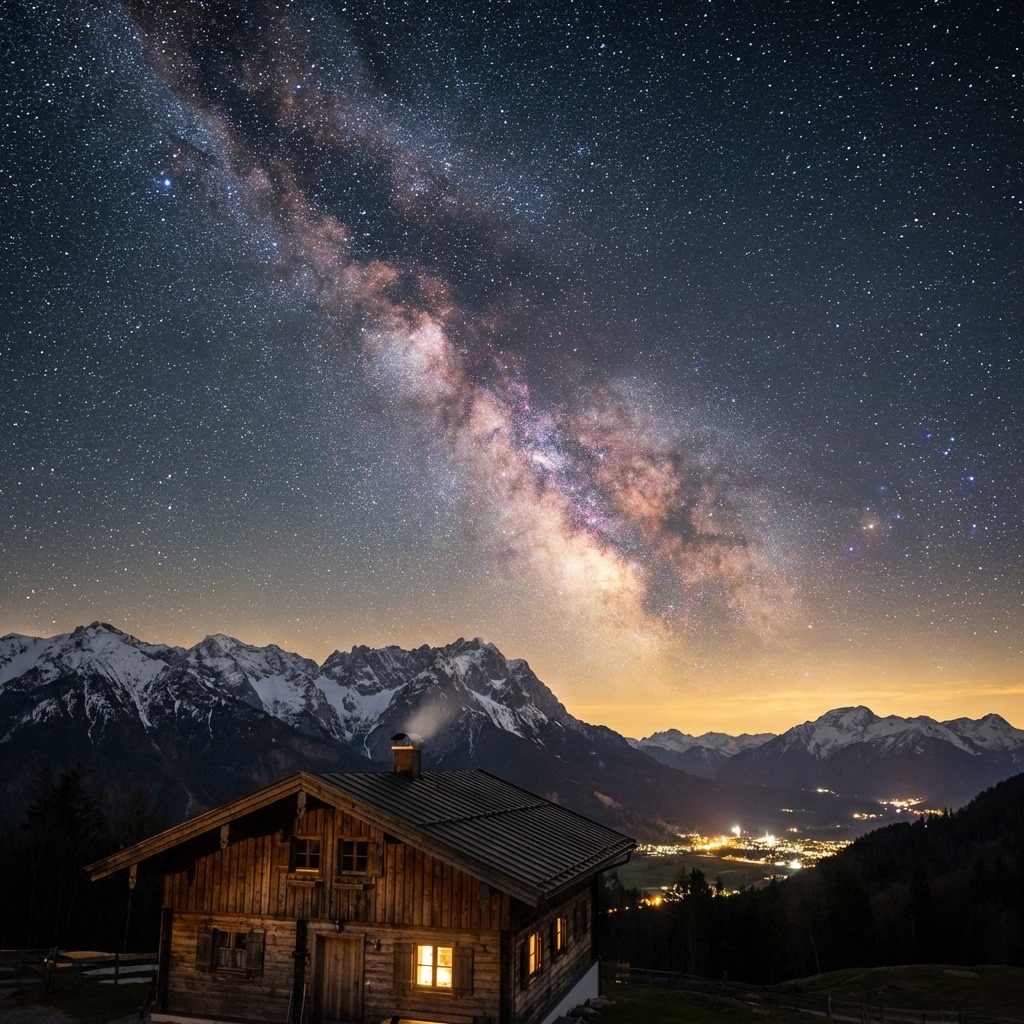
Best Stargazing Near Munich: 6 Alpine Dark Sky Escapes
Alpine stars await! 6 incredible dark sky spots near Munich—Berchtesgaden, Wendelstein, and the Austrian High Alps. Your guide to mountain stargazing.
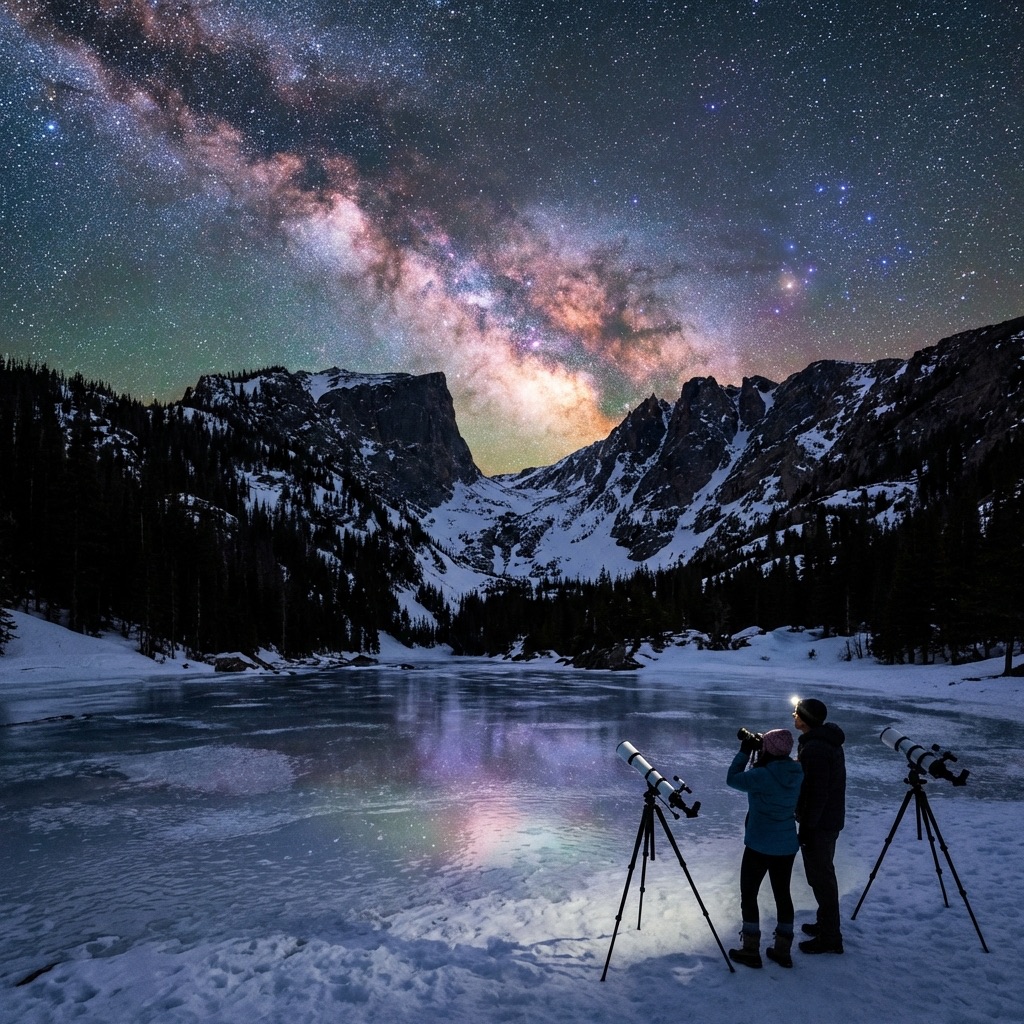
Best Stargazing Near Denver: 7 Colorado Dark Sky Escapes
High altitude and dark skies! 7 stunning Colorado spots within 3 hours of Denver—Rocky Mountain NP, Great Sand Dunes, and hidden alpine gems.
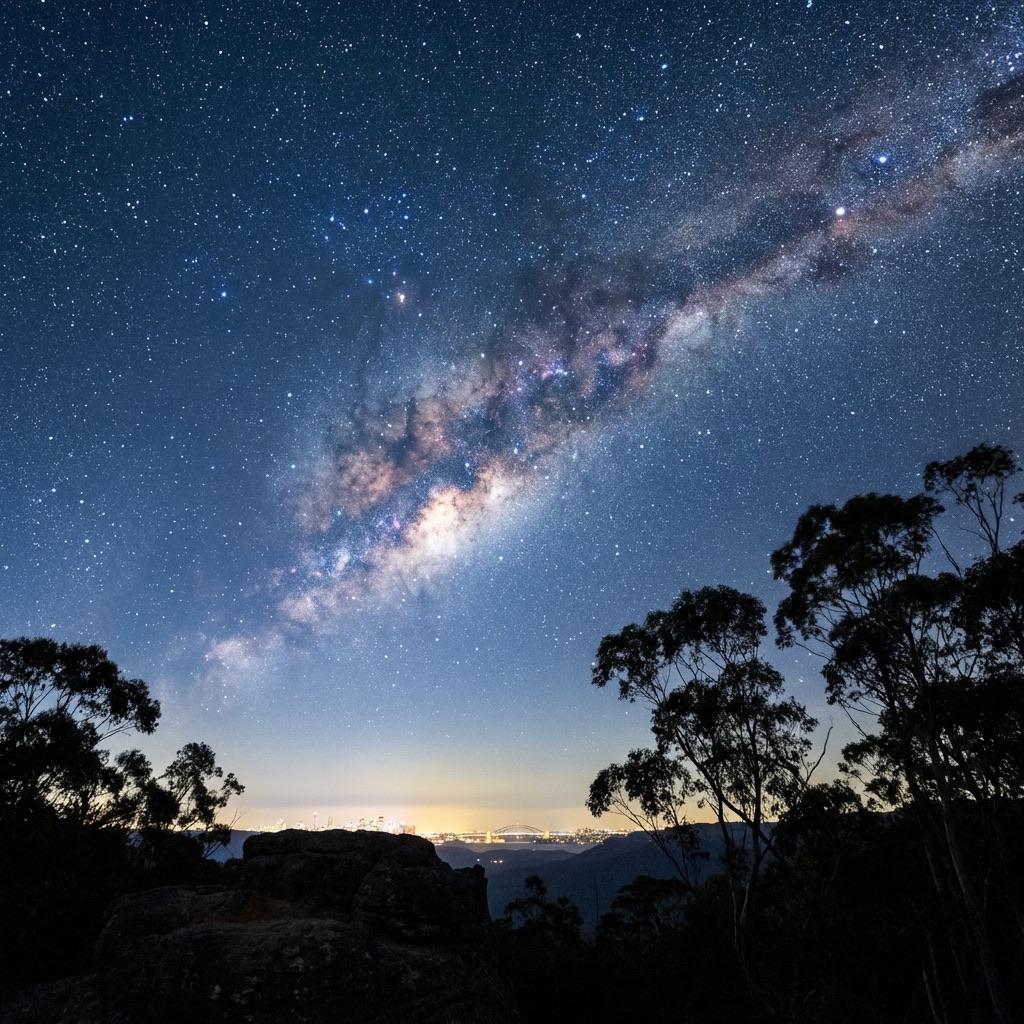
Stargazing Near Sydney: 6 NSW Dark Sky Escapes
Escape the city lights! 6 incredible NSW dark sky spots near Sydney—Warrumbungle, Blue Mountains, and Mudgee. Southern Hemisphere stars at their best.
End of Dossier • Research Complete