
Professional Stargazing Gear: The Ultimate Field Setup
Professional-grade visual observation utilizes precision optics and thermal management systems to ensure research-grade clarity during extended field operations. This equipment matrix defines the current standard for expert observers maintaining high-latitude mission sites.
DH Research Lab
Data & Editorial Board
Expert Tested Gear & Affiliate Disclosure
This guide contains affiliate links. As an Amazon Associate, we earn from qualifying purchases.
01Premium Optics
At this level, you're investing in optics that will last decades. Quality glass makes a real difference—sharper stars, better contrast, and views that simply aren't possible with budget gear.
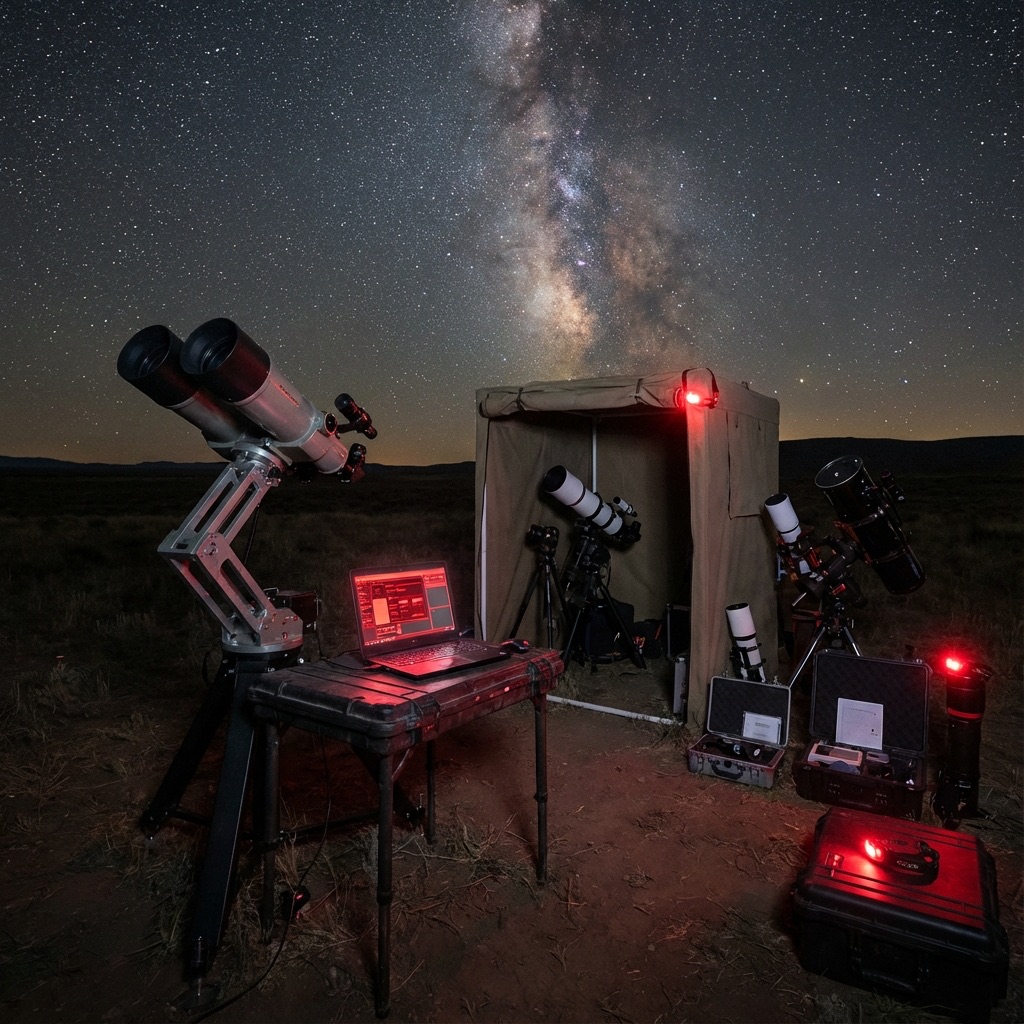
Large-aperture binoculars (25x100 or larger) mounted on a parallelogram mount are effectively portable telescopes. They're faster to set up and more intuitive than scopes.
High-end eyepieces for your telescope make a dramatic difference. Names like Tele Vue, Pentax, and Explore Scientific command high prices for good reason.
Tele Vue Nagler 13mm Eyepiece
“The standard by which all other eyepieces are judged.”
RATIONALE
82-degree apparent field of view, razor-sharp to the edge. Once you look through a Nagler, everything else feels compromised.
02All-Weather Readiness
Serious observers don't cancel for "bad" weather unless it's actually raining. Cold, wind, and dew are challenges to overcome, not excuses to stay home.
Dew heaters wrap around your eyepieces and optical tubes, preventing condensation that ruins views.
Heated clothing (jacket, gloves, socks) with battery packs lets you observe comfortably in below-freezing conditions.
Protect Your Optics
03Field Station Accessories
When you're spending entire nights away from home, you need a mobile command center.
A sturdy observing table gives you a place for charts, phones, and accessories. Red-light versions exist.
A power station (like a Jackery) keeps devices charged all night and powers dew heaters.
An observing shelter or windbreak blocks gusts that shake your scope and chill your bones.
Finally, for the truly dedicated remote observer, Starlink has become essential for checking cloud maps and staying safe in dead zones. Get the ultimate mobile internet setup
Checklist
Create a packing list. There's nothing worse than driving an hour and forgetting a key piece.
Logging
Keep an observing log. Your notes from previous sessions become invaluable references.
Community
Join a local astronomy club. Their dark-sky sites and shared knowledge are priceless.
Don't waste a clear-night chance
Get the field checklist, then use DarkestHour to decide if tonight's sky is actually worth your time, setup or travel.
Learn first. Decide with the map.
DarkestHour guides are free trust builders. Use them to understand conditions, then use Pro for saved spots, alerts and best-night decisions.
Find Your Darkest Sky
Use our real-time satellite maps to find locations with zero light pollution.
Launch Interactive MapYour Learning Roadmap
You've mastered the advanced basics. The next logical step in your technical progression is mastering astrophotography workflows.
MANDATORY FIELD EQUIPMENT
Celestron NexStar 8SE
The gold standard for deep-sky observation. 203mm aperture for maximum light gathering.
ZWO Seestar S50
Fully robotic imaging system. Perfect for urban environments and rapid deployment.
Peak Design Travel Tripod
Zero-latency stability for long exposure astrophotography. Carbon fiber construction.
Continue Your Research
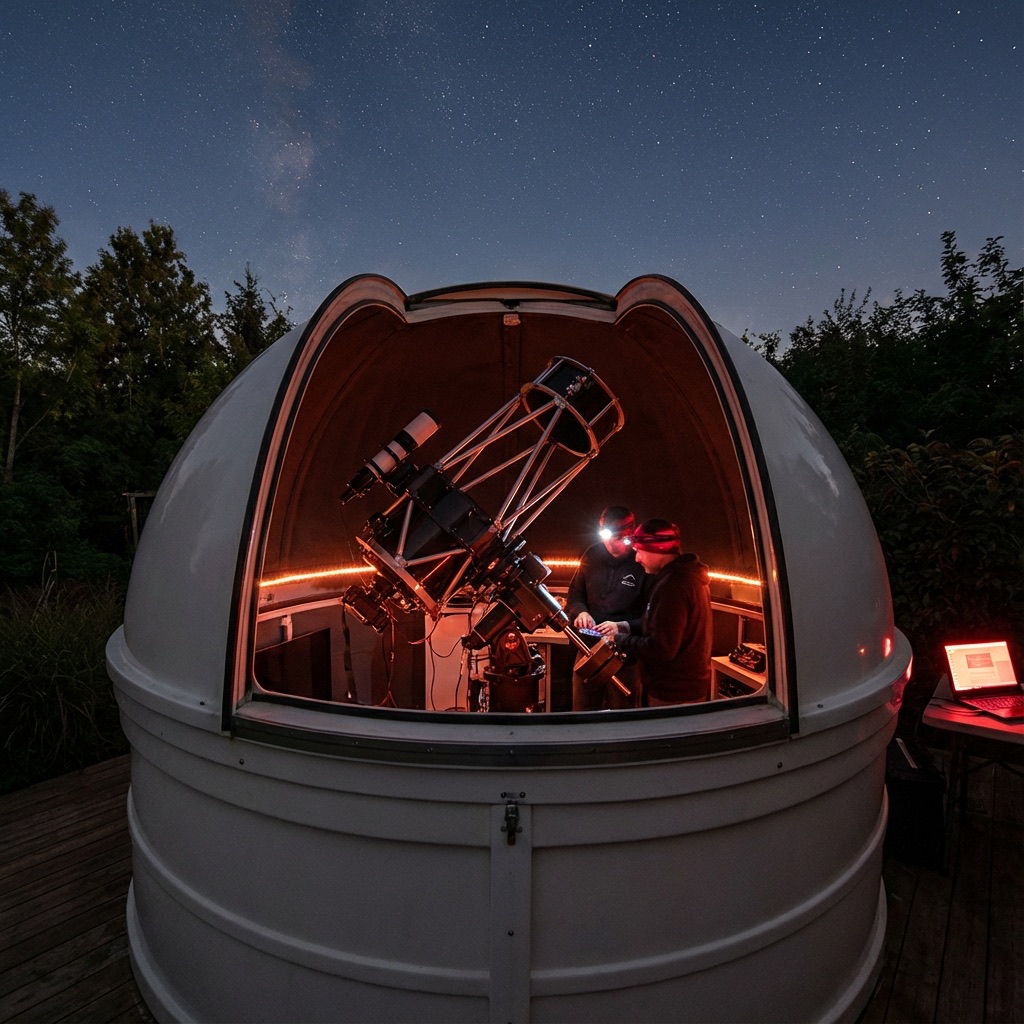
Professional Astronomy Gear: Observatory-Grade Equipment
Experience observatory-quality views with premium optics, precision mounts, and advanced accessories designed for the dedicated amateur astronomer.
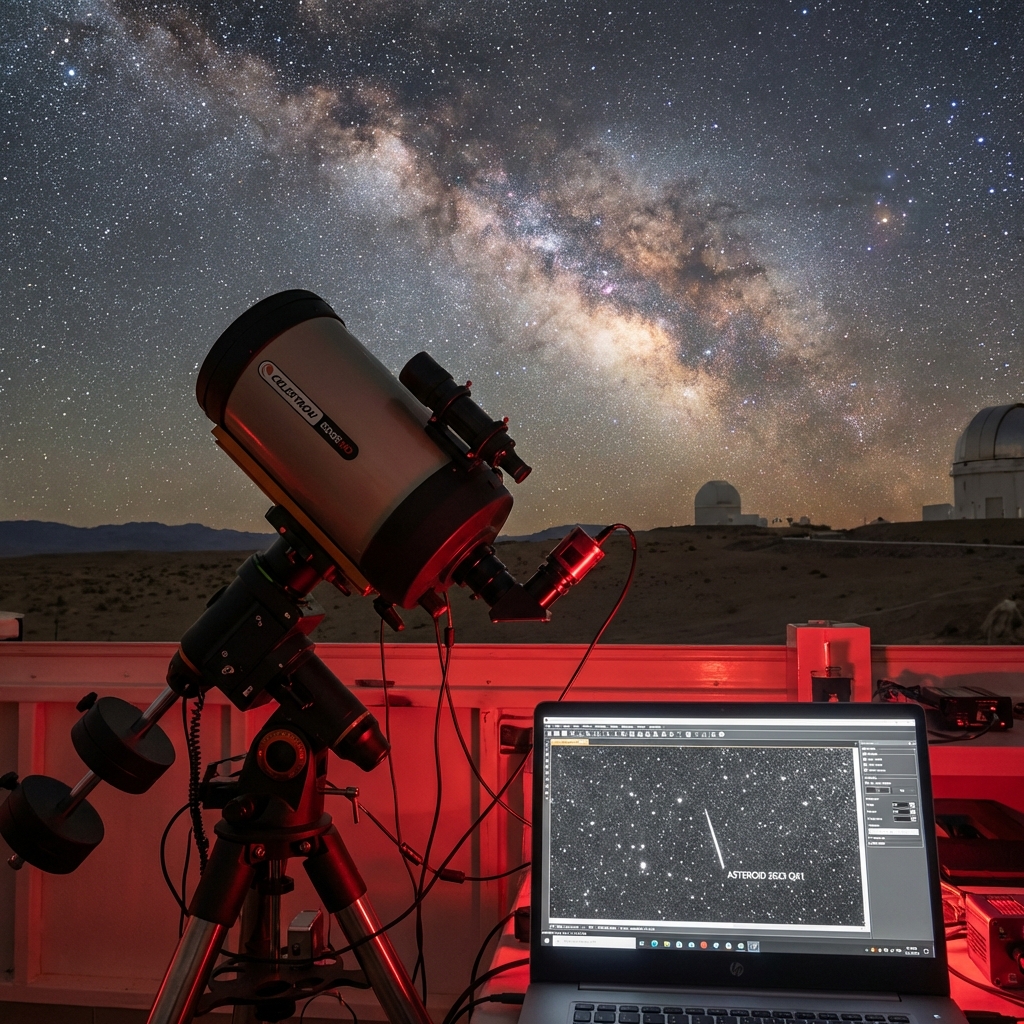
Planetary Defense: How Amateurs Track 'Killer' Asteroids
Learn how to use your backyard telescope for planetary defense. A guide to tracking Near-Earth Objects (NEOs) and submitting data to the Minor Planet Center.
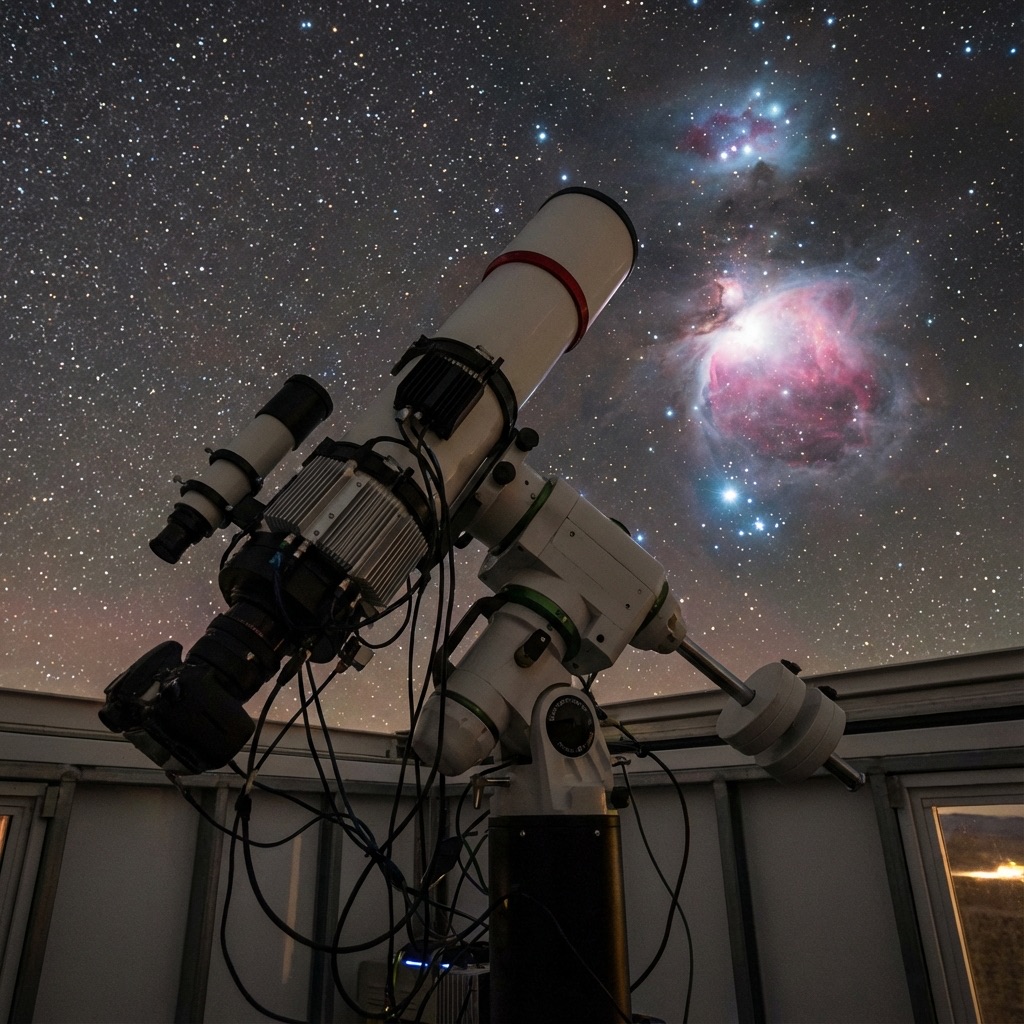
Deep Sky Imaging: The Complete Setup Guide
Master long-exposure imaging of deep sky objects with a dedicated rig. We cover sensors, optics, and tracking for professional-grade photos.
End of Dossier • Research Complete