
Planetary Defense: How Amateur Astronomers Track 'Killer' Asteroids
Orbital blind spots remain. While giant telescopes like the Vera Rubin Observatory scan the deep sky, a dedicated global network of amateur astronomers provides the 'follow-up' data critical for calculating asteroid orbits. This is decentralized planetary defense. As part of our mission at the DH Research Lab, we're showing you how to transition from pretty-picture astrophotography to real, scientific asteroid hunting.
DH Research Lab
Data & Editorial Board
Expert Tested Gear & Affiliate Disclosure
This guide contains affiliate links. As an Amazon Associate, we earn from qualifying purchases.
01What is a Near-Earth Object (NEO)?
A Near-Earth Object is any asteroid or comet whose orbit brings it within 1.3 astronomical units (AU) of the Sun. While most are harmless, 'Potentially Hazardous Asteroids' (PHAs) are those larger than 140 meters that come within 0.05 AU of Earth.
Amateurs don't usually 'discover' new ones anymore (surveys do that), but we refine the orbits. Without follow-up measurements (astrometry), a newly discovered asteroid can be 'lost' as its orbital uncertainty grows.
02The Tools of the Trade
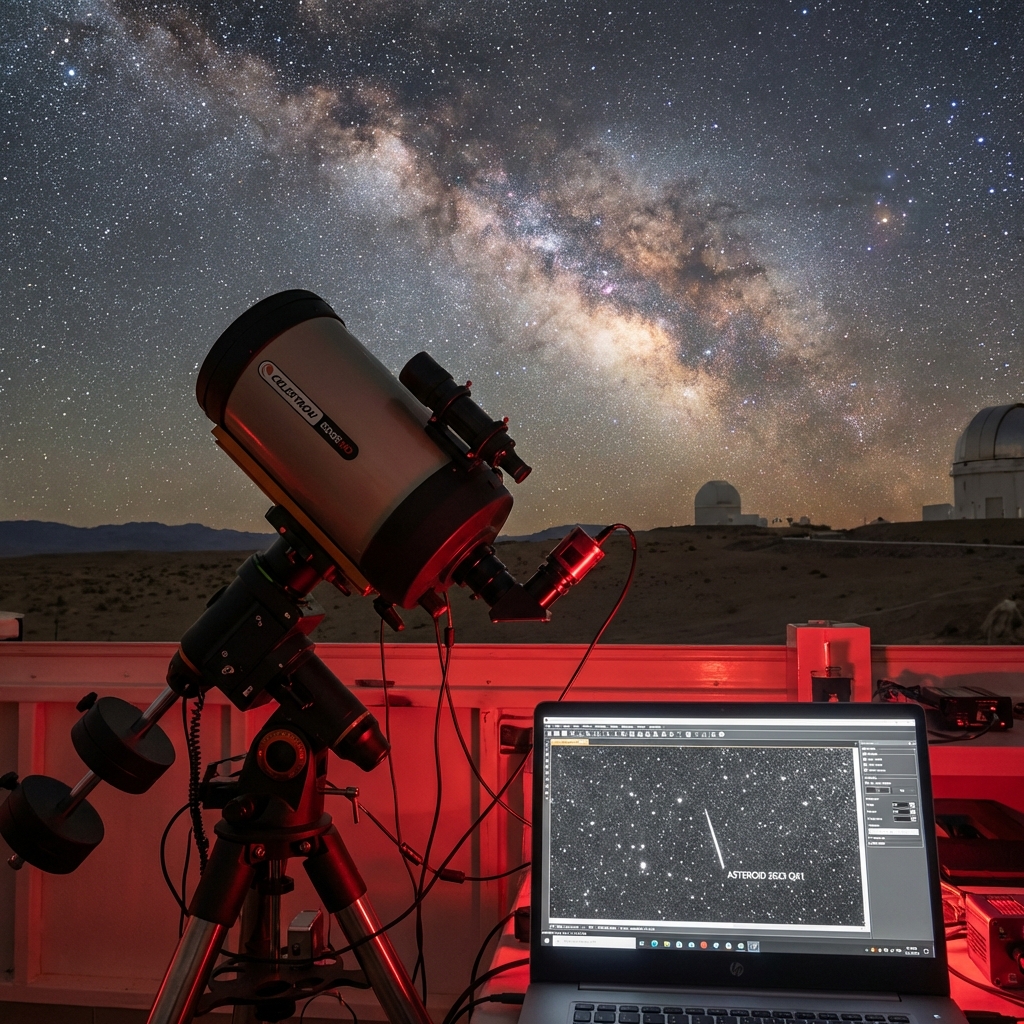
Professional-grade astrometry no longer requires institutional budgets. A standard 8-inch Schmidt-Cassegrain telescope and a cooled mono CMOS camera are sufficient to track objects down to magnitude 18 or 19.
ZWO ASI294MM Pro Cooled Mono Camera
“The gold standard for amateur scientific work. High quantum efficiency and low read noise make it perfect for detecting faint, moving points of light.”
RATIONALE
Monochrome sensors are significantly more sensitive for astrometry and photometry than color sensors.
03How to Participate: The Minor Planet Center
The hub of all asteroid data is the IAU Minor Planet Center (MPC). To contribute, you must:
- Calibrate your equipment: Accurate plate-solving (knowing exactly where your telescope is pointed) is non-negotiable.
- Submit a 'Check-on' observation: Prove you can measure known asteroids accurately before submitting data on unconfirmed ones.
- Use specialized software: Tools like Astrometrica or Tycho Tracker are the industry standards for measuring the precisely timed positions of moving targets.
Real Science
Frequently Asked Questions
Q:Can an amateur really discover an asteroid?
Discoveries are rare nowadays due to automated professional surveys like Pan-STARRS. However, amateurs are the primary source for 'recovery' observations—confirming the orbits of newly found objects so they aren't lost.
Q:What software do I need for asteroid tracking?
Astrometrica is the most traditional tool. Tycho Tracker is a modern, GPU-accelerated alternative that is excellent for 'synthetic tracking' of very faint objects.
Don't waste a clear-night chance
Get the field checklist, then use DarkestHour to decide if tonight's sky is actually worth your time, setup or travel.
Learn first. Decide with the map.
DarkestHour guides are free trust builders. Use them to understand conditions, then use Pro for saved spots, alerts and best-night decisions.
Find Your Darkest Sky
Use our real-time satellite maps to find locations with zero light pollution.
Launch Interactive MapPlan Your Deployment
Ready to experience these dark skies yourself? Use our interactive map to find the best dark-sky certified hotels, desert cabins, and observatories near this location.
Booking through this map supports Darkest Hour's light pollution research.
Your Learning Roadmap
You've mastered the advanced basics. The next logical step in your technical progression is mastering astrophotography workflows.
MANDATORY FIELD EQUIPMENT
Celestron NexStar 8SE
The gold standard for deep-sky observation. 203mm aperture for maximum light gathering.
ZWO Seestar S50
Fully robotic imaging system. Perfect for urban environments and rapid deployment.
Peak Design Travel Tripod
Zero-latency stability for long exposure astrophotography. Carbon fiber construction.
Continue Your Research
Deep Sky Imaging: The Complete Setup Guide
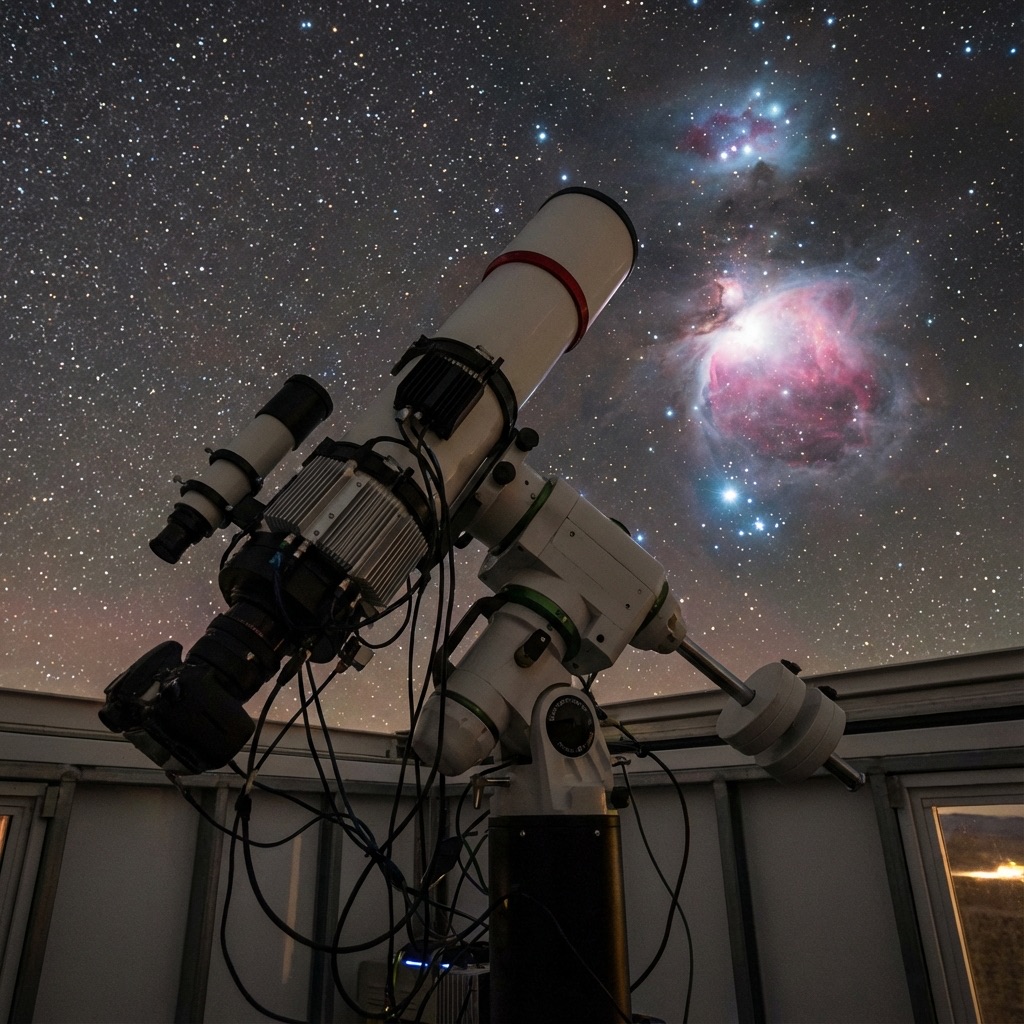
Master long-exposure imaging of deep sky objects with a dedicated rig. We cover sensors, optics, and tracking for professional-grade photos.
Professional Astronomy Gear: Observatory-Grade Equipment
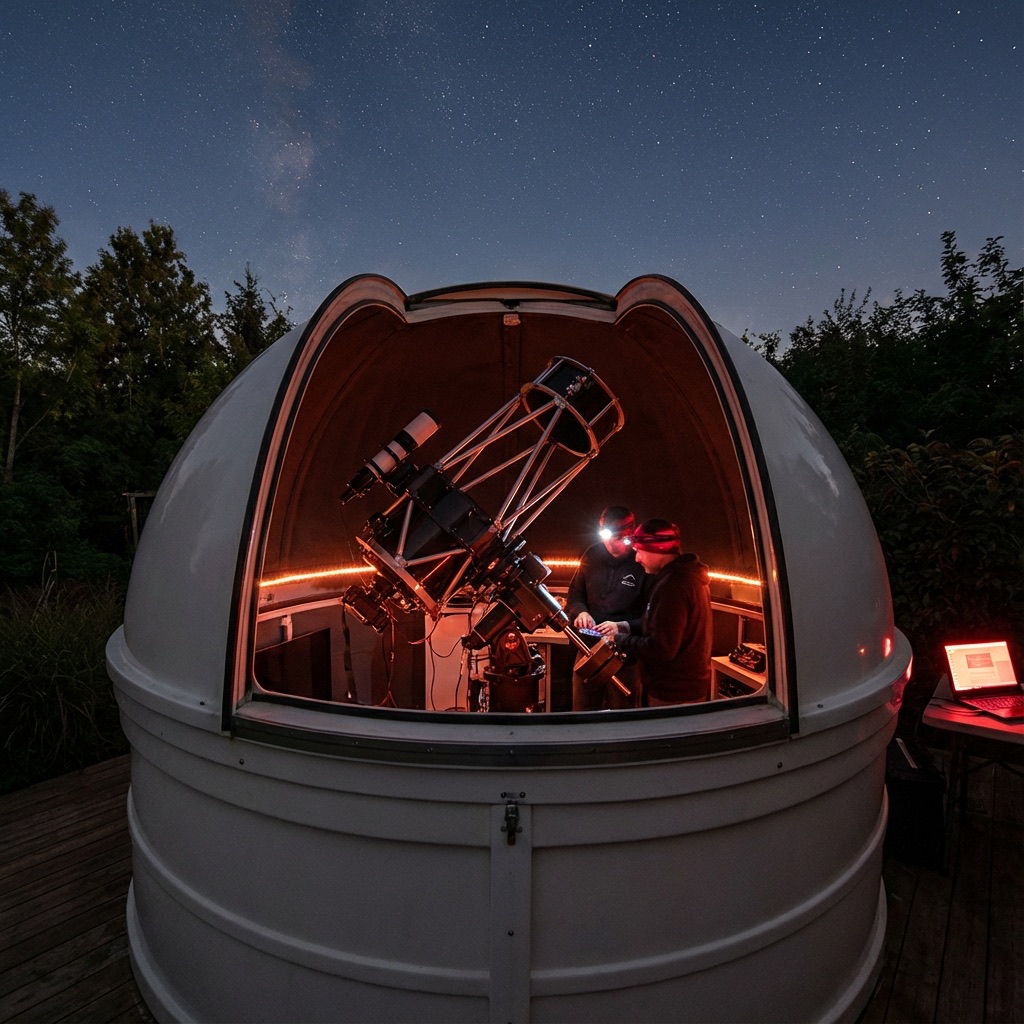
Experience observatory-quality views with premium optics, precision mounts, and advanced accessories designed for the dedicated amateur astronomer.
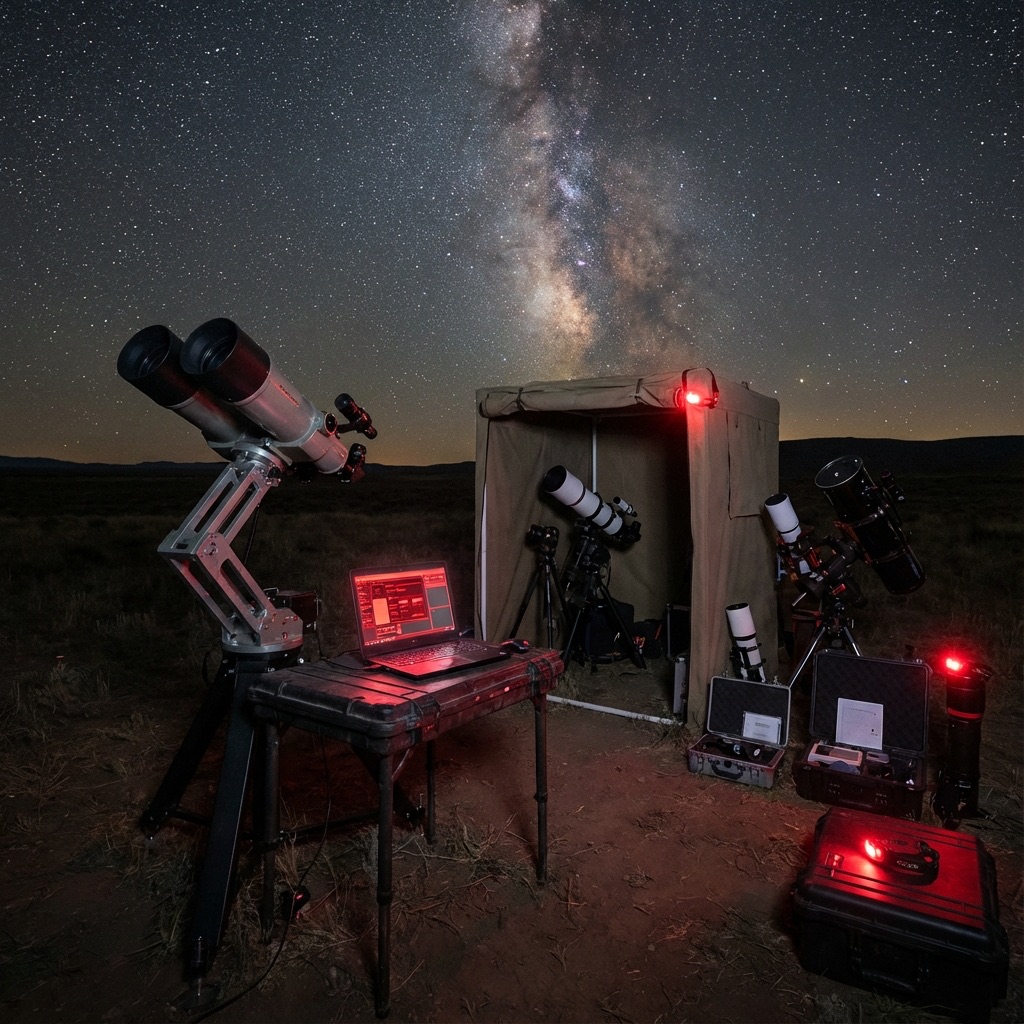
Professional Stargazing Gear: The Ultimate Field Setup
Discover the ultimate field setup for dedicated observers, featuring premium optics, all-weather protection, and professional station accessories.
End of Dossier • Research Complete