
Backyard Exoplanet Hunting: Detecting Worlds Around Other Stars
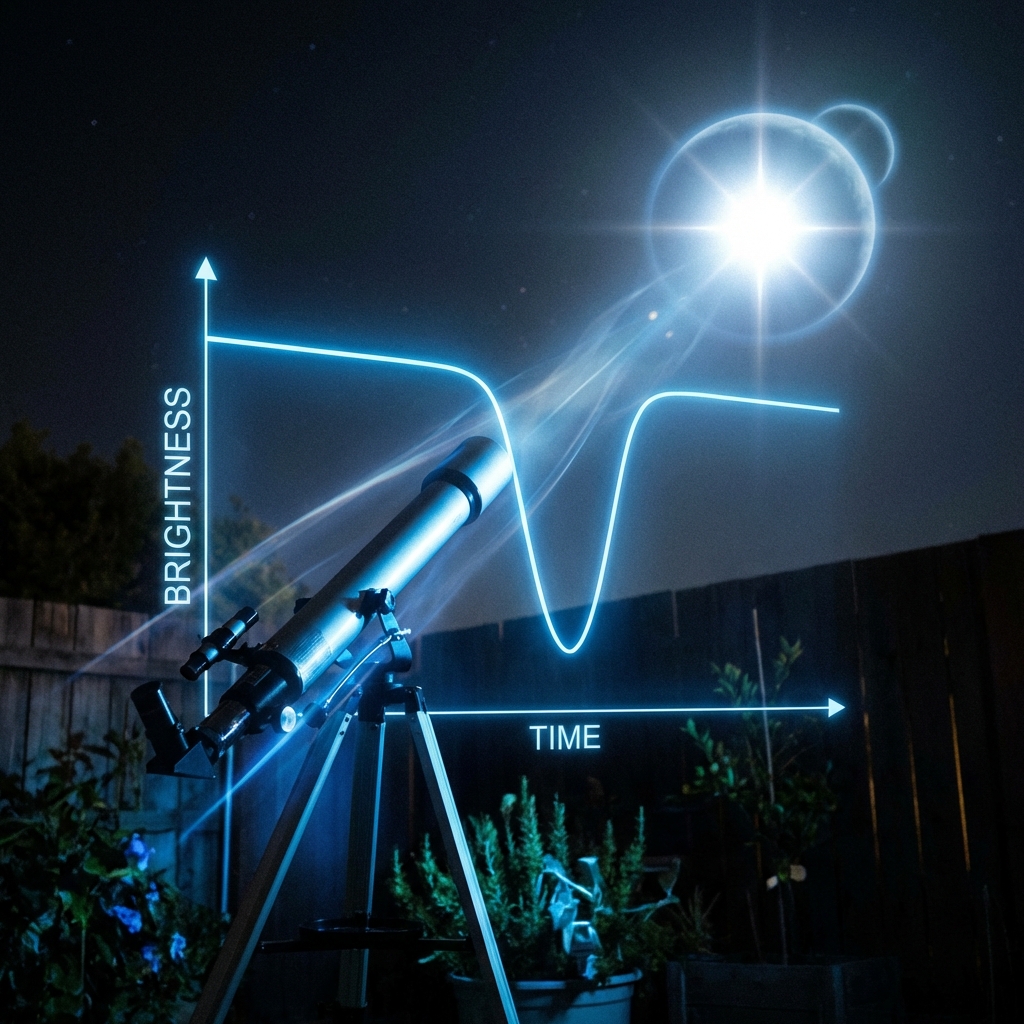
It rivals science fiction: with a telescope in your backyard, you can detect the shadow of a planet orbiting a star hundreds of light-years away. This is the world of Transit Photometry. DH Research Lab provides the methodology to go beyond 'taking pictures' and start contributing to NASA's TESS (Transiting Exoplanet Survey Satellite) follow-up program.
DH Research Lab
Data & Editorial Board
Expert Tested Gear & Affiliate Disclosure
This guide contains affiliate links. As an Amazon Associate, we earn from qualifying purchases.
01What is Transit Photometry?
Most exoplanets are discovered when they pass in front of their host star from our perspective. This causes a tiny, measurable dip in the star's brightness—usually less than 1-2%.
The Challenge:
- Precision: You aren't just measuring position (astrometry); you're measuring light (photometry).
- Consistency: You need to observe the star for several hours during the predicted transit window to capture the 'light curve'.
02Essential Equipment for Photometry
Precision is more important than size. A stable mount and a camera with a known linear response are critical.
ZWO ASI2600MM Pro Mono Camera
“With a 16-bit ADC and extremely high dynamic range, this camera can detect the subtle 1% dips in brightness required for exoplanet transit detection.”
RATIONALE
Superior bit-depth and zero amp-glow make it the professional choice for amateur photometry.
03Joining the TESS Follow-up (TFOP)
The TESS satellite scans the sky with a large pixel scale (~21 arcsec/pixel), often flagging 'Objects of Interest' (TOIs) that require higher-resolution validation. Amateurs act as the 'ground truth' to confirm these candidates.
How to Start:
- Target Selection: Use the Exoplanet Transit Database (ETD) or ExoFOP to find transits happening tonight.
- Data Acquisition: Take hundreds of short exposures of the target star and at least 3-4 'comparison' stars of similar brightness.
- Reduction Protocol: Utilize AstroImageJ to perform differential photometry and generate your light curve.
Citizen Scientist
Frequently Asked Questions
Q:How big of a telescope do I need to see exoplanets?
You don't 'see' the planet; you see the star dim. A 4-inch refractor is enough to detect transits around bright stars. An 8-inch or larger telescope is recommended for deeper scientific work.
Q:Is exoplanet hunting hard?
It requires more patience than traditional astrophotography. Your focus, polar alignment, and 'flat field' calibration must be perfect to ensure the data is scientifically valid.
Don't waste a clear-night chance
Get the field checklist, then use DarkestHour to decide if tonight's sky is actually worth your time, setup or travel.
Learn first. Decide with the map.
DarkestHour guides are free trust builders. Use them to understand conditions, then use Pro for saved spots, alerts and best-night decisions.
Find Your Darkest Sky
Use our real-time satellite maps to find locations with zero light pollution.
Launch Interactive MapPlan Your Deployment
Ready to experience these dark skies yourself? Use our interactive map to find the best dark-sky certified hotels, desert cabins, and observatories near this location.
Booking through this map supports Darkest Hour's light pollution research.
Your Learning Roadmap
You've mastered the advanced basics. The next logical step in your technical progression is mastering astrophotography workflows.
MANDATORY FIELD EQUIPMENT
Celestron NexStar 8SE
The gold standard for deep-sky observation. 203mm aperture for maximum light gathering.
ZWO Seestar S50
Fully robotic imaging system. Perfect for urban environments and rapid deployment.
Peak Design Travel Tripod
Zero-latency stability for long exposure astrophotography. Carbon fiber construction.
Continue Your Research
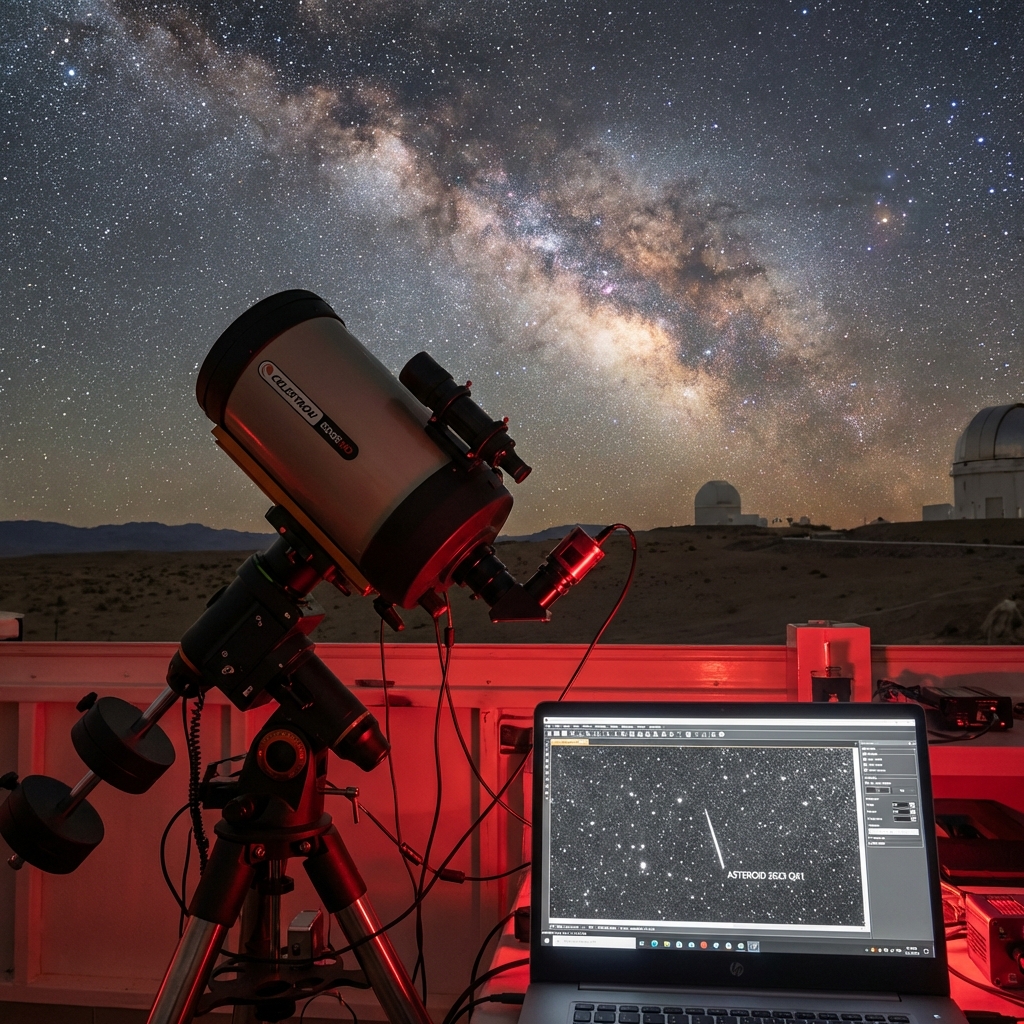
Planetary Defense: How Amateurs Track 'Killer' Asteroids
Learn how to use your backyard telescope for planetary defense. A guide to tracking Near-Earth Objects (NEOs) and submitting data to the Minor Planet Center.
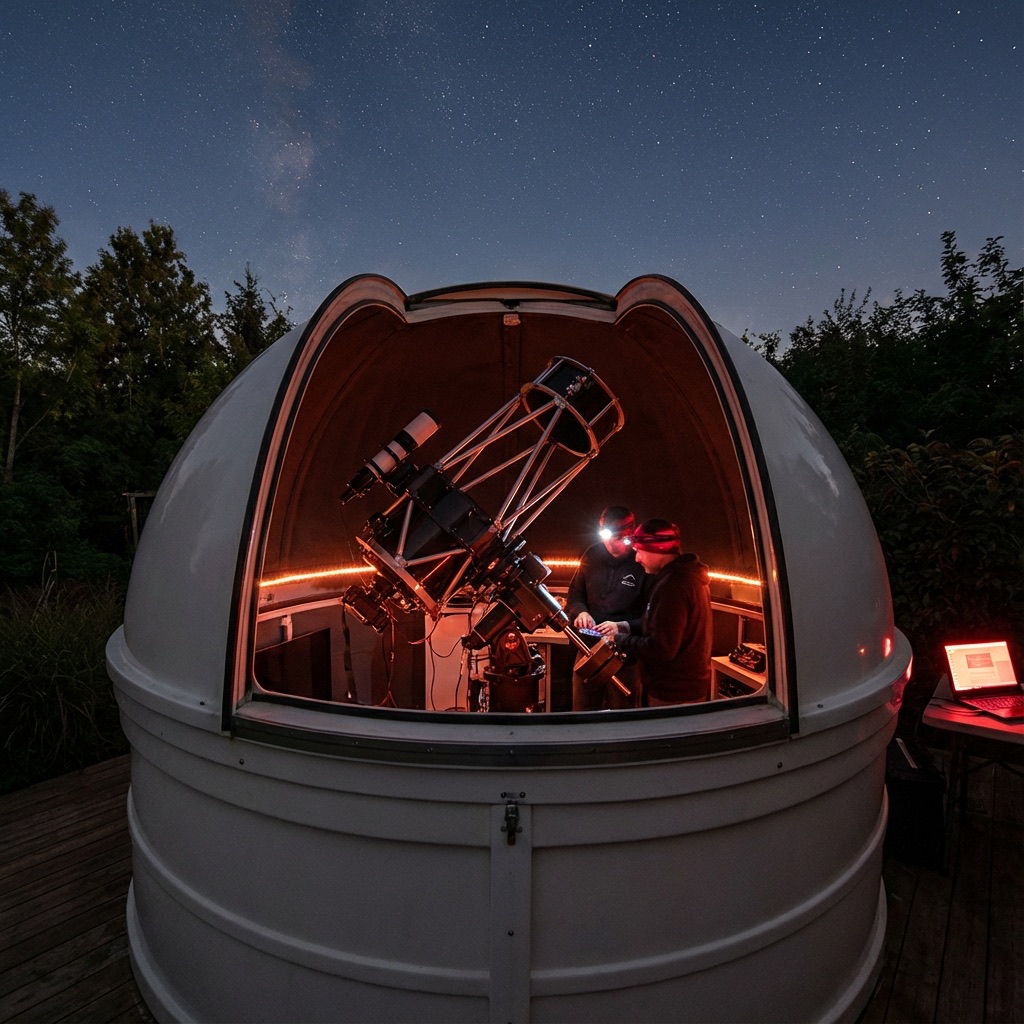
Professional Astronomy Gear: Observatory-Grade Equipment
Experience observatory-quality views with premium optics, precision mounts, and advanced accessories designed for the dedicated amateur astronomer.
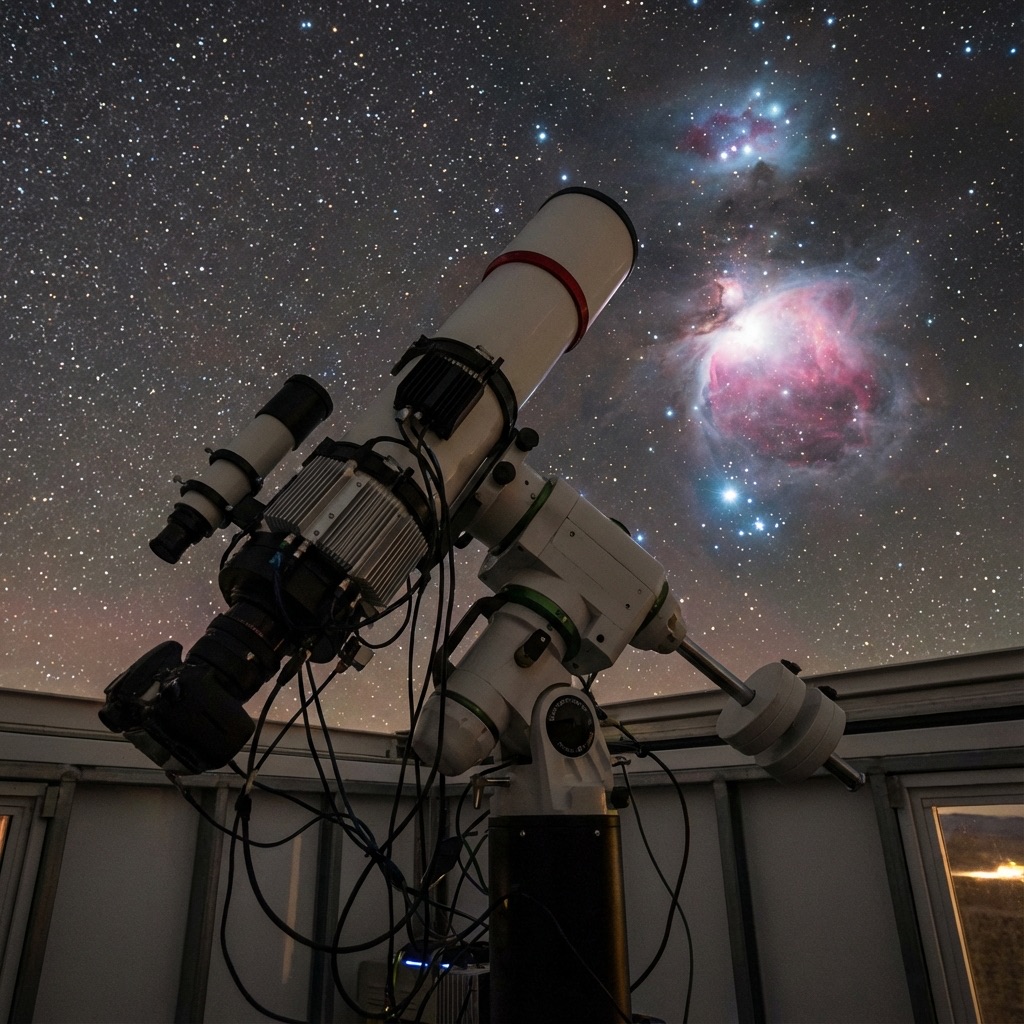
Deep Sky Imaging: The Complete Setup Guide
Master long-exposure imaging of deep sky objects with a dedicated rig. We cover sensors, optics, and tracking for professional-grade photos.
End of Dossier • Research Complete