
Astrophotography Gear for Hobbyists: The $1000 Milky Way Kit
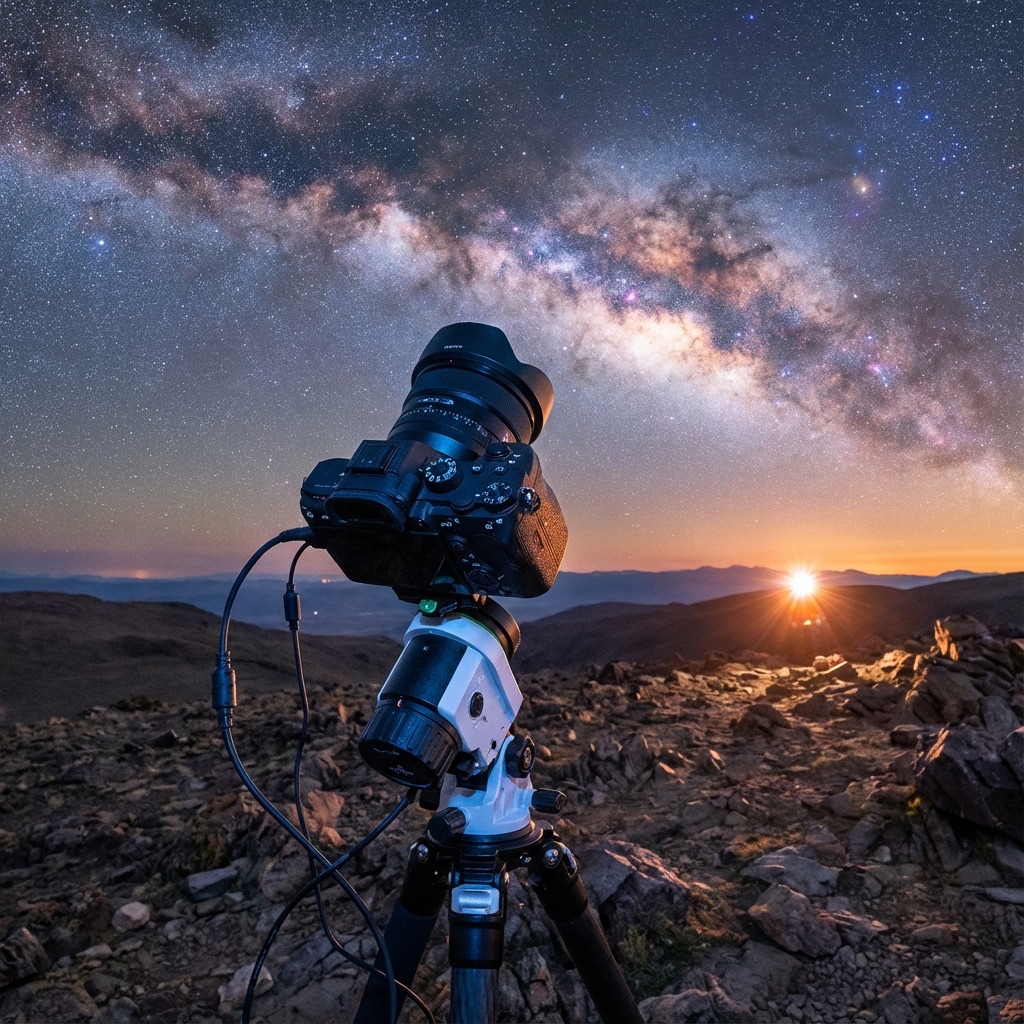
The $1000 technical tier represents the primary gateway to precision astrophotography, balancing sensor sensitivity with motorized tracking capabilities. This hardware matrix outlines the optimal components for achieving high-resolution wide-field imaging.

DH Research Lab
Data & Editorial Board
Expert Tested Gear & Affiliate Disclosure
This guide contains affiliate links. As an Amazon Associate, we earn from qualifying purchases.
01The Camera
You need a camera with interchangeable lenses, good high-ISO performance, and manual controls. Mirrorless is the way to go—smaller, lighter, and the electronic viewfinder helps in the dark.
Used is your friend. A 3-year-old flagship mirrorless body costs half as much and performs nearly as well as current models for astro work.
Sensor size matters. Full-frame gathers more light, but APS-C is excellent and much more affordable.
Sony a6400 (or a6000 used)
“The lightweight king of budget astrophotography.”
RATIONALE
Excellent high-ISO performance in a compact body. Massive selection of affordable E-mount lenses.
02The Lens
For Milky Way photography, you need a fast, wide-angle lens. "Fast" means a large maximum aperture (low f-number). "Wide" means a short focal length (14-24mm).
f/2.8 is the minimum—f/1.8 or f/1.4 is better. Every stop of aperture halves your required ISO, dramatically reducing noise.
Manual focus lenses are perfectly fine for astro. In fact, I prefer them—no hunting, no accidental refocus.
The Rokinon Secret
03The Tracker
This is the game-changer. A star tracker is a motorized mount that rotates your camera to follow the stars, allowing exposures of 2-4 minutes instead of 20-30 seconds. The result: dramatically lower noise, richer color, and fainter details.
Entry-level trackers like the iOptron SkyGuider Pro or Sky-Watcher Star Adventurer cost $300-400 and open up a whole new world.
iOptron SkyGuider Pro
“The tracker that launched a thousand careers.”
RATIONALE
11-lb payload capacity, built-in polar scope, and rock-solid reliability. This is the one I recommend.
Polar Alignment
Trackers must be aligned to Polaris. It takes 5 minutes to learn and makes a huge difference.
Payload Capacity
Make sure your tracker can handle your camera + lens weight.
Foreground Trick
Blend a tracked sky with an untracked foreground for tack-sharp everything.
Don't waste a clear-night chance
Get the field checklist, then use DarkestHour to decide if tonight's sky is actually worth your time, setup or travel.
Learn first. Decide with the map.
DarkestHour guides are free trust builders. Use them to understand conditions, then use Pro for saved spots, alerts and best-night decisions.
Find Your Darkest Sky
Use our real-time satellite maps to find locations with zero light pollution.
Launch Interactive MapYour Learning Roadmap
You've mastered the intermediate basics. The next logical step in your technical progression is mastering advanced deep sky setups.
MANDATORY FIELD EQUIPMENT
Celestron NexStar 8SE
The gold standard for deep-sky observation. 203mm aperture for maximum light gathering.
ZWO Seestar S50
Fully robotic imaging system. Perfect for urban environments and rapid deployment.
Peak Design Travel Tripod
Zero-latency stability for long exposure astrophotography. Carbon fiber construction.
Continue Your Research
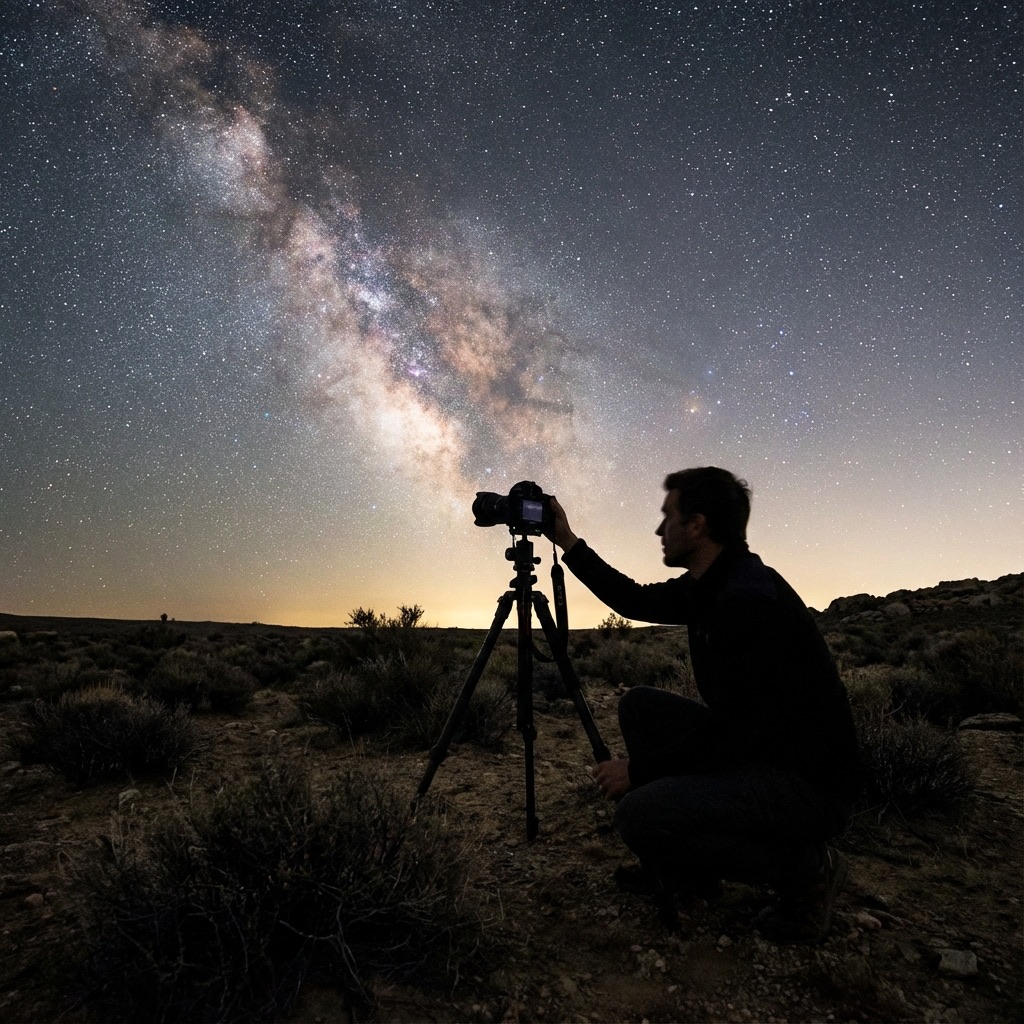
Astrophotography on a Budget: Milky Way for Under $500
Learn to photograph the night sky with affordable equipment. Our complete gear guide shows you how to capture the Milky Way for under $500.
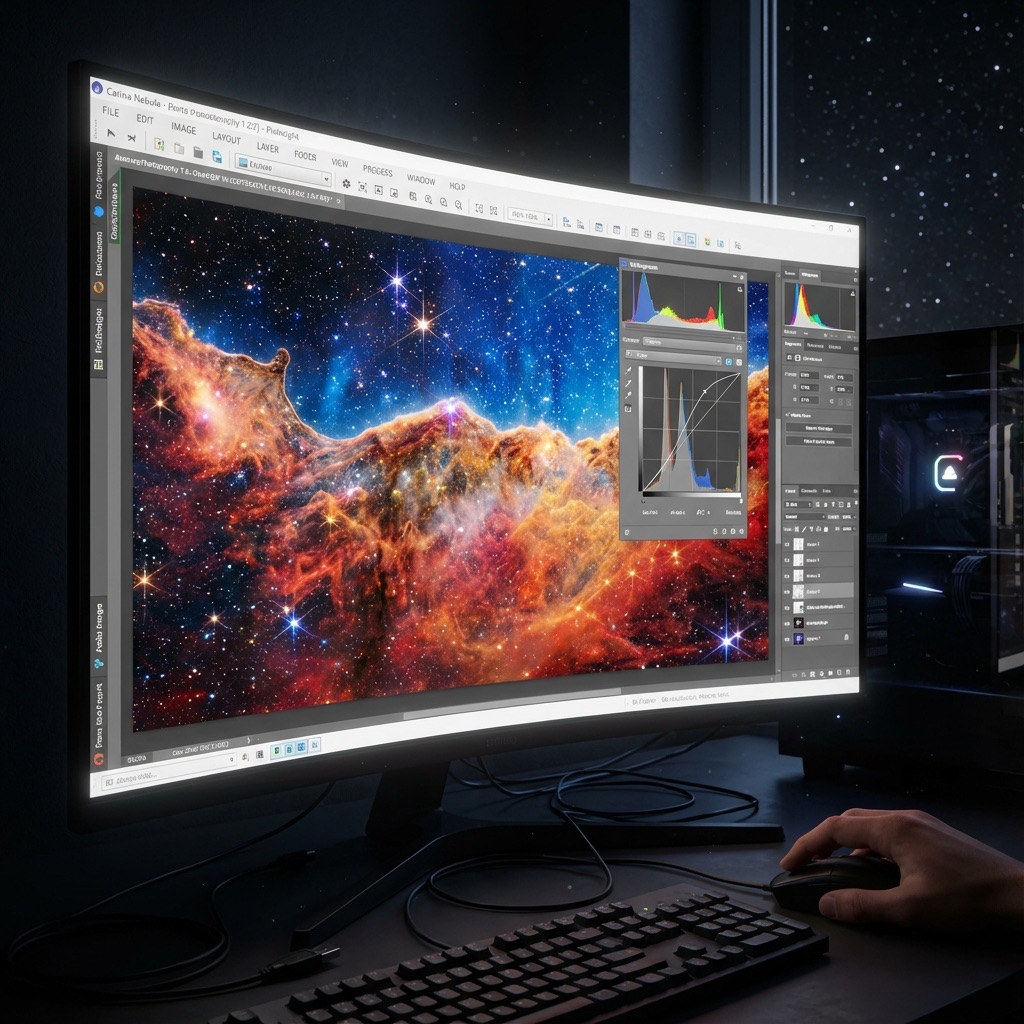
Astrophotography Post-Processing: From RAW to Stunning
Transform flat, noisy RAW files into vibrant, detailed images. Our step-by-step post-processing guide covers stacking, stretching, and color correction.
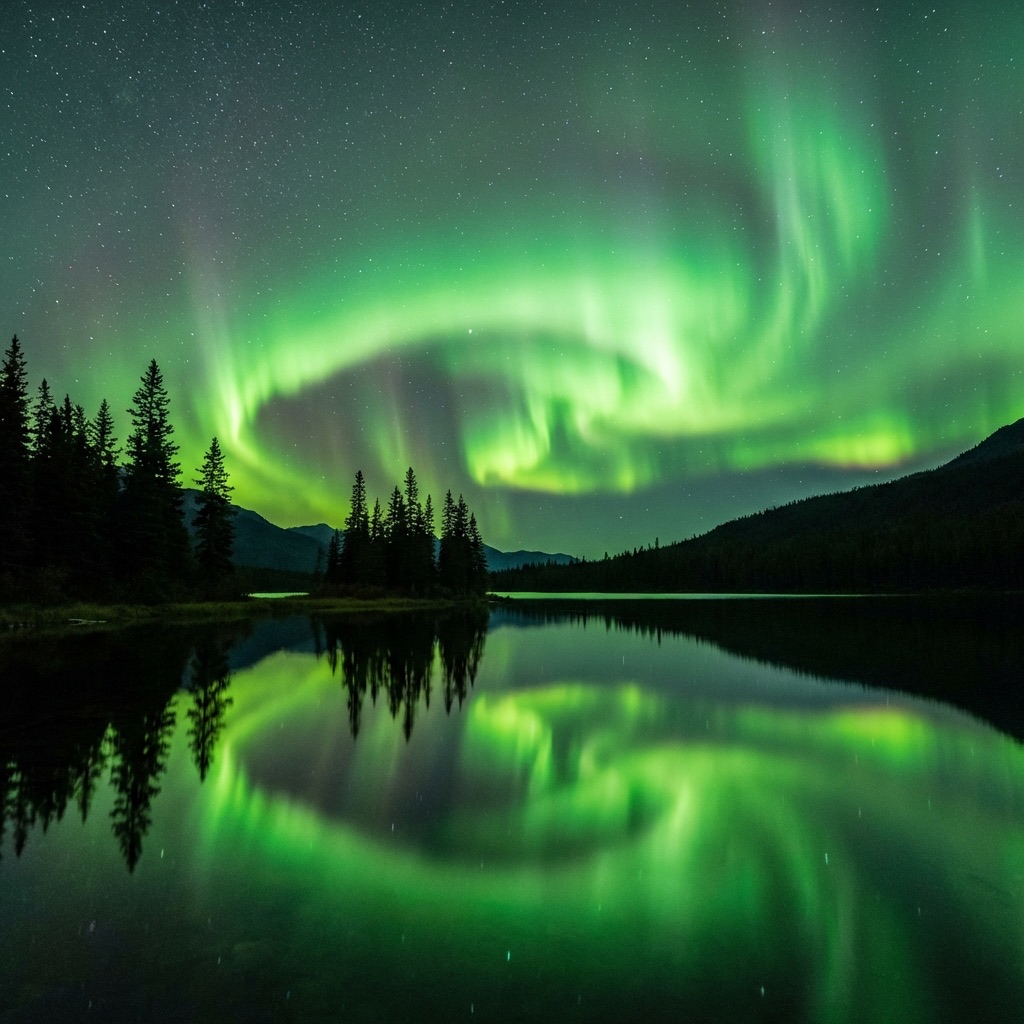
Aurora Photography: Settings & Gear for Stunning Shots
Master aurora photography with our complete guide. Learn the perfect camera settings, lens selection, and post-processing techniques for stunning results.
End of Dossier • Research Complete