
Advanced Deep Sky Astrophotography: Beyond the Basics
High-resolution deep-sky imaging requires a shift from basic gear to advanced monochromatic workflows. This technical dossier maps the pivot toward research-grade equipment—integrating monochrome sensor arrays, autoguiding synchronization, and SHO Hubble-palette calibration.
DH Research Lab
Data & Editorial Board
Expert Tested Gear & Affiliate Disclosure
This guide contains affiliate links. As an Amazon Associate, we earn from qualifying purchases.
01The Pivot: Mono vs. One-Shot Color (OSC)
The biggest leap in an astrophotographer's journey is the switch to a monochromatic camera.
Why go Mono?
- Resolution: Every pixel captures luminance data. In a color camera (Bayer matrix), pixels are filtered R, G, G, B. You lose resolution interpolating the missing colors.
- Sensitivity: Without the Bayer filter array blocking light, mono sensors are significantly more sensitive.
- Narrowband Control: You can shoot specific wavelengths (Hydrogen-Alpha, Oxygen-III, Sulfur-II) with pure efficiency.
The Downside: It's expensive and complex. You need a filter wheel and a set of filters (LRGB + SHO). You have to shoot 4+ sequences to get one color image. But the results are unmatched.
Efficiency
Mono captures 3x more signal in HA than color cameras.
City Imaging
Narrowband filters let you shoot nebulae from downtown light pollution.
Cost
Expect to spend $1,000+ on filters and wheels alone.
02Guiding and Dithering
To get sharp stars at 3-5 minute exposures, you need an autoguider.
Off-Axis Guider (OAG) vs. Guide Scope: For focal lengths under 1000mm, a separate guide scope is fine. But for long focal lengths (SCTs, RCs), you need an Off-Axis Guider. Mirrors shift ("mirror flop"), and an OAG sees exactly what the main sensor sees.
Dithering: This is non-negotiable. Dithering moves the mount slightly (a few pixels) between every exposure. Why? It shifts the "fixed pattern noise" (hot pixels, sensor rain) to different places. When you stack, the software (rejection algorithms) identifies these static defects and removes them.
Dithering Rule of Thumb
03Narrowband Palettes: The Hubble Look
Advanced imaging creates "false color" images that represent chemical composition, not what the human eye sees.
The Hubble Palette (SHO):
- Sulfur-II maps to Red
- Hydrogen-Alpha maps to Green
- Oxygen-III maps to Blue
This creates those iconic gold and blue nebula images. Since the universe is mostly Hydrogen (Green in this map), processing involves suppressing the green to bring out the gold and blue contrast.
Bi-Color (HOO): Great for beginners starting narrowband.
- Hydrogen-Alpha maps to Red
- Oxygen-III maps to Green and Blue This produces a natural-looking red/pink nebula with blue oxygen cores.
04Equipment Upgrades: The Mount is Everything
You cannot image at 1000mm focal length on a star tracker. You need a German Equatorial Mount (GEM) or a Strain Wave Gear (Harmonic) mount.
Harmonic Drives (Strain Wave): These are the new revolution (ZWO AM5, etc.). They have massive torque, don't need counterweights, and are incredibly portable. Pros: Portable, no balancing needed. Cons: High periodic error (requires good guiding).
Traditional Worm Gear (EQ6-R Pro): The workhorse. Heavy, needs balancing, but incredibly precise and smooth once tuned.
Sky-Watcher EQ6-R Pro
“The industry standard for amateur astrophotography mounts.”
RATIONALE
Handles up to 44lbs of gear. Belt drives mean near-silent operation and low backlash.
Don't waste a clear-night chance
Get the field checklist, then use DarkestHour to decide if tonight's sky is actually worth your time, setup or travel.
Learn first. Decide with the map.
DarkestHour guides are free trust builders. Use them to understand conditions, then use Pro for saved spots, alerts and best-night decisions.
Find Your Darkest Sky
Use our real-time satellite maps to find locations with zero light pollution.
Launch Interactive MapYour Learning Roadmap
You've mastered the advanced basics. The next logical step in your technical progression is mastering astrophotography workflows.
MANDATORY FIELD EQUIPMENT
Celestron NexStar 8SE
The gold standard for deep-sky observation. 203mm aperture for maximum light gathering.
ZWO Seestar S50
Fully robotic imaging system. Perfect for urban environments and rapid deployment.
Peak Design Travel Tripod
Zero-latency stability for long exposure astrophotography. Carbon fiber construction.
Continue Your Research
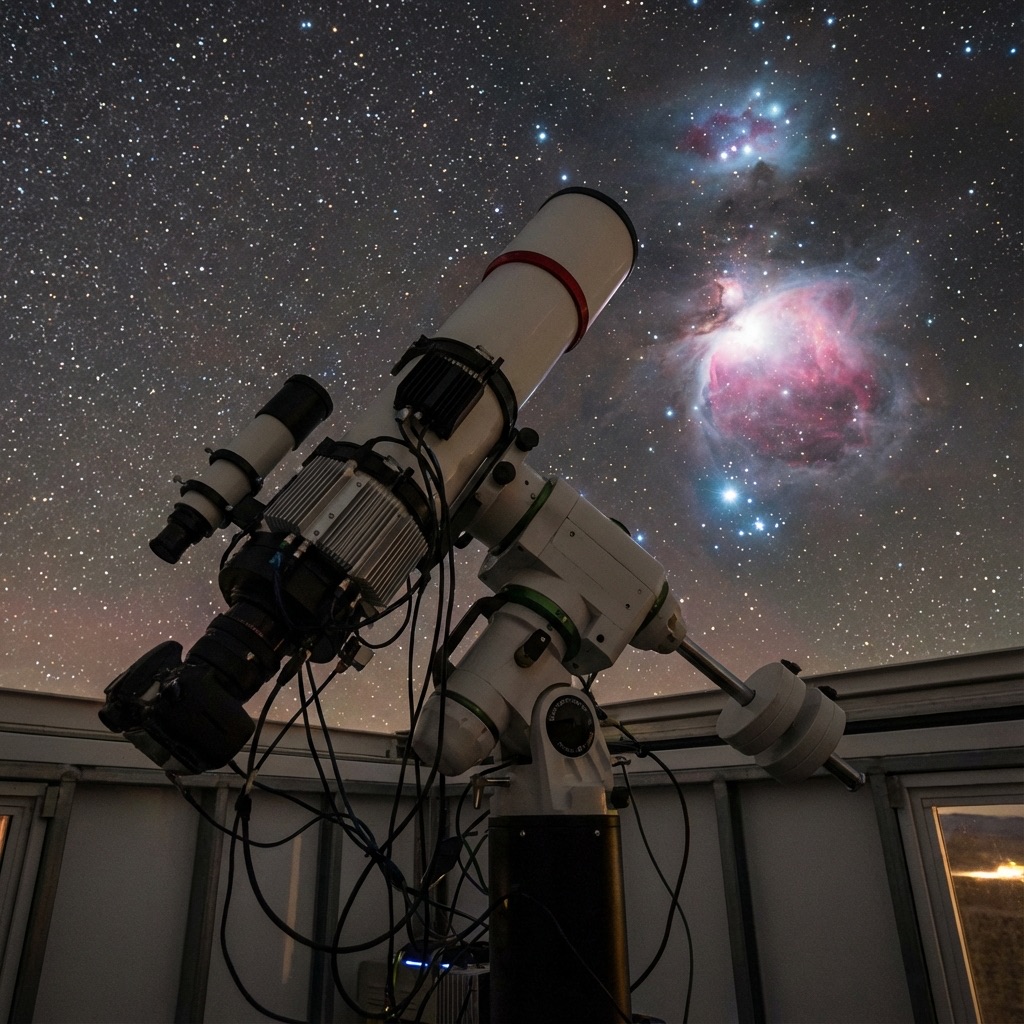
Deep Sky Imaging: The Complete Setup Guide
Master long-exposure imaging of deep sky objects with a dedicated rig. We cover sensors, optics, and tracking for professional-grade photos.
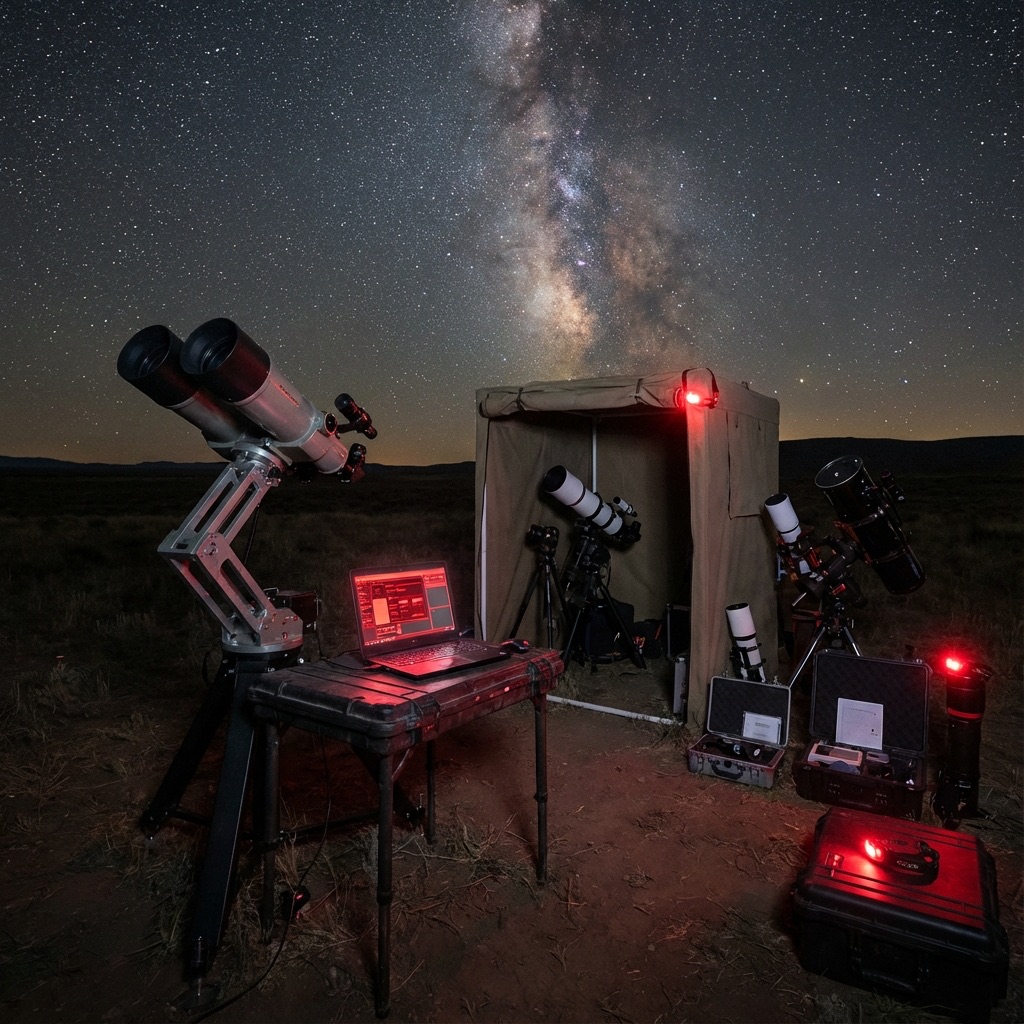
Professional Stargazing Gear: The Ultimate Field Setup
Discover the ultimate field setup for dedicated observers, featuring premium optics, all-weather protection, and professional station accessories.
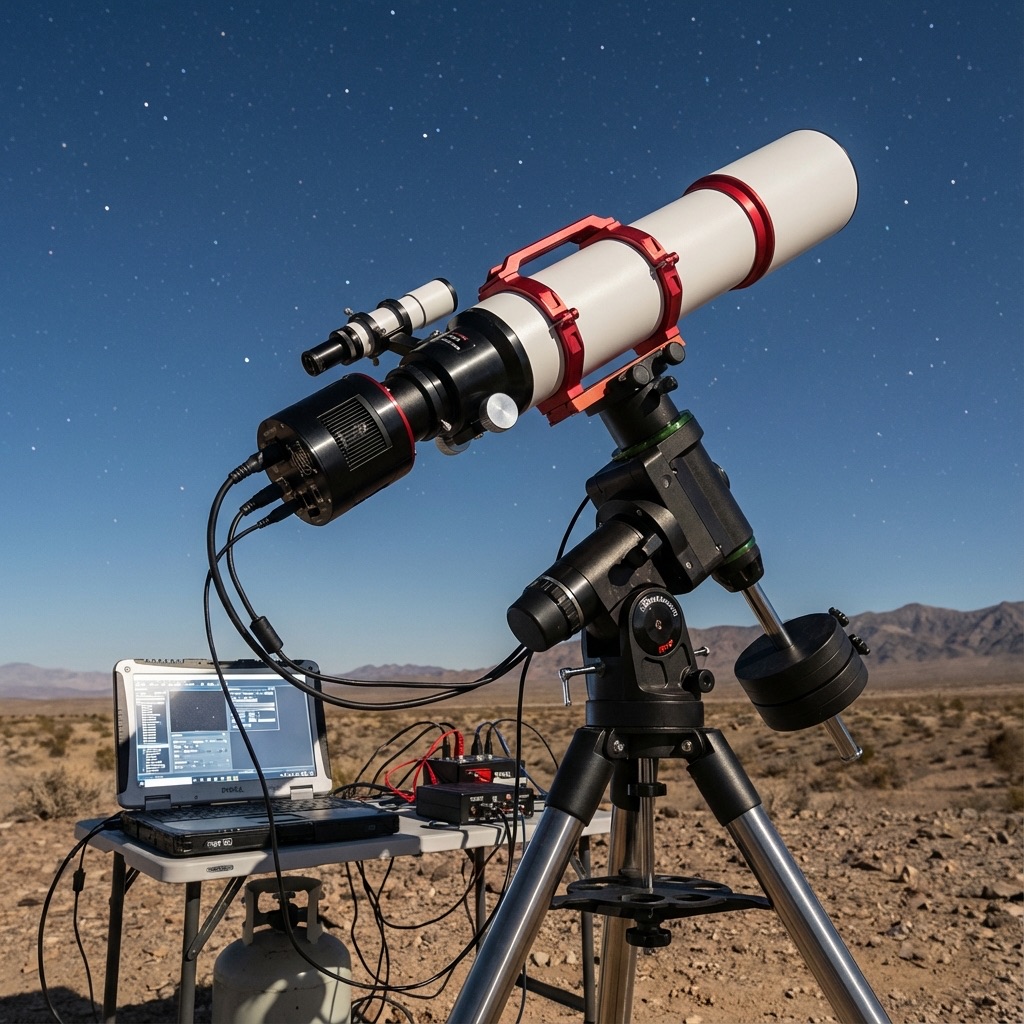
Professional Astrophotography Gear: Deep Sky Setup
Build the ultimate deep sky rig with cooled cameras, precision harmonic mounts, and apochromatic imaging telescopes for serious astrophotography.
End of Dossier • Research Complete