
Stargazing with Kids: A Family Guide to the Night Sky
Early exposure to celestial observation is a primary catalyst for long-term scientific curiosity. For parents, introducing children to observational astronomy in 2026 requires a strategic balance of high-quality telemetry and accessible education. This guide provides the pedagogical framework for fostering the next generation of observers, from naked-eye moon phase tracking to robotic telescope operation.
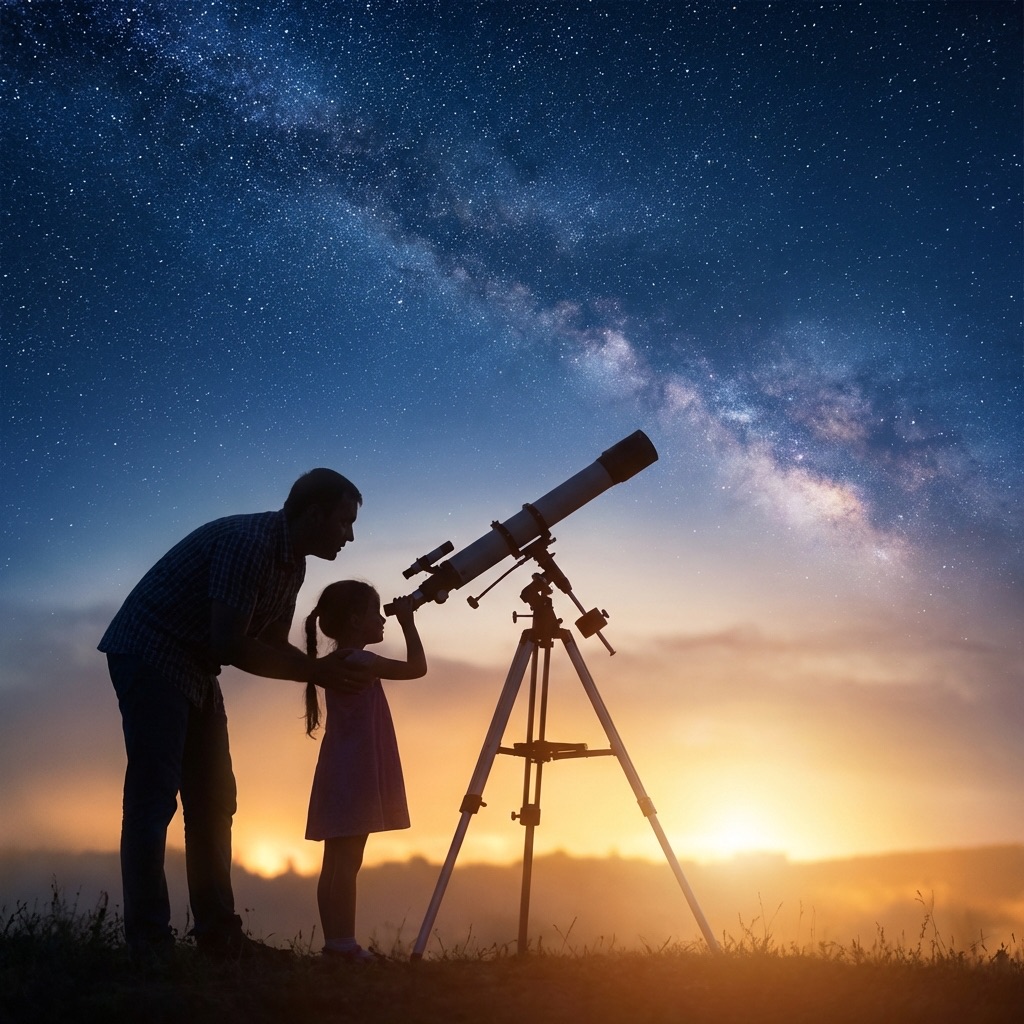

DH Research Lab
Data & Editorial Board
Expert Tested Gear & Affiliate Disclosure
This guide contains affiliate links. As an Amazon Associate, we earn from qualifying purchases.
01Why Stargazing is Perfect for Kids
Astronomy offers something rare in the digital age: screen-free wonder.
Benefits of stargazing with children:
- Encourages curiosity and scientific thinking
- Teaches patience and observation skills
- Creates lasting family memories
- No cost beyond a blanket and snacks
- Works at any age (even toddlers love the Moon)
- Combines outdoors, science, and stories
Unlike many activities, stargazing scales perfectly. A 3-year-old pointing at the Moon and a 13-year-old tracking satellites are both having profound experiences.
Manage Expectations
02Age-Appropriate Starting Points
Ages 3-5: The Basics
- The Moon (always a hit!)
- "Counting stars" games
- Making up their own constellation stories
- Listening for nighttime animal sounds
- Glow-in-the-dark star stickers at home
Ages 6-9: Building Knowledge
- Learning the Big Dipper and Orion
- Spotting planets (Venus is easy!)
- Watching for "moving stars" (satellites)
- Simple binocular views of the Moon
- Tracking moon phases on a calendar
Ages 10-13: Getting Serious
- Learning multiple constellations
- Using a star chart or app
- Beginner telescope observations
- Meteor shower watching
- Understanding why the sky changes seasonally
Teens: Deepening Interest
- Astrophotography with their phone
- Operating a GoTo telescope independently
- Attending star parties
- Learning about space science
- Planning dark sky road trips
Start Simple
Moon, Big Dipper, Venus—master these first.
Short Sessions
20 minutes is plenty for young kids.
Follow Their Lead
Let kids direct their curiosity.
03Your First Family Stargazing Kit
You don't need a telescope to start—in fact, I'd argue against it for beginners. Here's the essential kit:
Must-Haves:
- Blanket or reclining chairs
- Red flashlight (preserves night vision)
- Snacks and warm drinks
- Layers (nights cool down fast!)
- A simple star chart or app
Nice-to-Haves:
- Binoculars (7x50 ideal for sharing)
- Planisphere (rotating star chart)
- Glow sticks (mark your spot, not your eyes!)
- Telescope (later—see recommendations below)
Skip For Now:
- Complex equipment
- Printed star atlases
- Anything requiring setup in the dark
Celestron Cometron 7x50 Binoculars
“Perfect first binoculars for families—affordable, robust, and bright.”
RATIONALE
Large 50mm objectives gather lots of light. The 7x magnification is easy to hold steady. Kids love them.
04Fun Activities for Stargazing Nights
Keep kids engaged with structured activities:
Constellation Bingo Create cards with bright stars and constellations. First to spot their card wins!
Satellite Counting On a dark night, count how many satellites you spot in 30 minutes. Use our Dashboard to check for bright Starlink passes.
Make-Your-Own Constellations Let kids create and name their own star patterns. Draw them and share the stories.
Moon Phase Tracking Create a monthly calendar and draw the Moon's shape each clear night. Kids love patterns!
ISS Flyover Check our Dashboard for ISS pass times. Waving at astronauts is exciting at any age.
Meteor Wish Counting During meteor showers, keep a tally. One wish per meteor!
The Flashlight Game Take turns being the "tour guide"—pointing at objects while others identify them (use red light only!).
05Best Telescopes for Families
The best first telescope is one that's used often, not one that's "the best" technically. Here's what works with kids:
What to Look For:
- Simple setup (under 5 minutes)
- Stable enough that kids don't knock it
- Large enough eyepiece area
- Forgiving of wiggles and bumps
- Bonus: No batteries or alignment needed
What to Avoid:
- Tiny "department store" telescopes
- Complex computerized mounts (for beginners)
- Anything requiring precise polar alignment
- Ridiculous "600x magnification!" claims
Orion StarBlast 4.5 Astro Reflector
“Tabletop Dobsonian that kids can operate independently.”
RATIONALE
Point and look. No alignment, no batteries. The wide field makes finding targets easy. I've gifted three of these to families.
06Choosing Your Stargazing Location
Backyard Basics Your backyard is the best starting point:
- Familiar, safe environment
- Easy bathroom and snack access
- No travel = spontaneous sessions
- Turn off porch lights!
Level Up: Dark Parks Once kids are hooked, venture to darker sites:
- Check our Dark Sky Map for local options
- State and national parks often have programs
- Call ahead about after-dark access
- Bring more layers than you think!
Pro Tips for Location:
- Scout during daylight first
- Arrive before sunset to set up
- Keep the car nearby (warmth, emergency)
- Avoid areas with late-night traffic
Safety Reminders:
- Never leave kids unsupervised in darkness
- Bring communication device with signal
- Know the exit route
- Watch for wildlife (especially at rural sites)
Bug Prep
07Making it a Routine
One-off stargazing is fun. Regular stargazing creates lifelong astronomers.
Weekly Moon Watch Same time each week, check the Moon's phase. In 4 weeks, kids understand the cycle.
Monthly Meteor Checks Most months have at least a minor meteor shower. Track how many you spot each time.
Seasonal Constellation Tracking Orion = winter. Scorpius = summer. Kids learn the sky changes over time.
Make It Social
- Join a local astronomy club's family night
- Invite friends for backyard star parties
- Share your sightings on family chat
Document Progress
- Astronomy journal with drawings
- Photo log of what you've seen
- "First spotted" list like birders use
The goal is to create positive associations. Ice cream after stargazing? Now stars = happiness.
National Geographic Kids First Big Book of Space
“Beautiful, accessible introduction to astronomy for ages 4-8.”
RATIONALE
Daytime reading reinforces nighttime learning. The photos are stunning enough to inspire any kid.
08Tonight's Family Challenge
Here's a simple activity you can do tonight:
The Big Dipper Hunt
- Check our Dashboard for local weather and conditions
- Wait until at least one hour after sunset
- Face north (use your phone compass)
- Look halfway up the sky
- Find 7 bright stars forming a "ladle" shape
Once You Find It:
- The two stars at the "cup" end point to Polaris (North Star)
- Follow the handle's arc to find Arcturus (orange star)
- Tell the story: some cultures saw a bear, others a wagon
Take a Photo Use your phone on a tripod (or propped on a car) with Night Mode. Even if the result is rough, kids love seeing "their" photo of the stars.
Check the Moon What phase is it? Draw it in a journal. Predict what it will look like next week.
There's no wrong way to explore the sky together. The goal is wonder—everything else is bonus. Happy stargazing! ✨
Don't waste a clear-night chance
Get the field checklist, then use DarkestHour to decide if tonight's sky is actually worth your time, setup or travel.
Learn first. Decide with the map.
DarkestHour guides are free trust builders. Use them to understand conditions, then use Pro for saved spots, alerts and best-night decisions.
Find Your Darkest Sky
Use our real-time satellite maps to find locations with zero light pollution.
Launch Interactive MapPlan Your Deployment
Ready to experience these dark skies yourself? Use our interactive map to find the best dark-sky certified hotels, desert cabins, and observatories near this location.
Booking through this map supports Darkest Hour's light pollution research.
Your Learning Roadmap
You've mastered the beginner basics. The next logical step in your technical progression is mastering intermediate acquisition.
MANDATORY FIELD EQUIPMENT
Celestron NexStar 8SE
The gold standard for deep-sky observation. 203mm aperture for maximum light gathering.
ZWO Seestar S50
Fully robotic imaging system. Perfect for urban environments and rapid deployment.
Peak Design Travel Tripod
Zero-latency stability for long exposure astrophotography. Carbon fiber construction.
Continue Your Research
Best Beginner Astronomy Gear: Your First Telescope Setup
A complete guide to your first telescope setup: expert recommendations for Dobsonians, essential eyepieces, and navigation aids for beginners.
ISS Spotting Guide: How to Track the Space Station
Everything you need to see the International Space Station fly overhead tonight—no telescope required. Plus, tips for photographing the ISS pass.
Your First Night Stargazing: Complete 2026 Guide
Everything you need for your first night under the stars. Learn to find dark sky locations, navigate constellations, and master stargazing with zero gear.
End of Dossier • Research Complete