Meteor Shower Calendar 2026: Don't Miss These Events
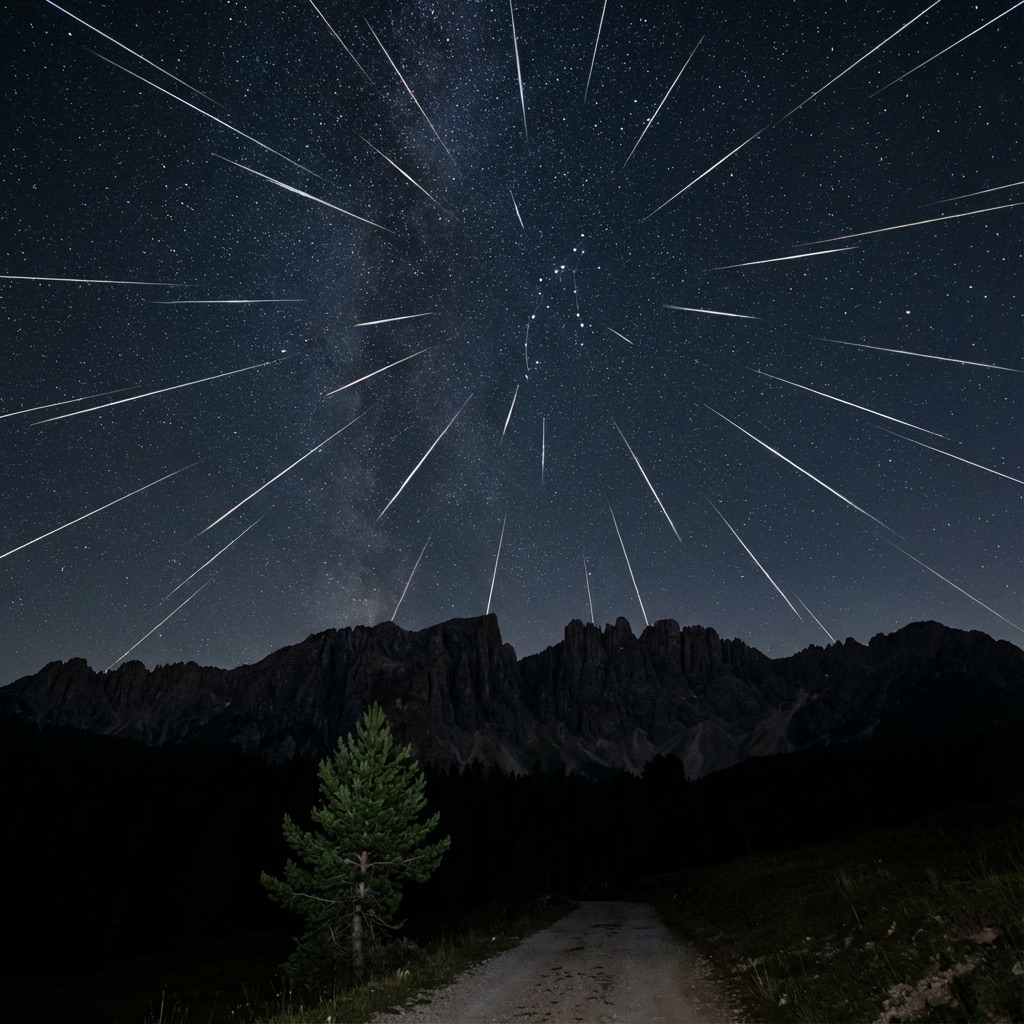
The 2026 meteor calendar identifies the primary windows for witnessing major shooting star events. This technical briefing establishes the peak timing and best locations for maximizing your hourly meteor count through dark-site deployment.
DH Research Lab
Data & Editorial Board
Expert Tested Gear & Affiliate Disclosure
This guide contains affiliate links. As an Amazon Associate, we earn from qualifying purchases.
01How to Watch Meteor Showers
Unlike other astronomy, meteor watching requires no equipment. In fact, telescopes and binoculars make it harder—you need the widest field of view possible.
Find Dark Skies — Use our Dark Sky Map to find a Bortle 4 or darker location. Even a single streetlight can cut your visible meteor count in half.
Give Your Eyes Time — It takes 20-30 minutes for your pupils to fully dilate. Avoid looking at your phone (use night mode if you must).
Be Patient — Meteors come in bursts. You might see 10 in a minute, then nothing for 5 minutes.
Look Away from the Radiant
02The 2026 Calendar
Here are the major showers worth your time this year:
Quadrantids (Jan 3-4) — Up to 120 meteors/hour at peak. Best viewed after midnight. Often overlooked because of winter cold.
Lyrids (April 22-23) — 20 meteors/hour. The oldest known shower, observed for 2,700 years.
Perseids (Aug 11-13) — The king of meteor showers. 100+ meteors/hour, warm summer nights, and always reliable.
Geminids (Dec 13-14) — 150 meteors/hour. Many consider this the best shower of the year. Bright, slow meteors.
Moon Phase Matters
A bright moon washes out faint meteors. Check the lunar calendar before planning your trip.
Hourly Rates
Published rates assume perfect dark skies. Expect 50-70% of stated rates from suburban locations.
Photography
Use a wide-angle lens, 20-30 second exposures, and pray. Most meteor photos are luck.
03Gear for Meteor Watching
You don't need much, but comfort is everything when you're lying on your back for hours:
Zero Gravity Recliner Chair
“The ultimate meteor-watching throne.”
RATIONALE
Lie back without straining your neck. Folds flat for transport. I've used mine for 5+ years.
Frequently Asked Questions
Q:What is the best meteor shower of 2026?
The Perseids (August 11-13) and Geminids (December 13-14) are the best meteor showers of 2026. The Perseids offer 100+ meteors per hour on warm summer nights, while the Geminids produce up to 150 bright, slow meteors per hour.
Q:When is the Perseid meteor shower 2026?
The Perseids peak on the nights of August 11-13, 2026. The best viewing is after midnight when the radiant is highest in the sky. The Perseids are reliable every year with 100+ meteors per hour under ideal conditions.
Q:How do I watch a meteor shower?
Find a dark location away from city lights, lie on your back with a wide view of the sky, and wait. No telescope or binoculars needed—you want the widest field of view possible. Give your eyes 20-30 minutes to adapt to the darkness.
Q:What direction should I look during a meteor shower?
Look 45-90 degrees away from the radiant point (where meteors appear to originate). Meteors near the radiant have shorter trails, while those further away produce longer, more spectacular streaks across the sky.
Q:How many meteors will I actually see?
Published rates assume perfect dark skies. From suburban locations, expect 50-70% of stated rates. From a Bortle 4 dark site during the Perseids or Geminids, you might see one meteor every minute on average.
Don't waste a clear-night chance
Get the field checklist, then use DarkestHour to decide if tonight's sky is actually worth your time, setup or travel.
Learn first. Decide with the map.
DarkestHour guides are free trust builders. Use them to understand conditions, then use Pro for saved spots, alerts and best-night decisions.
Find Your Darkest Sky
Use our real-time satellite maps to find locations with zero light pollution.
Launch Interactive MapYour Learning Roadmap
You've mastered the beginner basics. The next logical step in your technical progression is mastering intermediate acquisition.
MANDATORY FIELD EQUIPMENT
Celestron NexStar 8SE
The gold standard for deep-sky observation. 203mm aperture for maximum light gathering.
ZWO Seestar S50
Fully robotic imaging system. Perfect for urban environments and rapid deployment.
Peak Design Travel Tripod
Zero-latency stability for long exposure astrophotography. Carbon fiber construction.
Continue Your Research
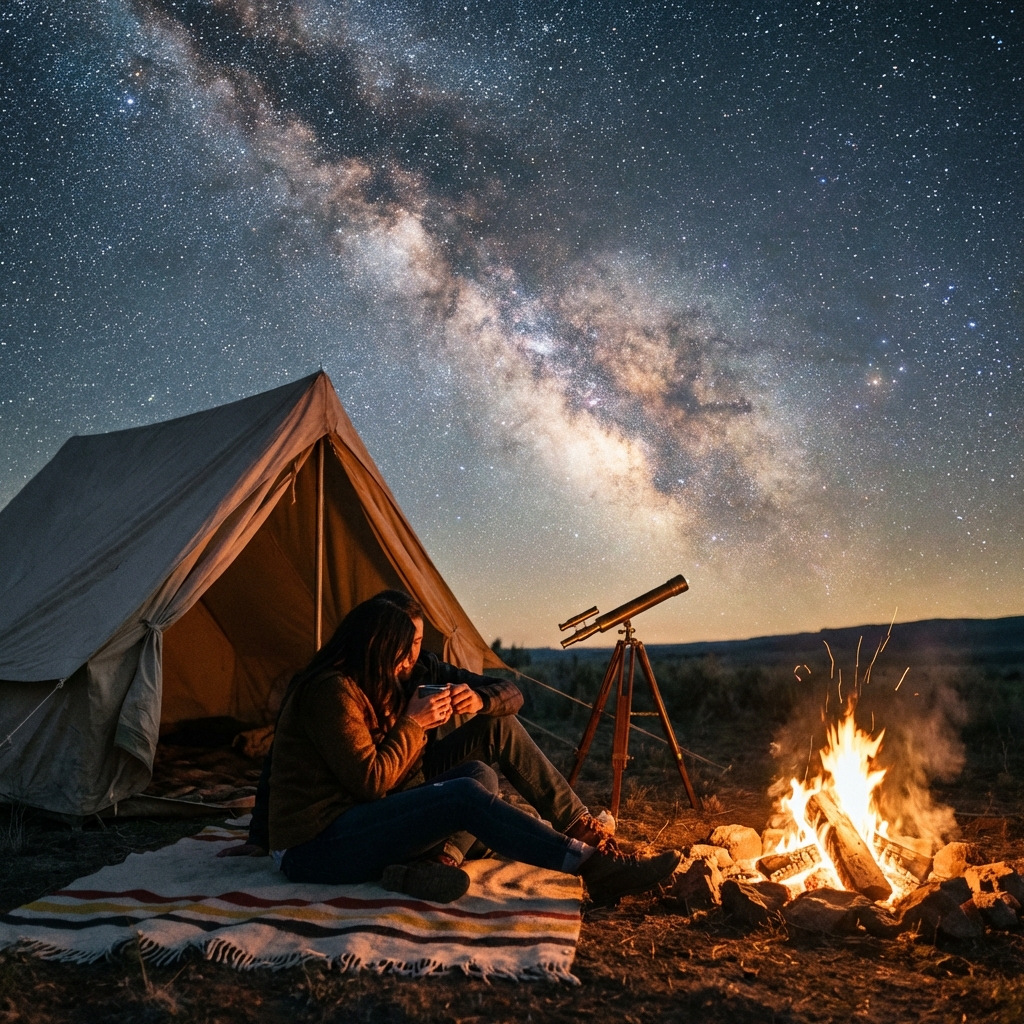
Your First Night Stargazing: Complete 2026 Guide
Everything you need for your first night under the stars. Learn to find dark sky locations, navigate constellations, and master stargazing with zero gear.
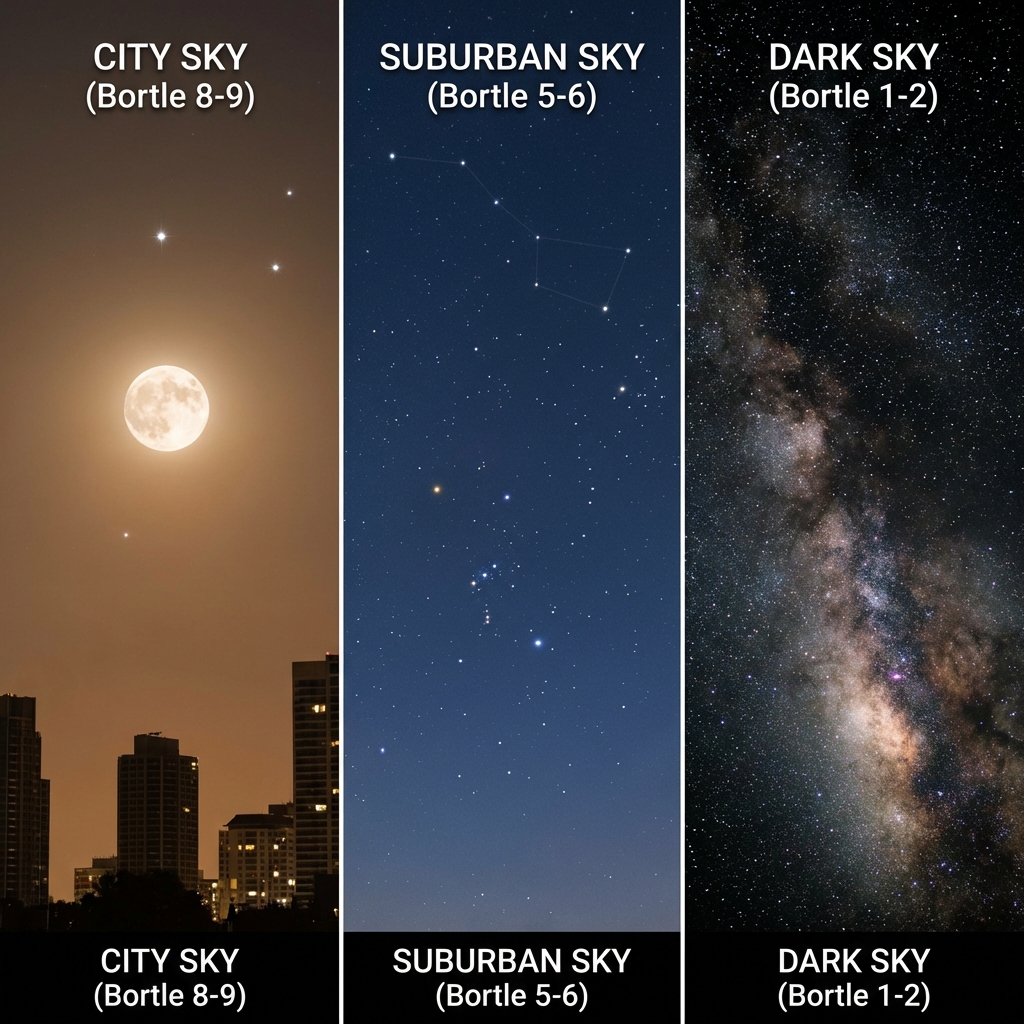
How to Read a Bortle Scale Map: The Dark Sky Cheat Code
Decode light pollution maps and understand Bortle classes 1 to 9. Use our advanced dark sky tools to find your perfect stargazing location tonight.
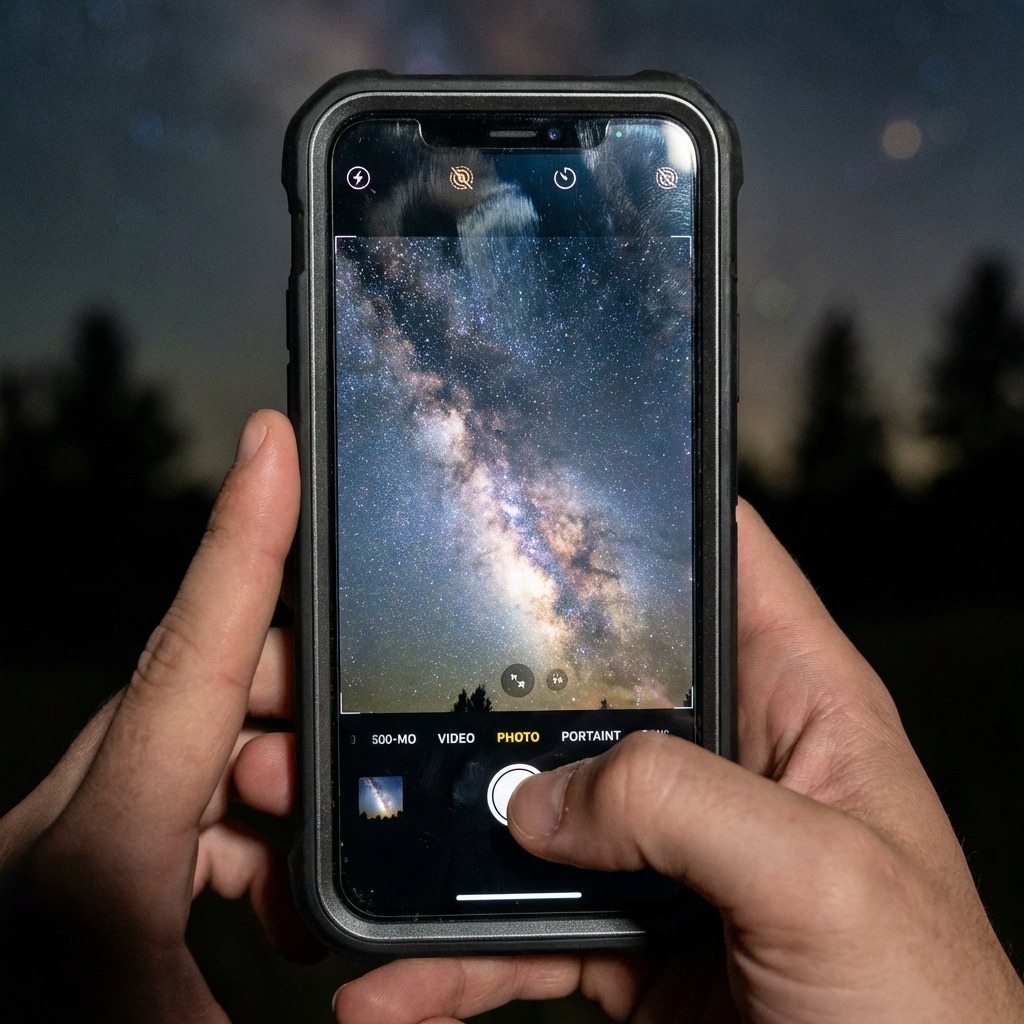
Mobile Astrophotography: Capture the Night Sky
Your smartphone is more powerful than professional cameras from 15 years ago. Learn to shoot the Moon, Milky Way, and auroras with just your phone.
End of Dossier • Research Complete