
Finding Stars Near Honolulu: Top Observing Spots
Finding a truly dark sky near Honolulu can feel impossible with the ever-growing light dome. However, if you know where to drive, there are still pristine pockets of darkness waiting to be explored.
DH Research Lab
Data & Editorial Board
Expert Tested Gear & Affiliate Disclosure
This guide contains affiliate links. As an Amazon Associate, we earn from qualifying purchases.
01Understanding Local Light Pollution
Before heading out from Honolulu, always check the Bortle scale of your destination. The transition from the inner city (Bortle 8/9) to these locations represents a massive leap in visibility.
02The Pacific Advantage
Why Hawaii is the world's premier astronomy destination:
Isolation: 2,500 miles from the nearest continent means zero light pollution reaches the archipelago's fringes. Elevation: Mauna Kea and Haleakala put you above 40% of the Earth's atmosphere and 90% of its water vapor. Latitude: At 19°N, you can see all of the Northern Hemisphere constellations and the vast majority of the Southern Hemisphere ones as well.
Respect the Mountain
031. Mauna Kea Visitor Station (Big Island)
Elevation: 9,200 ft | Bortle Class: 1-2 | Best For: The world's best accessible stargazing
While the true summit is reserved for professional observatories and sacred use, the Onizuka Center for International Astronomy (Visitor Station) offers world-class viewing.
Highlights:
- Free public stargazing programs (check current schedule).
- Telescopes provided via the visitor center.
- Above the cloud layer most nights, ensuring perfectly clear skies.
Safety Tip: Do not attempt the true summit at night without a 4WD vehicle and proper acclimatization to the 13,800 ft altitude.
Stay22 - Big Island Stays
“Find stays in Hilo or Waimea for Mauna Kea access.”
RATIONALE
Staying in Waimea or Hilo allows for a shorter drive to the mountain. Avoid resorts on the Kona coast for the quickest access.
042. Haleakala National Park (Maui)
Elevation: 10,023 ft | Bortle Class: 2 | Best For: Stargazing above the clouds
Haleakala, the 'House of the Sun,' is just as spectacular at night. The high crater rim offers an unobstructed view in every direction.
Why go:
- See the 'Zodiacal Light' and the Milky Way with intense contrast.
- Looking down on the lights of Maui through the cloud layer is surreal.
- Quiet, spiritual atmosphere away from the resort crowds.
Nikon Monarch M5 10x42 Binoculars
“The gold standard for high-altitude island viewing.”
RATIONALE
Lightweight and robust. In the thin air of Haleakala, these binoculars will reveal the structure of the Lagoon and Trifid nebulae with ease.
053. Polihale State Park (Kauai)
Distance from Lihue: 1.5 hours | Bortle Class: 2-3 | Best For: Remote beach stargazing
Polihale is at the very end of the road on Kauai's west side. It is one of the most remote beaches in the islands.
Highlights:
- Dramatic cliffs of the Na Pali coast as a backdrop.
- Zero light pollution looking west over the open Pacific.
- Wide, sandy beaches for laying out a blanket and looking up.
End of the Road
Requires a long drive on a dirt road, keeping the crowds away.
Transparency
Cleanest possible air traveling thousands of miles across the ocean.
Isolation
Total peace with only the sound of the massive Pacific waves.
064. Kaʻena Point (Oahu)
Distance from Honolulu: 1 hour | Bortle Class: 4 | Best For: Closest darkness for Honolulu residents
Kaʻena Point is the westernmost tip of Oahu and the furthest point from the Honolulu light dome.
What to expect:
- Accessible from either the North Shore or the Waianae coast side.
- Significant reduction in light pollution compared to the city.
- Beautiful ocean views and a sense of 'old Hawaii' darkness.
Stroll at Night
075. Hawaii Volcanoes National Park (Big Island)
Bortle Class: 3-4 | Best For: Volcanic landscapes under the stars
The high-elevation volcanic fields provide a unique foreground for astrophotography.
Highlights:
- Stargazing from the rim of Kilauea caldera.
- Steam vents and cooled lava flows create an alien-world feeling.
- Generally darker than the coastal resort areas.
Glow & Stars
If the volcano is active, the red glow of the crater against the Milky Way is legendary.
Variable Weather
The park is on the windward side; check cloud forecasts carefully.
Elevation
Approx 4,000 ft, so it will be much cooler than the beach.
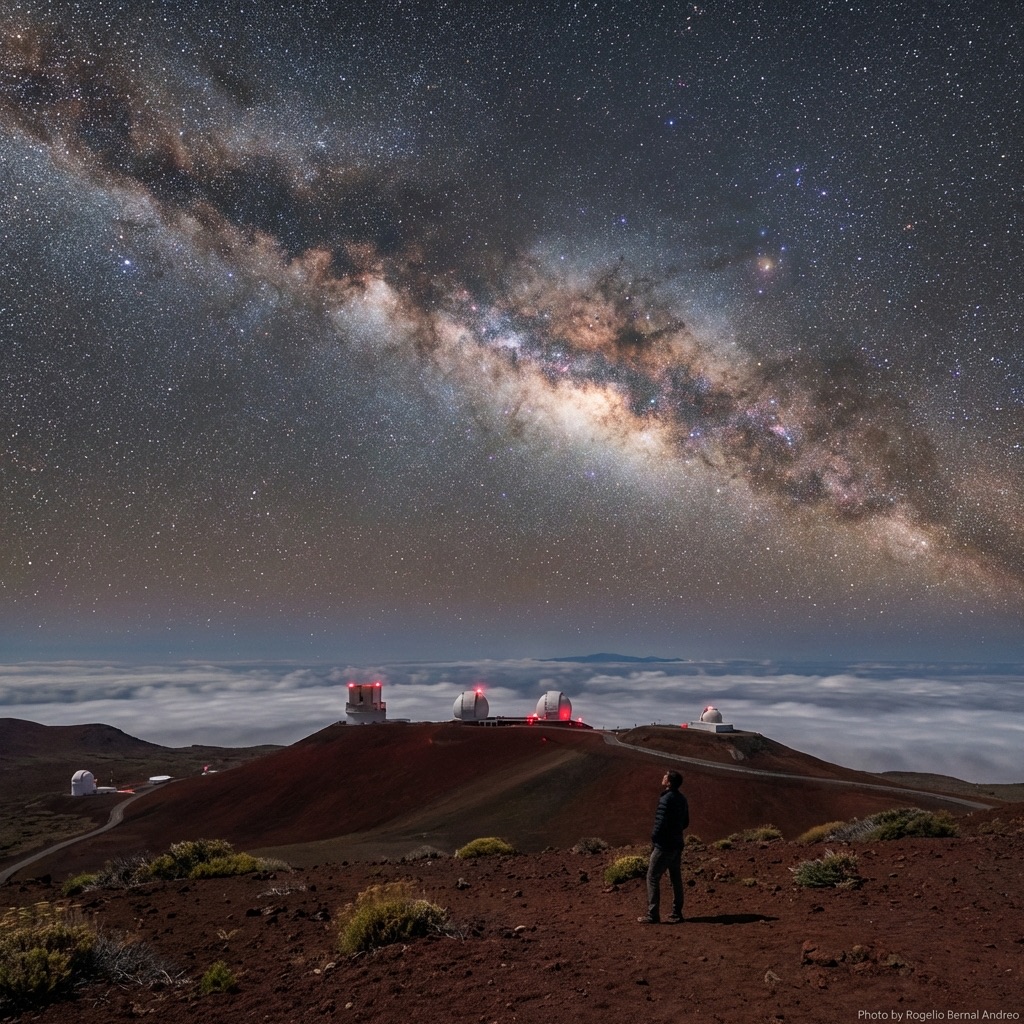
086. Keck Observatory Perimeter (Mauna Kea)
Elevation: 13,600 ft | Bortle Class: 1 | Best For: The absolute limit of darkness
For many, just standing near the silver domes of the Keck telescopes at sunset and seeing the first stars emerge is a spiritual experience.
Sony 24mm f/1.4 GM Lens
“The preferred lens for Hawaii's night sky.”
RATIONALE
Wide enough to capture the volcanic horizon and fast enough to shoot the Milky Way with minimal noise in Hawaii's perfect darkness.
Don't waste a clear-night chance
Get the field checklist, then use DarkestHour to decide if tonight's sky is actually worth your time, setup or travel.
Learn first. Decide with the map.
DarkestHour guides are free trust builders. Use them to understand conditions, then use Pro for saved spots, alerts and best-night decisions.
Find Your Darkest Sky
Use our real-time satellite maps to find locations with zero light pollution.
Launch Interactive MapPlan Your Deployment
Ready to experience these dark skies yourself? Use our interactive map to find the best dark-sky certified hotels, desert cabins, and observatories near this location.
Booking through this map supports Darkest Hour's light pollution research.
Your Learning Roadmap
You've mastered the locations basics. The next logical step in your technical progression is mastering astrophotography workflows.
MANDATORY FIELD EQUIPMENT
Celestron NexStar 8SE
The gold standard for deep-sky observation. 203mm aperture for maximum light gathering.
ZWO Seestar S50
Fully robotic imaging system. Perfect for urban environments and rapid deployment.
Peak Design Travel Tripod
Zero-latency stability for long exposure astrophotography. Carbon fiber construction.
Continue Your Research
Your First Night Stargazing: Complete 2026 Guide
Everything you need for your first night under the stars. Learn to find dark sky locations, navigate constellations, and master stargazing with zero gear.
Astrophotography on a Budget: Milky Way for Under $500
Learn to photograph the night sky with affordable equipment. Our complete gear guide shows you how to capture the Milky Way for under $500.
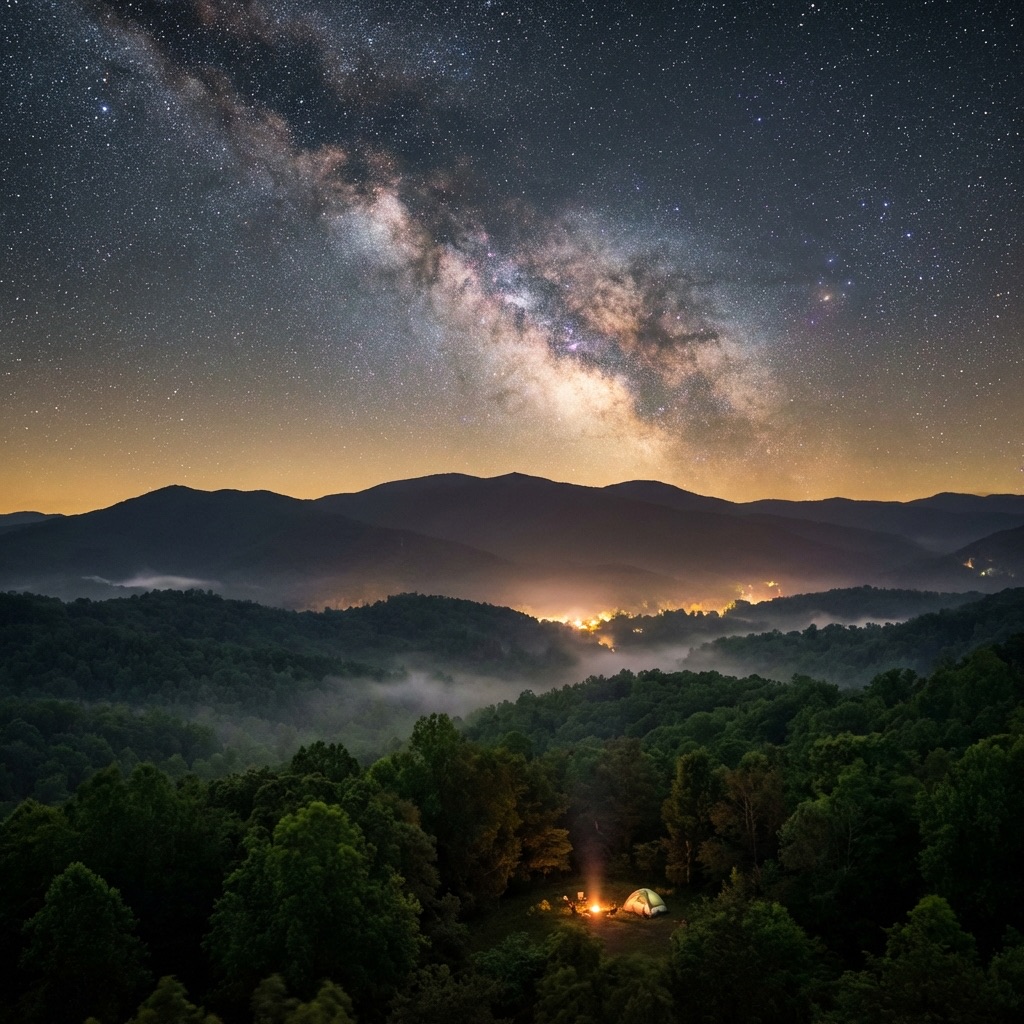
Best Stargazing Near Atlanta: 6 Southeast Dark Sky Escapes
Find the real night sky! 6 stunning dark sky spots near Atlanta—Stephen C. Foster, Blue Ridge Mountains, and hidden Georgia gems. Bortle ratings included.
End of Dossier • Research Complete