Best Stargazing Gear for Beginners: Start Under $100
You don't need expensive equipment to enjoy the night sky. In fact, some of my most magical stargazing moments involved nothing but my eyes and a warm blanket. This guide covers everything a beginner needs to start exploring the cosmos tonight—all for under $100.
DH Research Lab
Data & Editorial Board
Expert Tested Gear & Affiliate Disclosure
This guide contains affiliate links. As an Amazon Associate, we earn from qualifying purchases.
01The Essentials (Under $50)
Let's start with the absolute basics. These items will transform your first stargazing experience from "looking up" to actually seeing the sky:
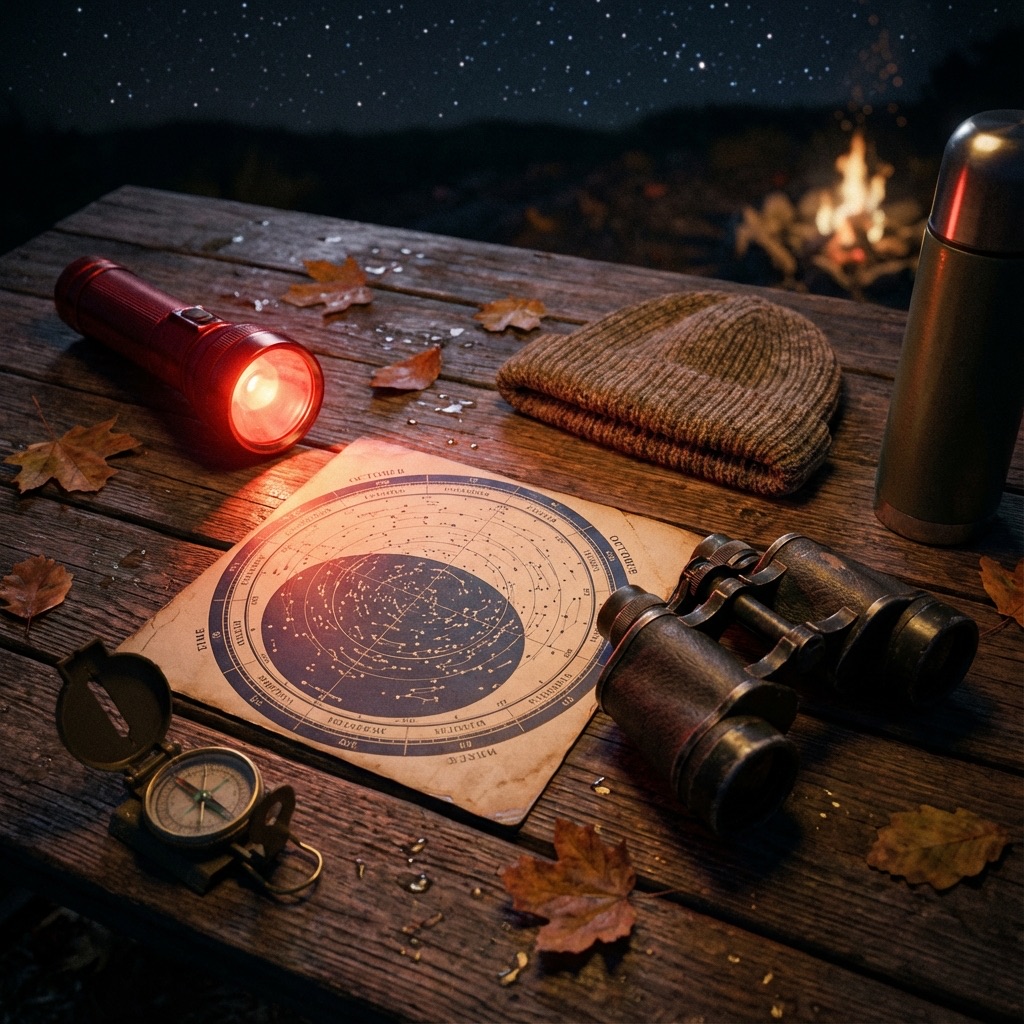
A red headlamp is non-negotiable. Red light preserves your night vision—white light blinds you for 20+ minutes. Look for one with multiple brightness levels.
A star wheel (planisphere) is low-tech magic. Dial in the date and time to see exactly what's visible tonight. No batteries, no internet, no dead phone—just works.
Compact binoculars reveal a shocking amount. Even a cheap 10x25 pair will show you lunar craters and Jupiter's four Galilean moons.
Red LED Headlamp
“Hands-free red light that preserves night vision.”
RATIONALE
The most impactful $15 you can spend on this hobby. You'll use it every single session.
02Comfort is Everything
Here's what nobody tells beginners: stargazing means looking UP for hours. Your neck will hate you without the right setup.
A zero gravity chair lets you lie back and stare straight up in comfort. Trust me—this changes everything.
Even in summer, nights get cold when you're sitting still. Pack a fleece blanket and some hand warmers if it's below 60°F.
The Observing Blanket
03Apps That Replace Expensive Gear
Your smartphone is secretly a powerful astronomy tool:
Stellarium Mobile — Point your phone at the sky and it labels everything. Free.
Clear Outside — Hourly cloud forecasts specifically for astronomers.
ISS Detector — Alerts you when the Space Station flies overhead.
These apps replace hundreds of dollars of traditional equipment. Just remember to use red-screen mode to protect your night vision.
Night Mode
Every astronomy app has a red-screen mode. Use it religiously.
Offline Stars
Download offline star maps before heading to remote dark sites.
Our Map
Use Darkest Hour to find Bortle 4 or darker locations near you.
04What About Telescopes?
Here's my honest advice: wait on the telescope.
Many beginners rush to buy a telescope and end up frustrated. Cheap department store scopes are wobbly, hard to aim, and show disappointing views. You'll use it twice and it'll collect dust.
Instead, start with binoculars. A quality pair of 10x50 binoculars shows you:
- Craters on the Moon
- Jupiter's four largest moons
- Saturn (as an oval, not rings)
- Star clusters like the Pleiades
- The Andromeda Galaxy (as a fuzzy patch)
When you DO buy a telescope: Budget at least $300-400 for a quality starter scope. Look for an 6" or 8" Dobsonian—they offer the best value per inch of aperture.
Celestron UpClose G2 10x50 Binoculars
“Best budget binoculars for astronomy beginners.”
RATIONALE
These punch way above their price. 50mm objectives gather enough light to show you things you never imagined seeing. Perfect starter optics.
05Keeping a Stargazing Journal
The observers who stick with this hobby all have one thing in common: they keep notes.
What to record:
- Date, time, and location
- Sky conditions (cloud cover, Bortle class, transparency)
- What you observed and your impressions
- Sketches (even rough ones) of what you saw
Why it matters: Looking back at your early notes is incredibly rewarding. You'll see how your skills developed, which objects became favorites, and remember nights you'd otherwise forget.
Digital or Analog? Both work. Many observers love the ritual of a physical notebook with red-filtered headlamp. Others prefer astronomy logging apps like SkySafari Pro or Starry Night.
The Messier List
Don't waste a clear-night chance
Get the field checklist, then use DarkestHour to decide if tonight's sky is actually worth your time, setup or travel.
Learn first. Decide with the map.
DarkestHour guides are free trust builders. Use them to understand conditions, then use Pro for saved spots, alerts and best-night decisions.
Find Your Darkest Sky
Use our real-time satellite maps to find locations with zero light pollution.
Launch Interactive MapYour Learning Roadmap
You've mastered the beginner basics. The next logical step in your technical progression is mastering intermediate acquisition.
MANDATORY FIELD EQUIPMENT
Celestron NexStar 8SE
The gold standard for deep-sky observation. 203mm aperture for maximum light gathering.
ZWO Seestar S50
Fully robotic imaging system. Perfect for urban environments and rapid deployment.
Peak Design Travel Tripod
Zero-latency stability for long exposure astrophotography. Carbon fiber construction.
Continue Your Research
Your First Night Stargazing: Complete 2026 Guide
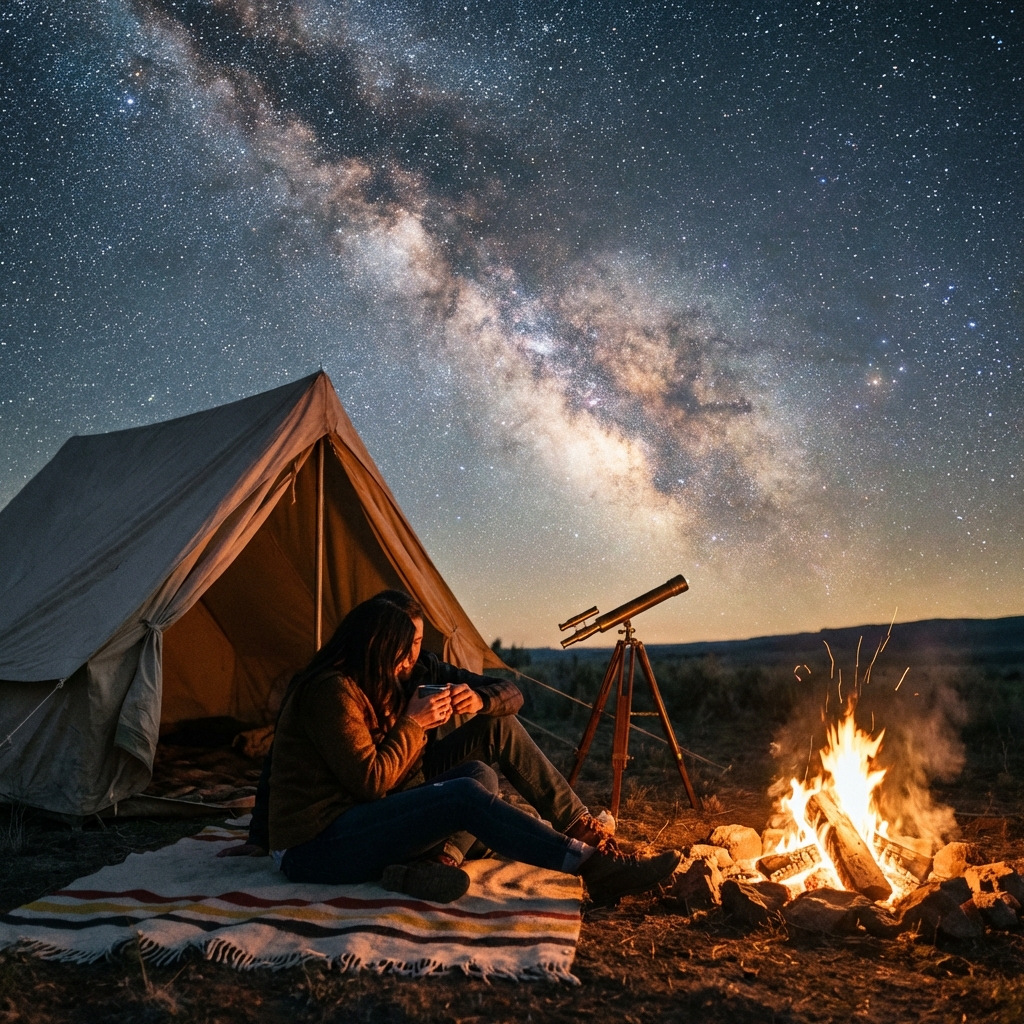
Everything you need for your first night under the stars. Learn to find dark sky locations, navigate constellations, and master stargazing with zero gear.
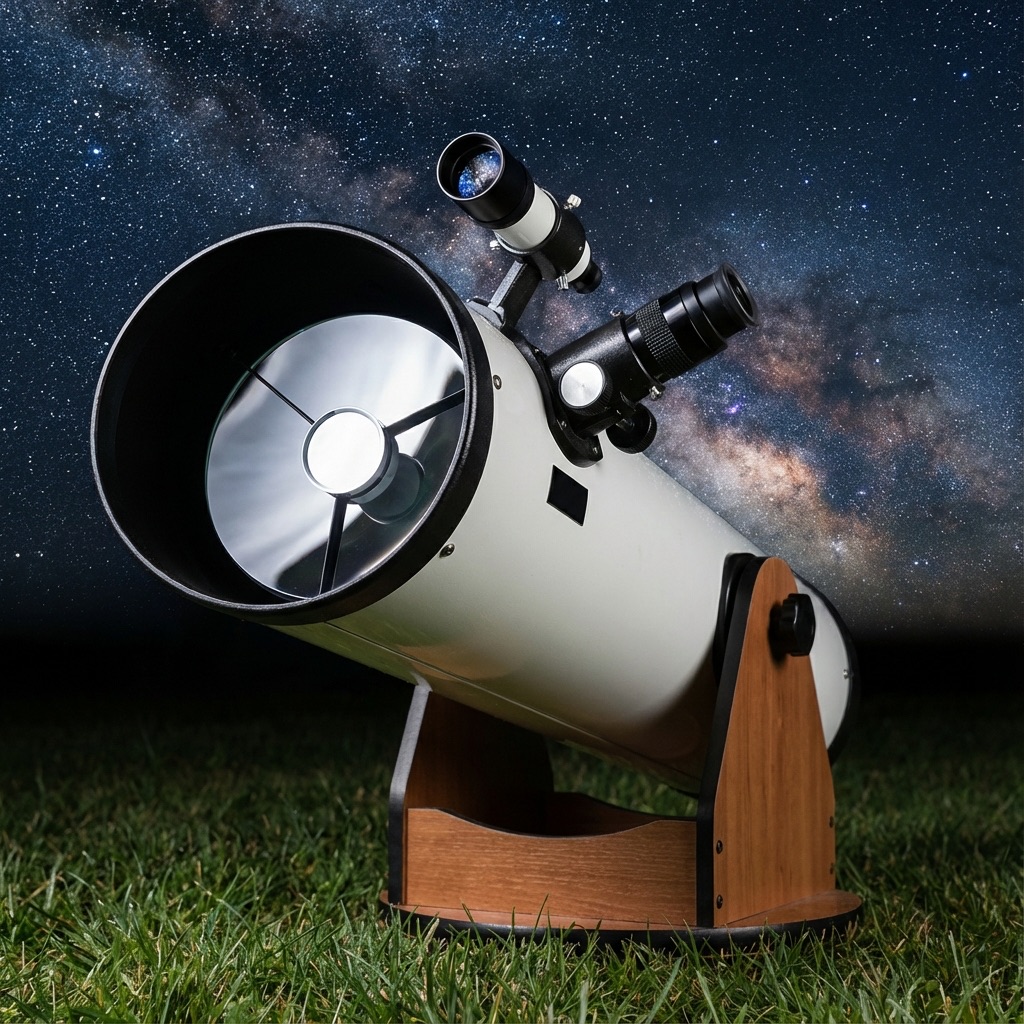
The Best Telescopes for Beginners 2026: Buyer's Guide
Don't waste money on a shaky scope. Find the best first telescope with our 2026 expert reviews, budget picks, and essential gear advice.
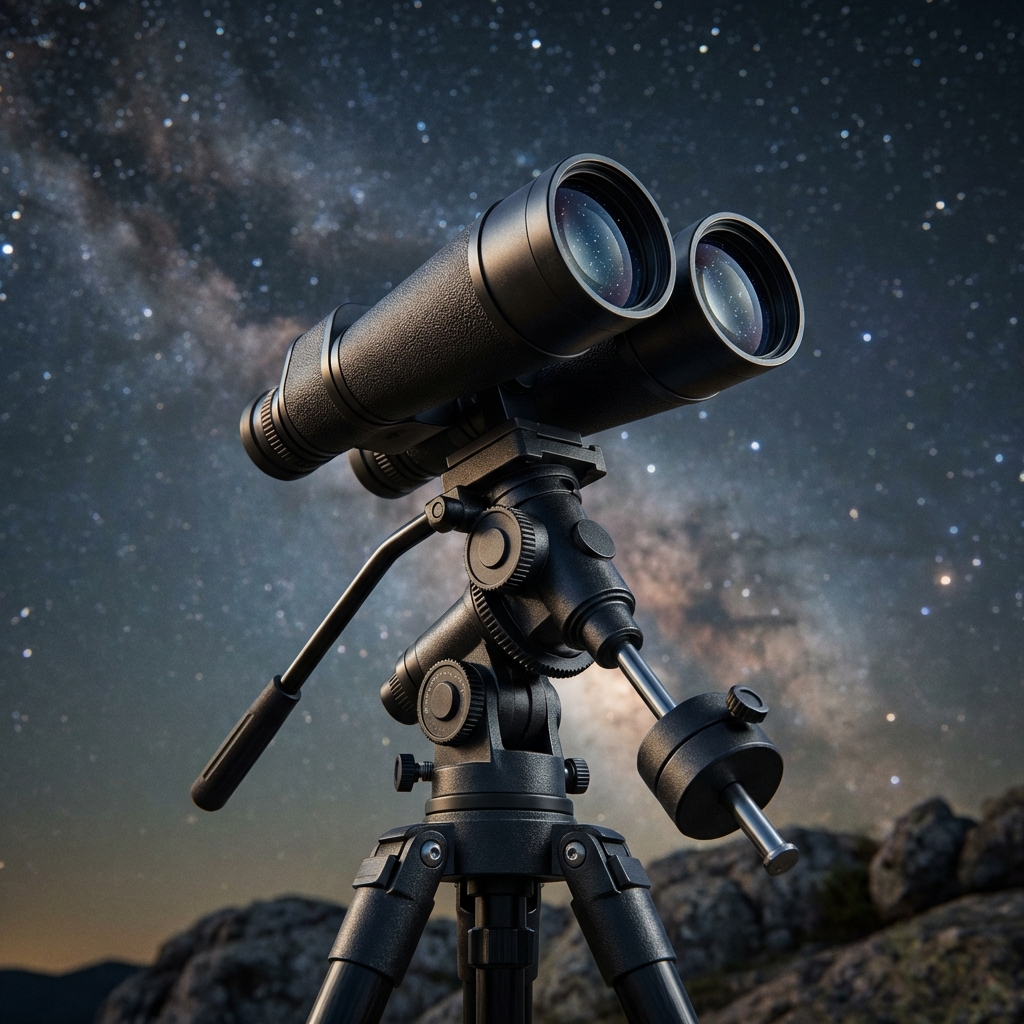
Best Binoculars for Astronomy 2026: Top Expert Picks
Experience the universe in 3D. Discover why 10x50 binoculars are the ultimate first step in astronomy. We review the top budget and premium picks for 2026.
End of Dossier • Research Complete